
First Time Visit to James A. Garfield National Historic Site

I drove an hour out of my way to visit the James A. Garfield National Historic Site while in Ohio to see a solar eclipse. I did it alone, because for some odd reason when I mentioned the plan to my broth and my family, I got exactly zero takers. Zero (?!). Early morning, beautiful spring day, just me and the 20th president’s front porch. I don’t get it. I thought it was an easy decision.
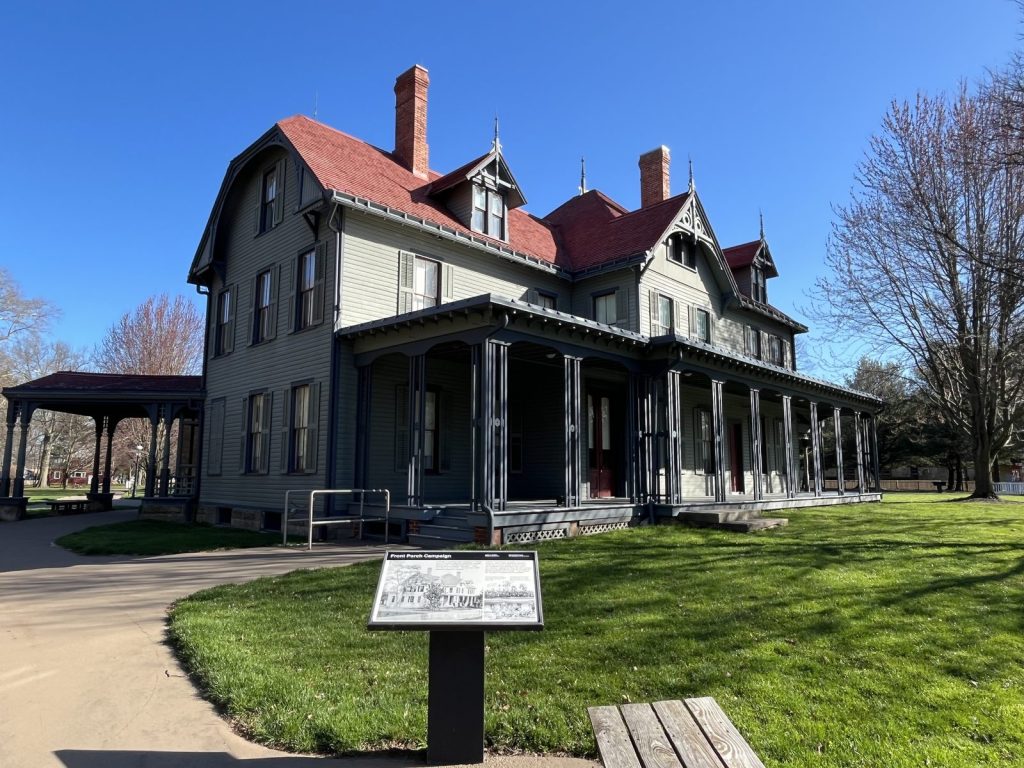
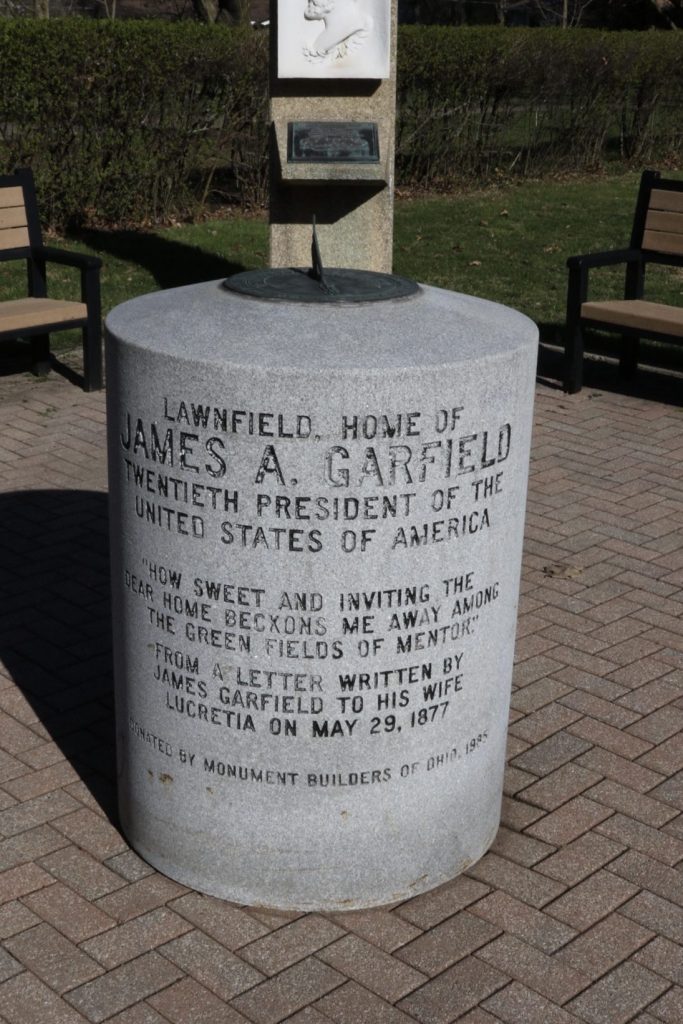
So who is this guy? James A. Garfield National Historic Site in Mentor, Ohio preserves Lawnfield — the Victorian farmhouse where Garfield (not the cat) ran his famous Front Porch Campaign, raised his family, and built one of the most impressive private libraries I’ve ever walked through. Some even consider it the first presidential library. This place tells a complete story about a man most people know only as “that president who got shot.”
Arriving Early — It Matters Here
I pulled into the parking lot early and had time to explore the grounds before the Visitor center opened, which turned out to be a great way to ease into the visit.
Parking is free, easy, and right next to the visitor center. The site sits in the middle of what was Garfield’s farm, so the lot is flat, accessible, and about thirty seconds from the front door.
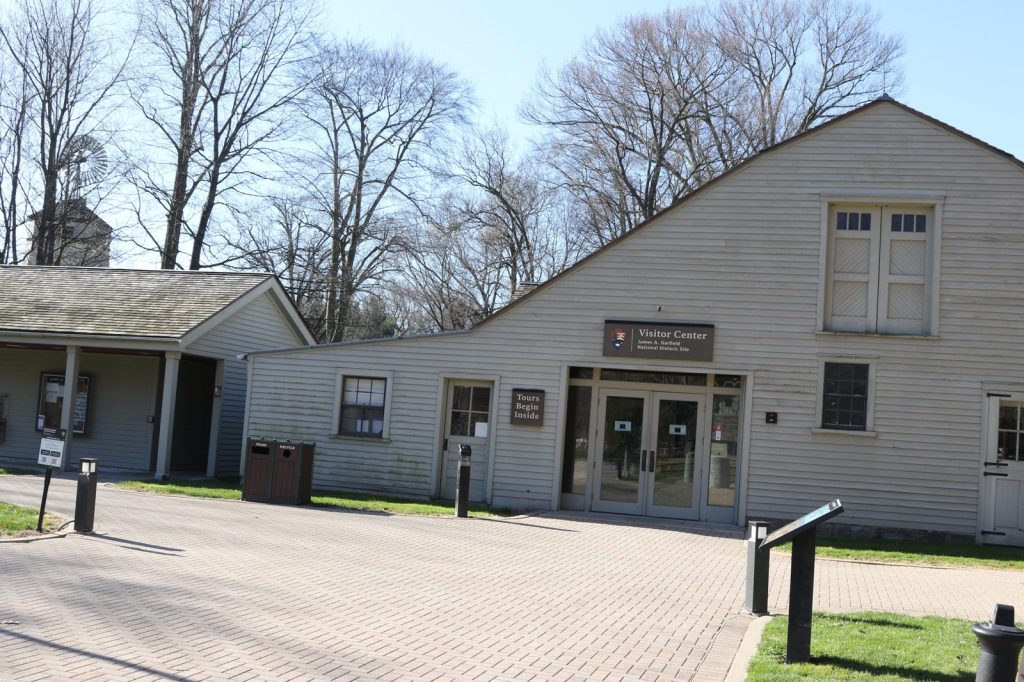
Tours of the home are guided, first come first served, and they fill up. It was spring break season when I visited, which made it rather busy, which I hadn’t really expected. The first group filled up quickly. You can only visit the inside of the house on the ranger-led tour. It is a more emersive experience than just wandering the grounds, so I wouldn’t skip it.
The Grounds Before the Doors Open
The extra time before the visitor center opened gave me a chance to walk the grounds, and there’s more out there than you might expect.
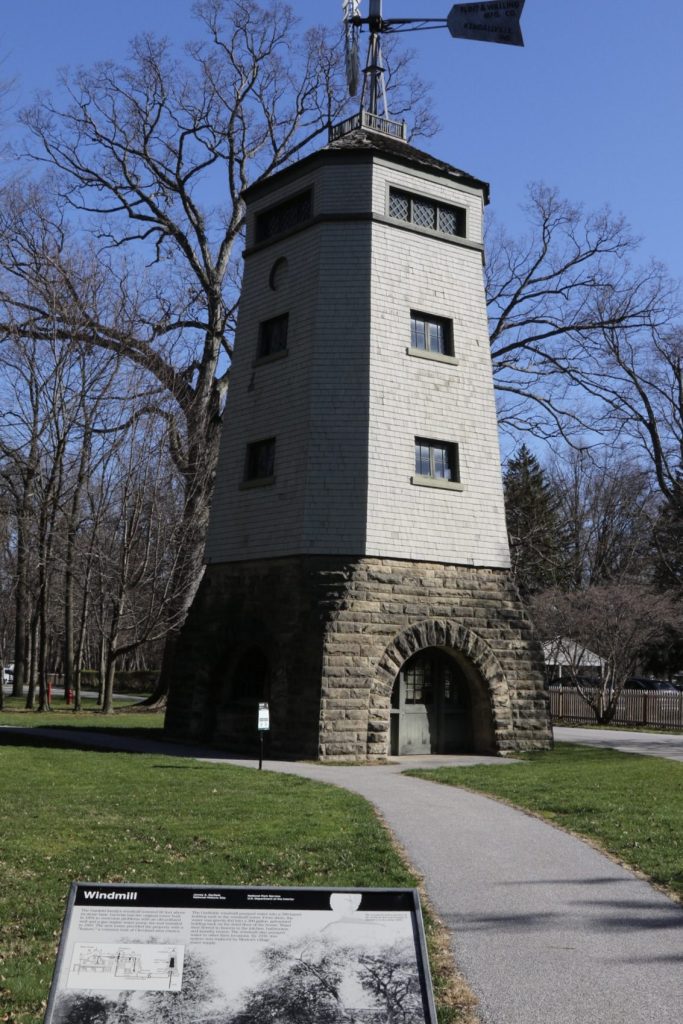
Several interpretive signs are scattered across the property covering the farm layout, the railroad connection that made Garfield’s Front Porch Campaign possible, the windmill and private water system, and the gasholder building that supplied the house with gas lighting. They have a lot of information so it is still an informative visit even if you missed the tour. The aerial map panel is worth stopping at — it gives you a sense of how substantial this farm was, and how central it was to Garfield’s identity as a self-made man who never forgot where he came from.
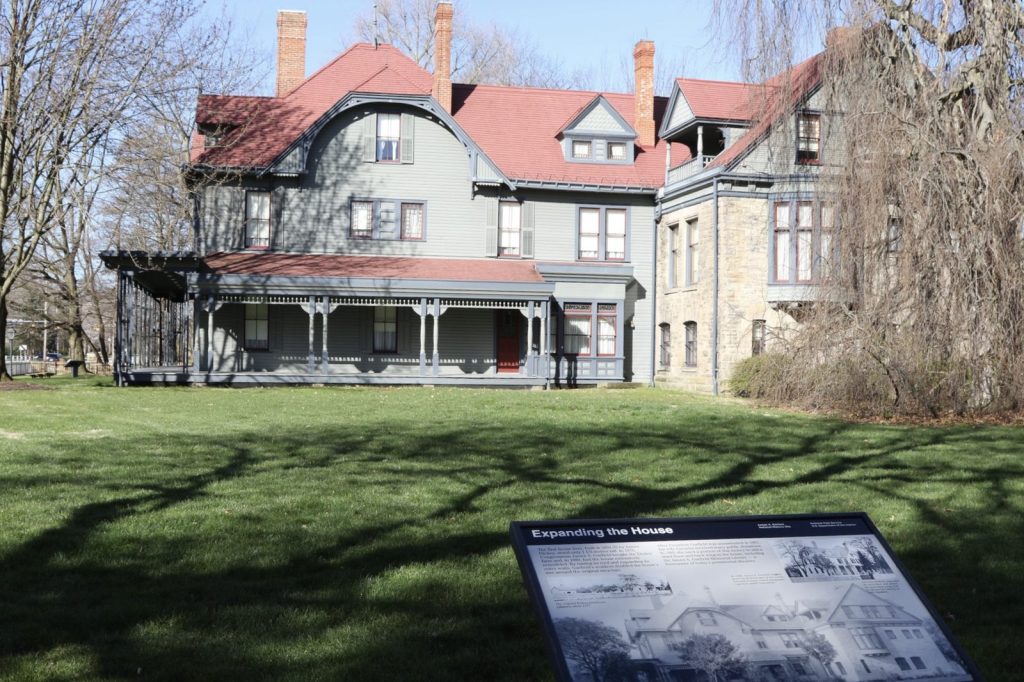
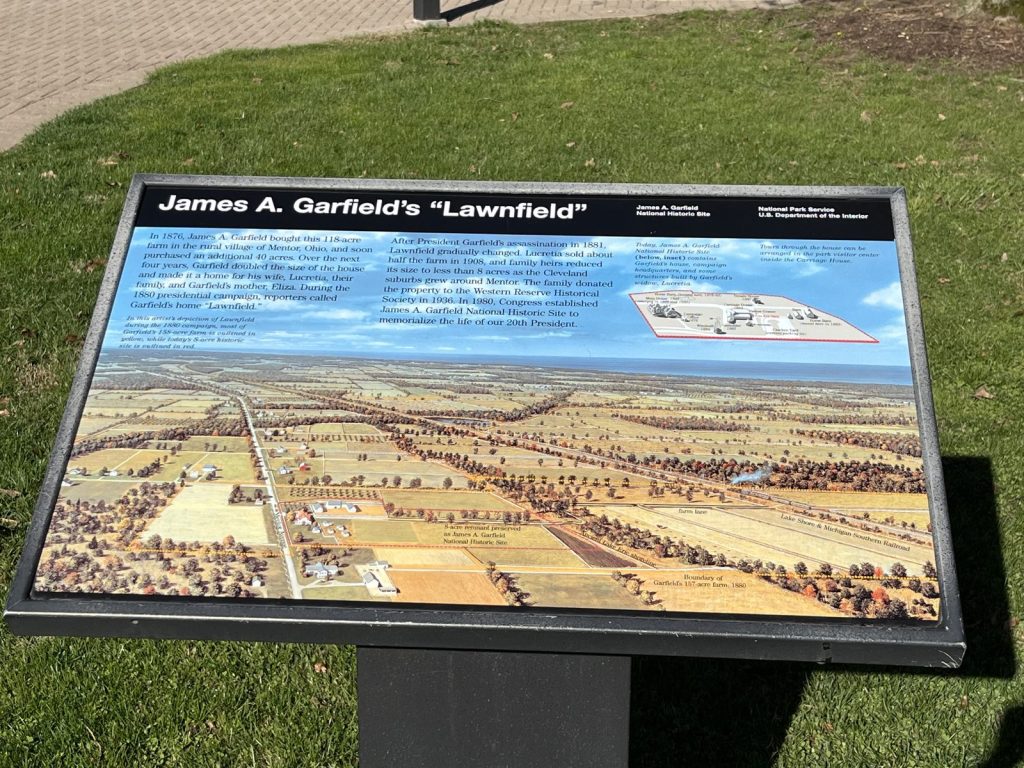
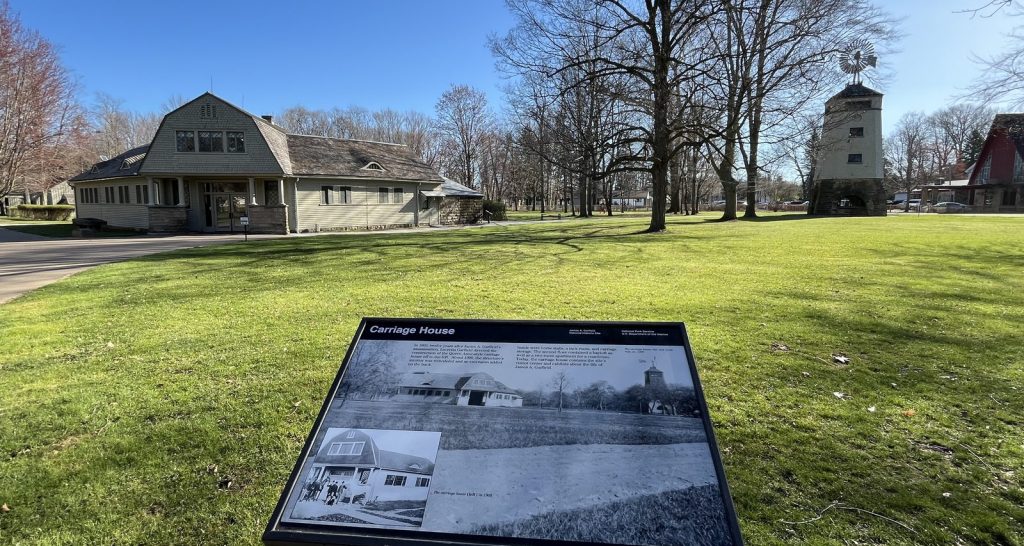
The Visitor Center and Carriage House Museum
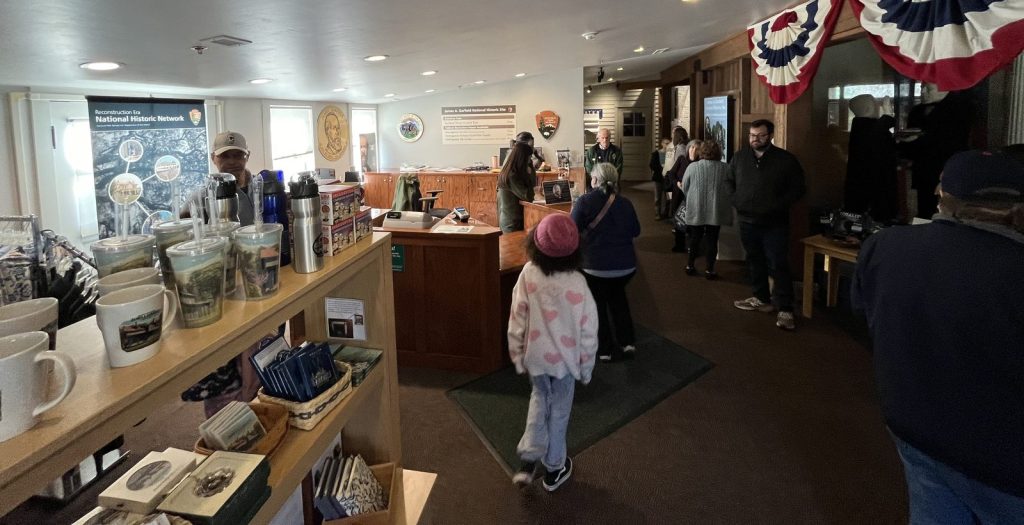
The visitor center is where you sign up for the tour and start getting oriented, which use to be the carriage house. There’s a good exhibit hall inside with display cases, a family photo wall, and a few standout artifacts — including a display case with archaeological finds from the property. One thing that caught my eye: a family photo anchored by the quote from a letter James wrote to Lucretia before he bought the farm: “So my darling you shall have a home and a cow.” Wow. What a romantic.
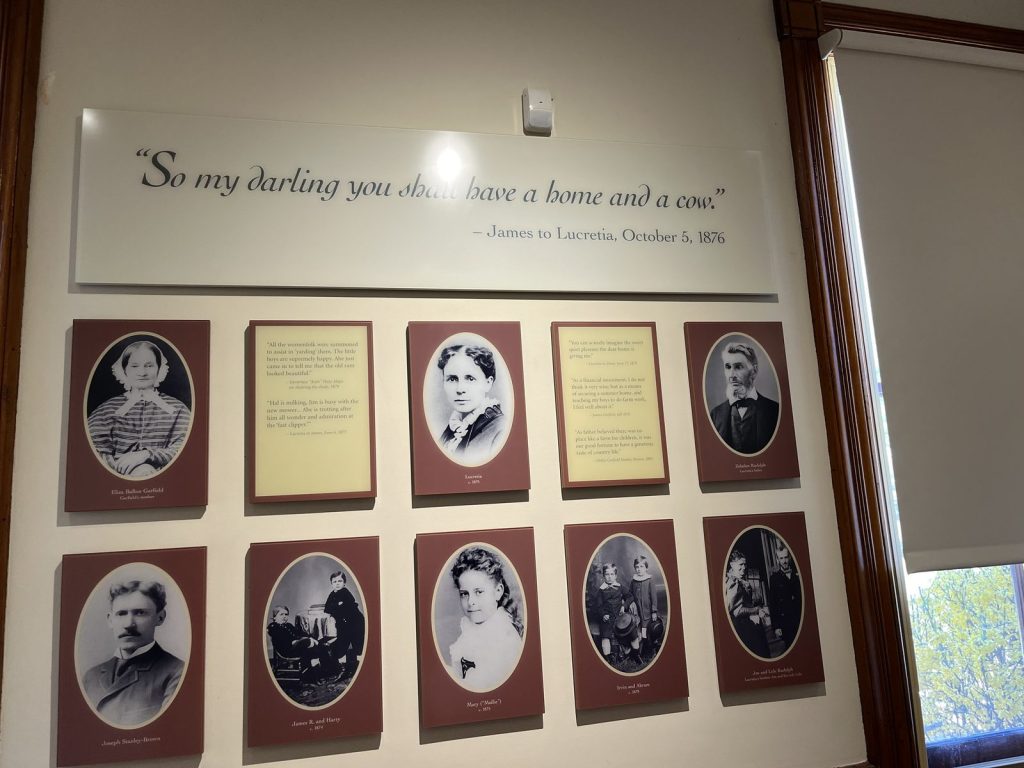
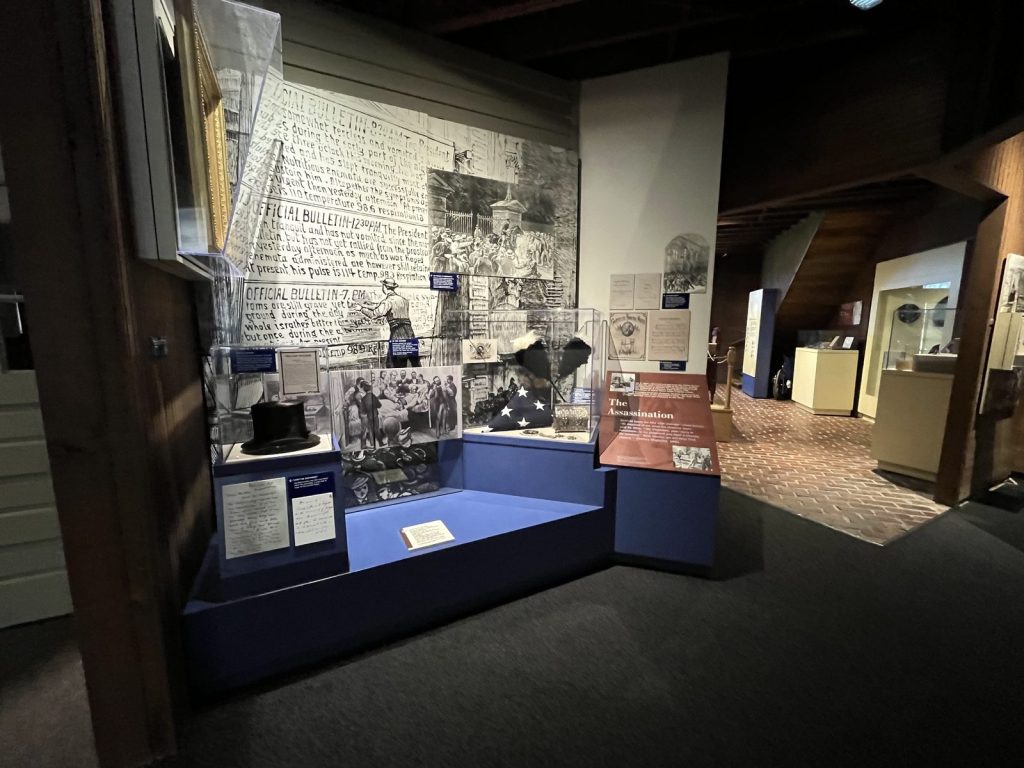
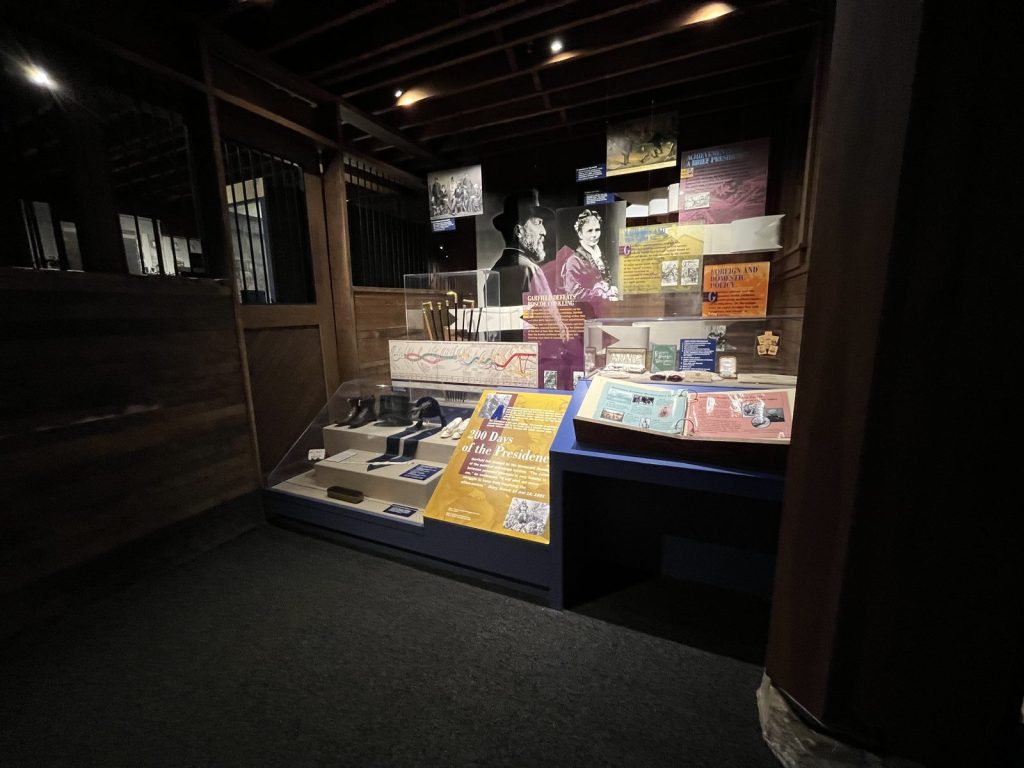
The carriage house connected to the visitor center holds the main museum. There are exhibits covering his Civil War service — he rose to Major General before resigning to take a congressional seat — his surprise nomination at the 1880 Republican National Convention, the Front Porch Campaign, and a thoughtful final section called “Whatever Became Of” that grapples honestly with why a man so widely mourned in 1881 became so obscure so quickly.
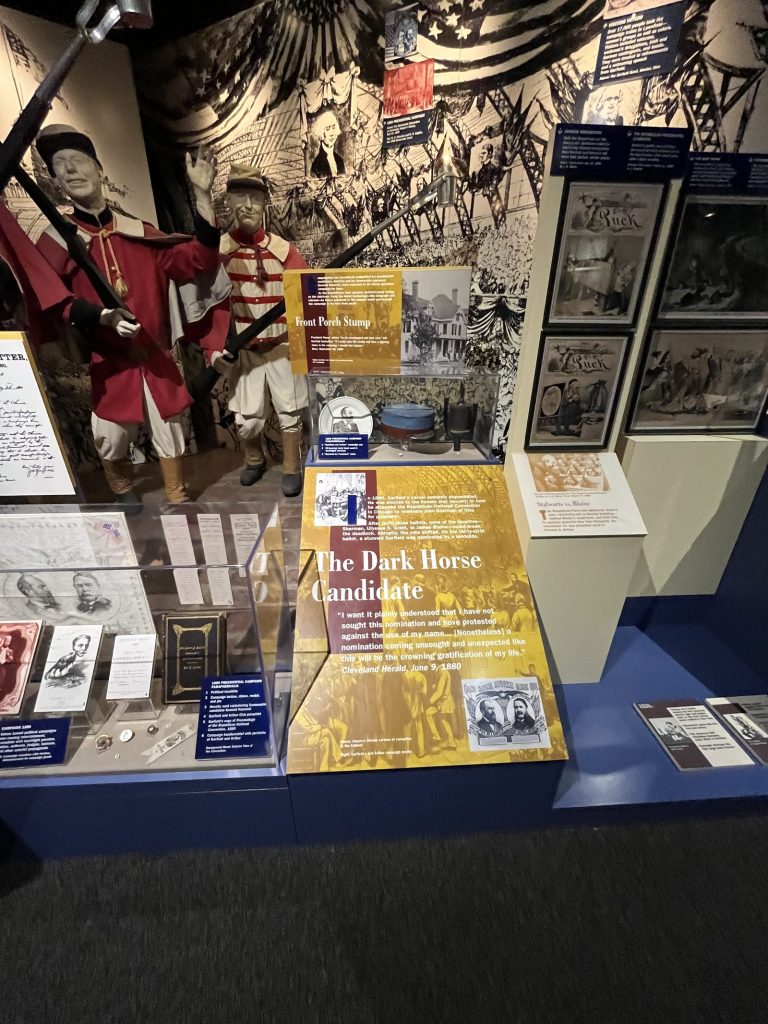
The Dark Horse exhibit is worth a read. Garfield went to Chicago in 1880 to place another candidate’s name for the nomination. He wasn’t trying to run for president. The convention deadlocked through 36 ballots, and on the 36th, the delegates turned to him. He didn’t seek it — he accepted it. Certainly not what happens now.
The Guided House Tour
So the guided tour is must do for the visit. It just adds so much to the context and understanding of the man. Walking through the home with a ranger who knows the stories behind every room is great.
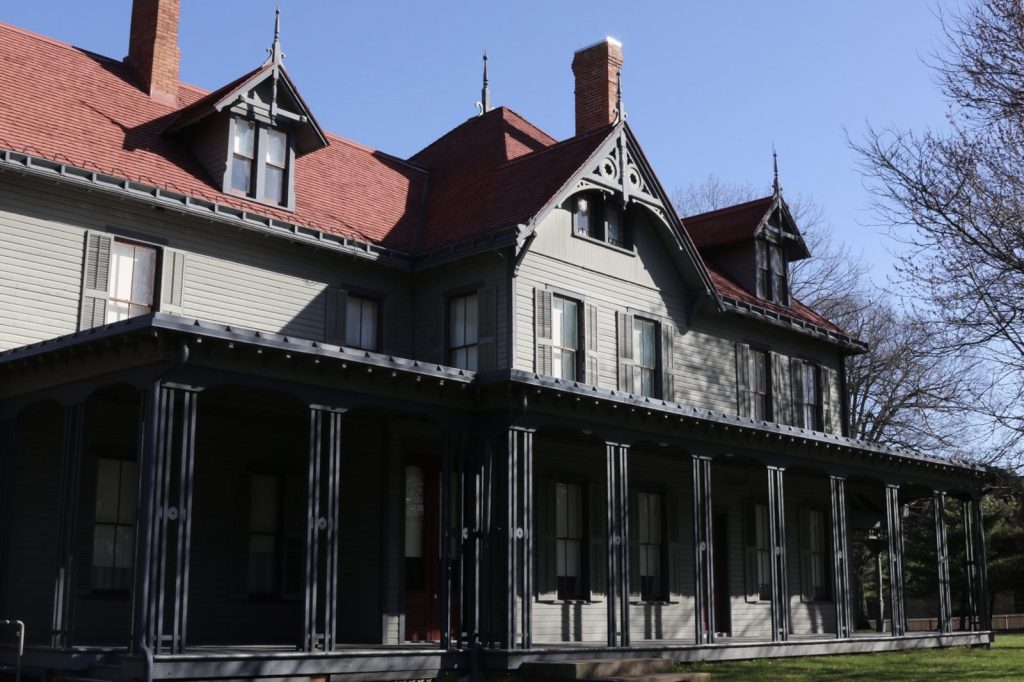
The front porch is the iconic view. This is where Garfield ran his entire presidential campaign — 17,000 visitors came to Lawnfield during the summer and fall of 1880, traveling by train to hear him speak from his own front steps. He didn’t barnstorm the country, which was just not how they did it at that time. It was considered ‘undignified’ and they look to local party organizations and newspapers campaign for them. But he allowed the country came to him. That porch isn’t just a nice architectural feature; it’s a piece of American political history.
Garfield had a Pro-Civil Rights stance. Amid waning Northern interest in Reconstruction, Garfield argued that former slaves must be protected by the vote and have a say in their government. On October 25, 1880, he told visiting African American veterans they were freed “to enjoy an equality of opportunity in the race of life” and should not be left to the mercy of their former masters
Inside, the tour moves through the parlor, dining room, study, reception hall, and up to the bedrooms on the second floor. The dining room stained glass windows are beautiful.
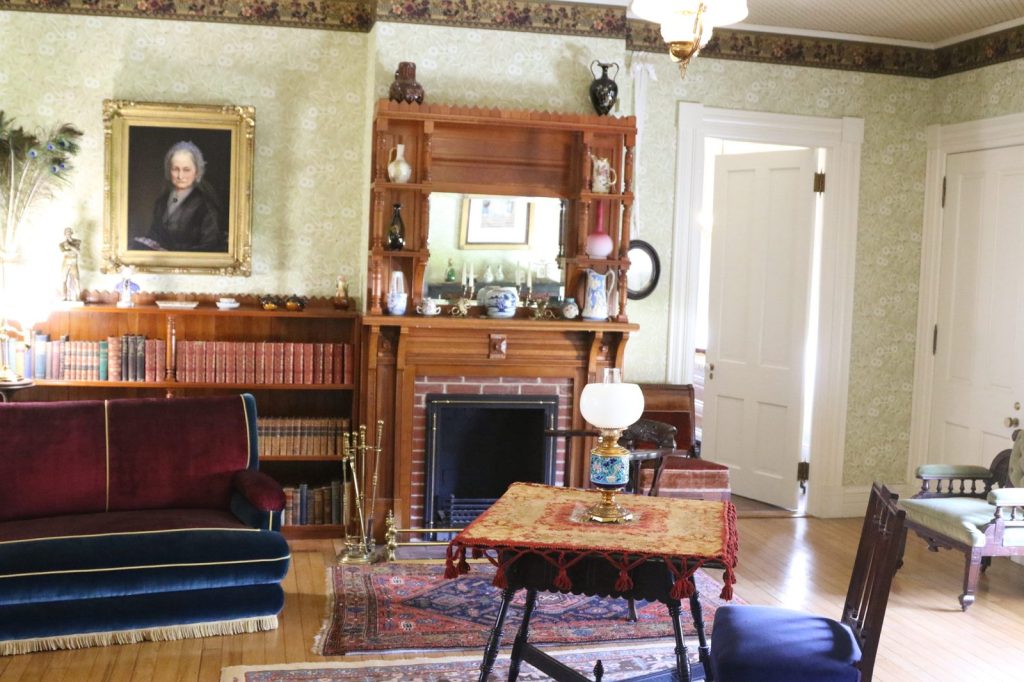
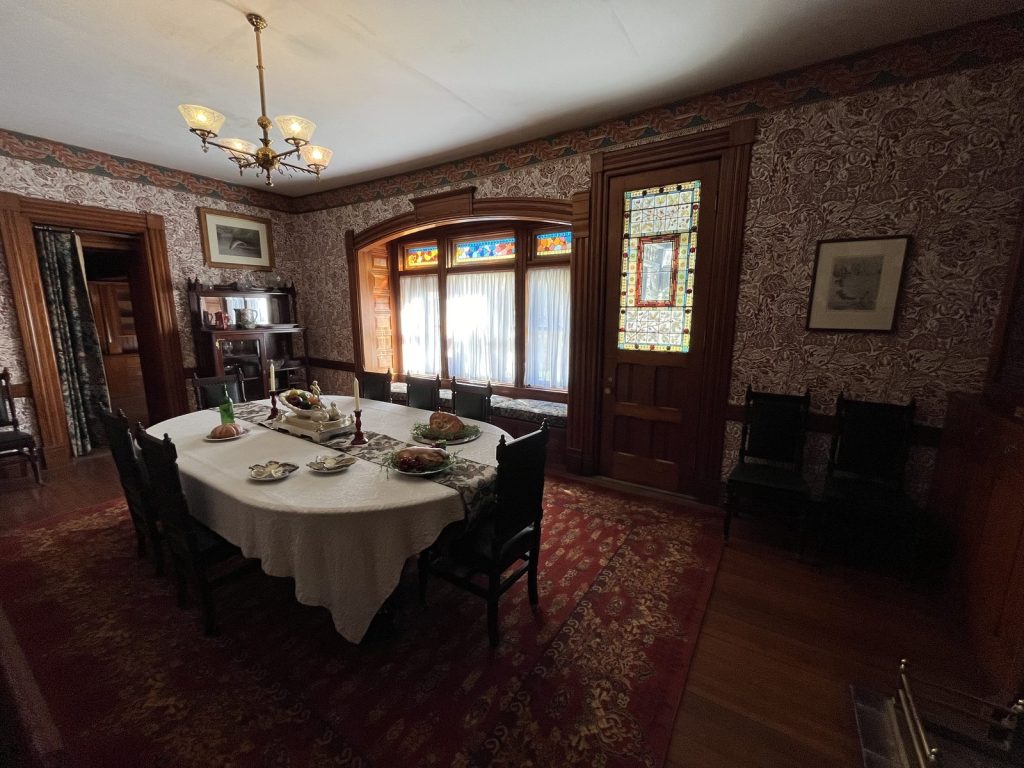
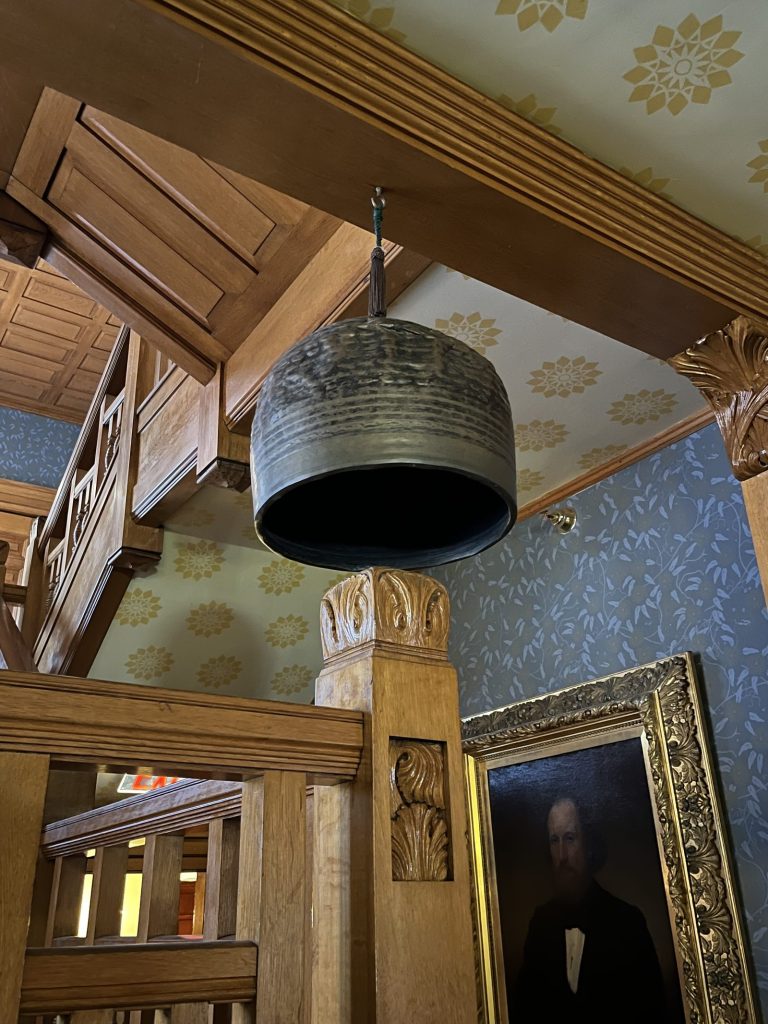
Then there’s the bell. A large bronze bell hangs in the stair hall, and its significance is explained on the tour. They used this to call people for dinner.
The Library
The memorial library wing is the single best room in the house. Lucretia Garfield had it built after her husband’s death to house his papers and books — making it one of the first presidential libraries in the country. She even had a safe door built to protect his papers.
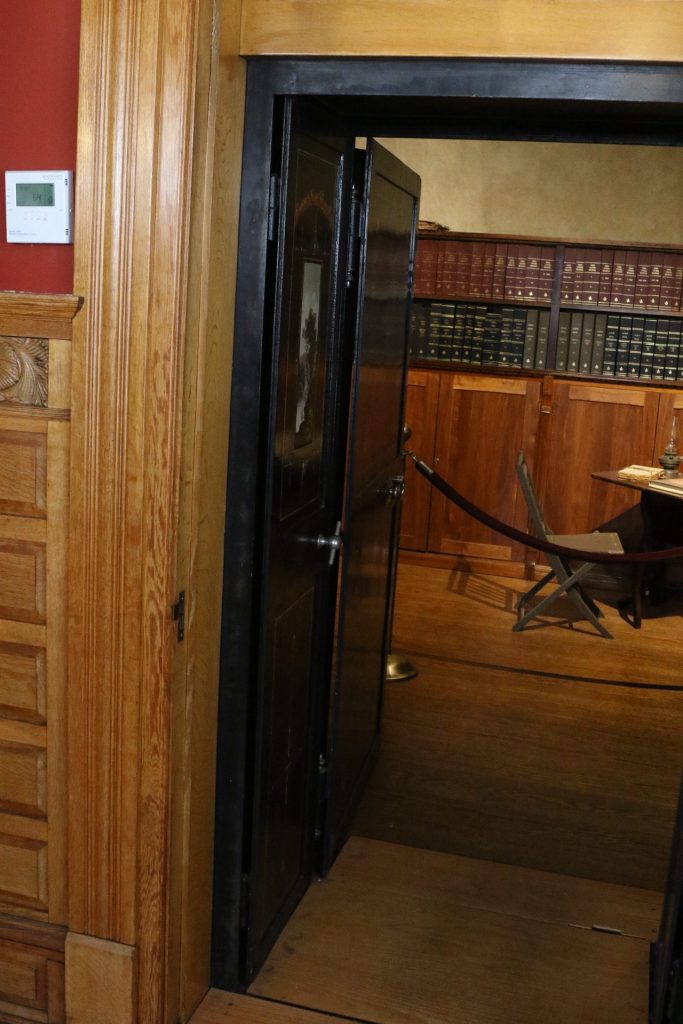
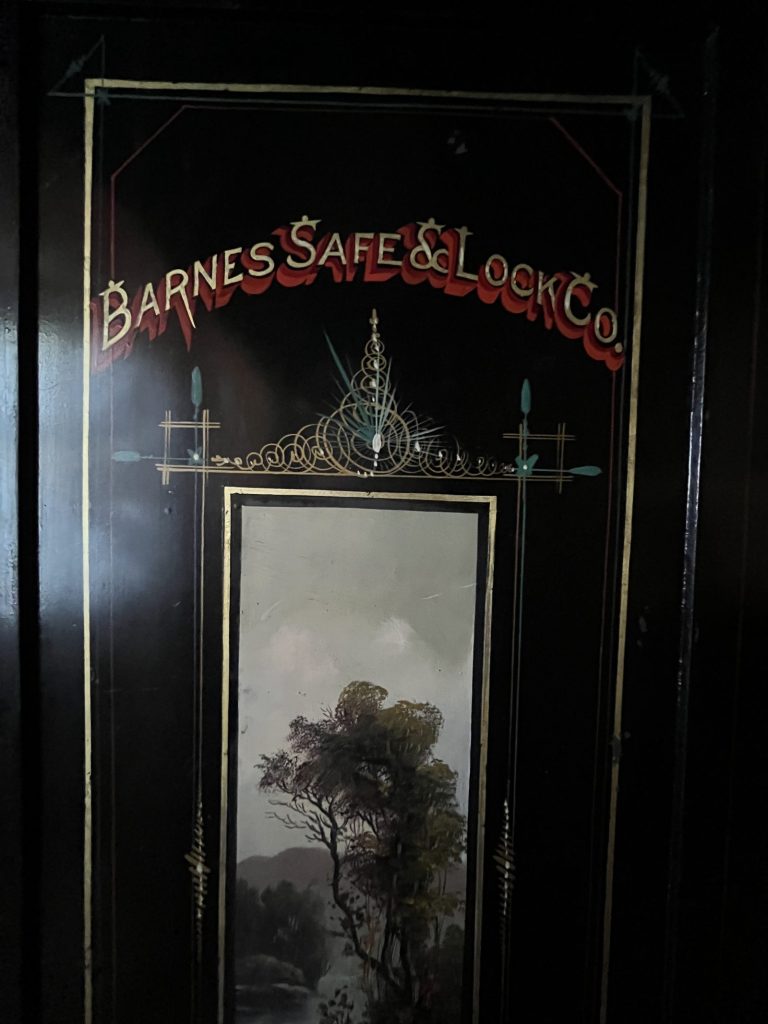
Through the safe door, the room opens into floor-to-ceiling glass-front bookcases, a rolltop desk with a portrait of Garfield (not the cat) above it, a library table with books and a marble bust, and a piano — because the Garfields were a musical family and the library doubled as a music room.
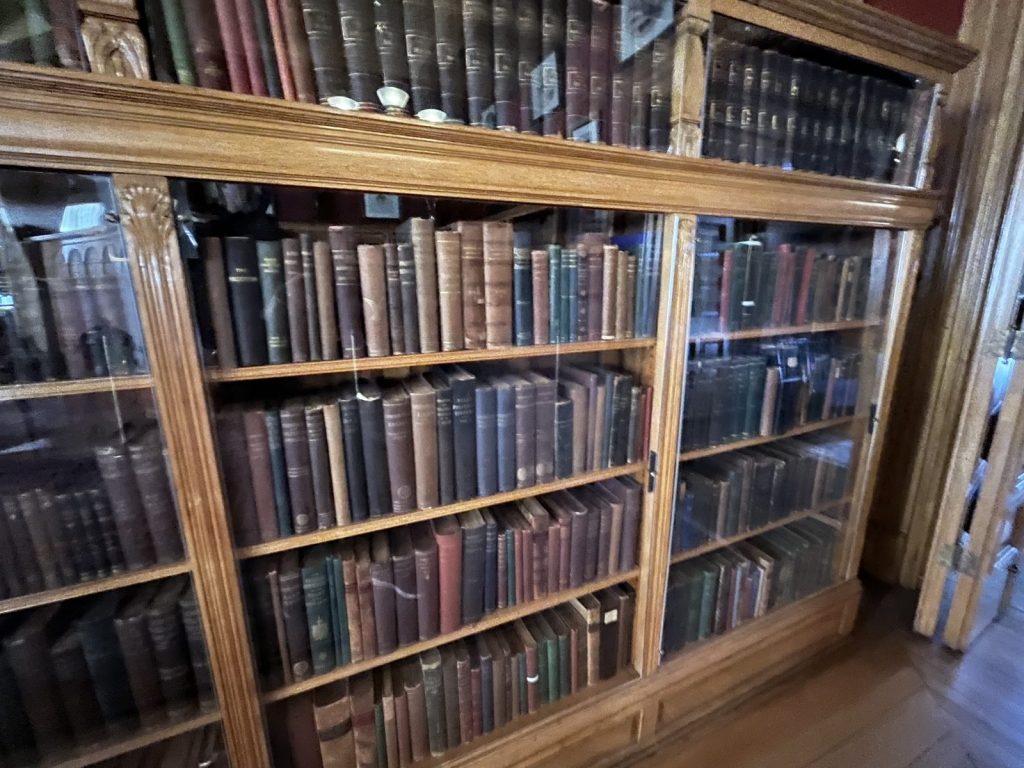
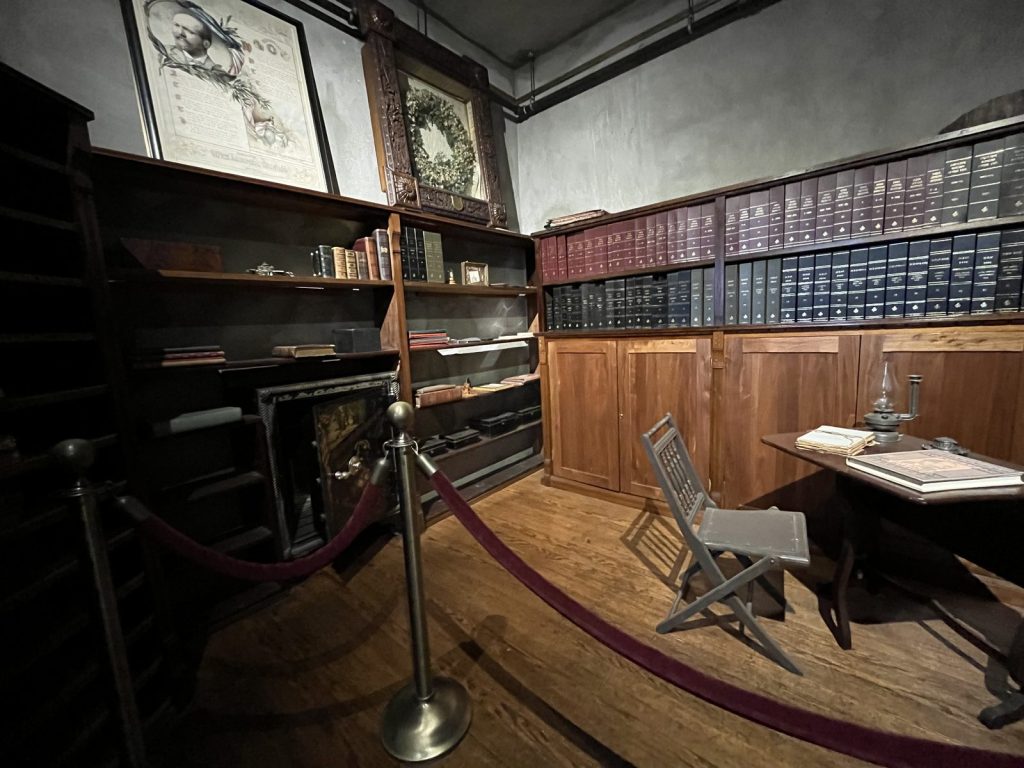
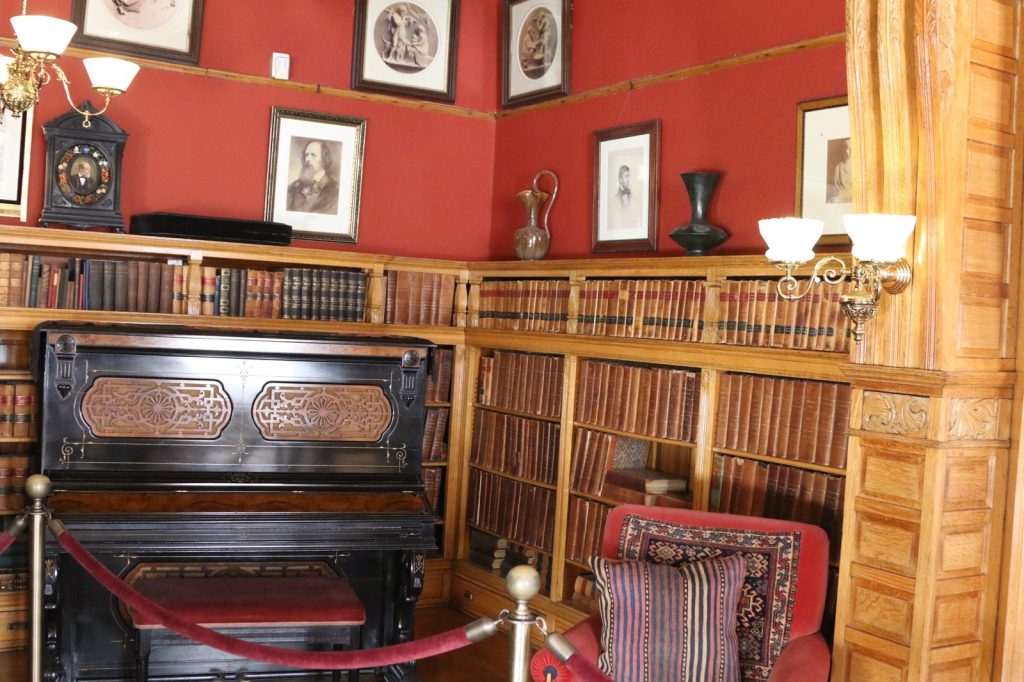
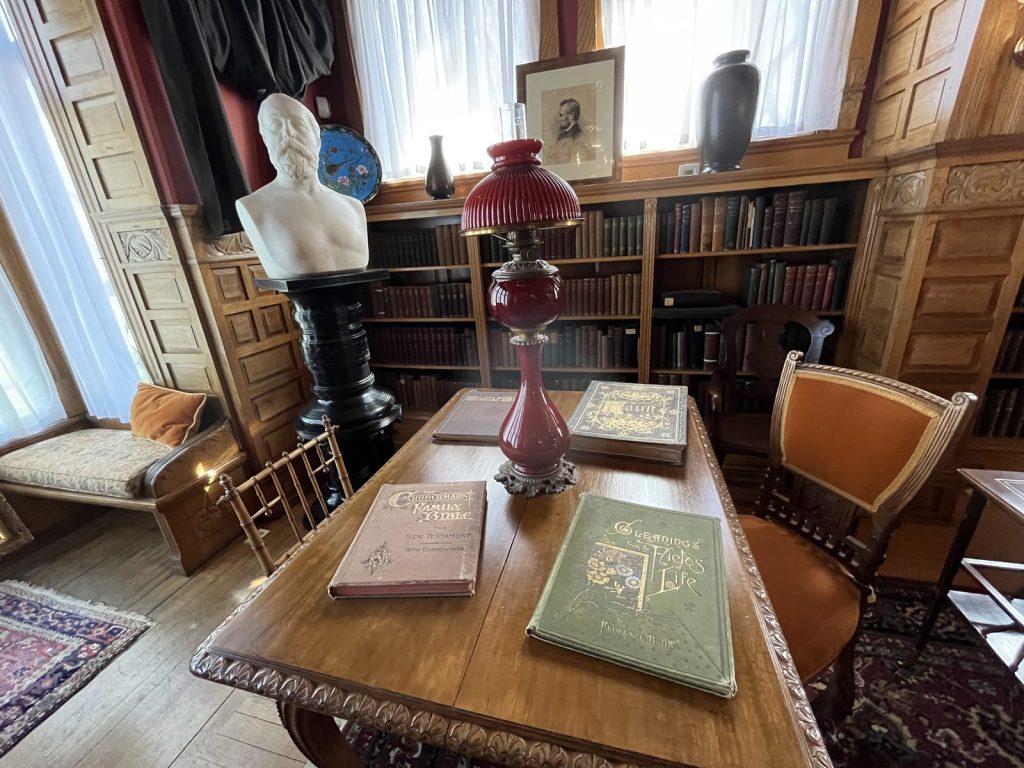
The man read constantly. He wrote constantly. Seeing the physical evidence of that — the full shelves, the desk worn in at the edges — I found myself wishing our current ‘statesmen’ had the same habit.
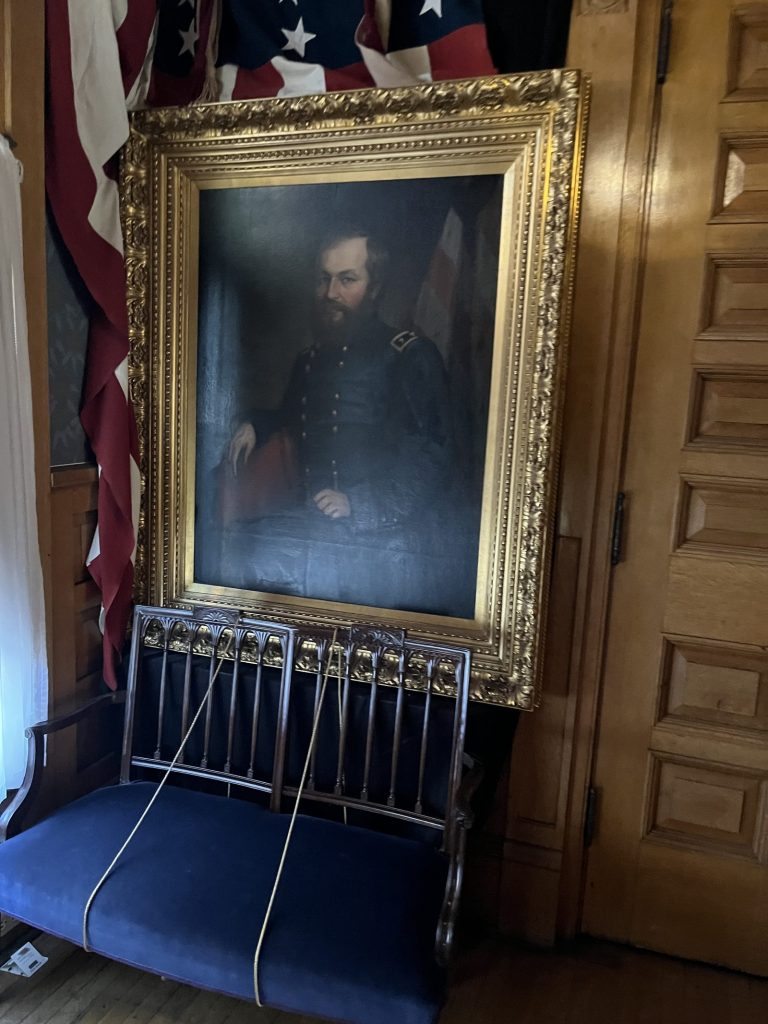
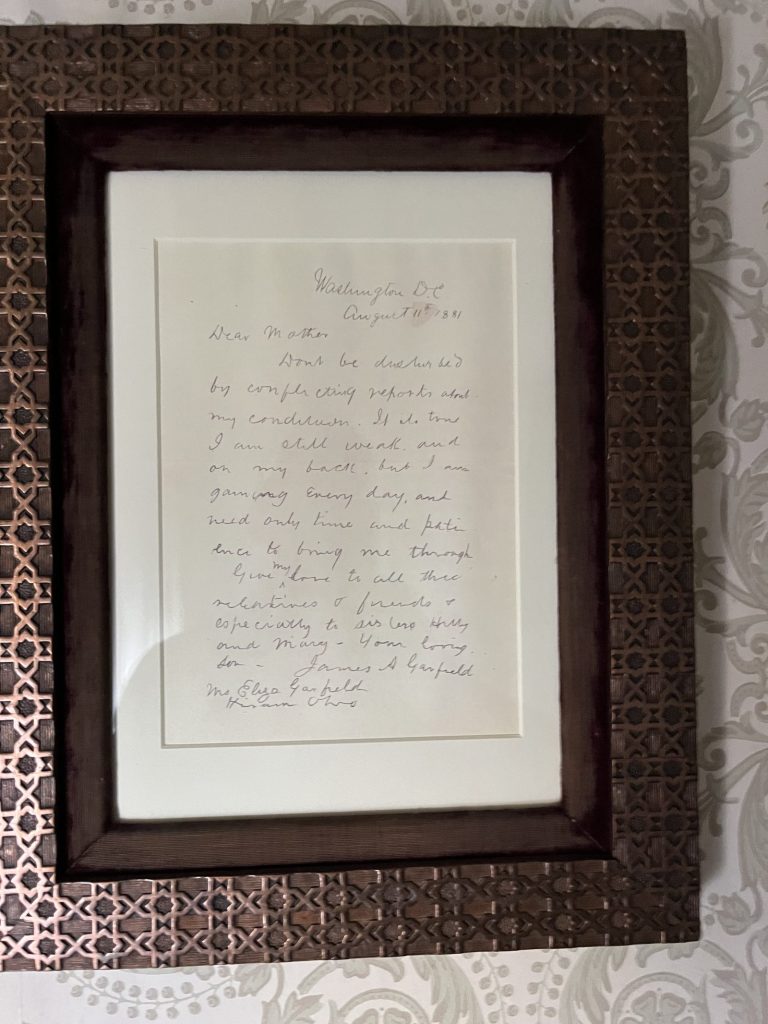
Also on display in the house: a framed letter Garfield wrote from Washington on August 11, 1881, reassuring his mother that he was gaining strength each day after the assassination attempt. He died five weeks later.
The Assassination — Wait, what happened?
On July 2, 1881 — just four months into his presidency — Garfield was shot at a Washington train station by a man named Charles Guiteau. Guiteau wasn’t a conspirator or a political enemy. He was an office seeker who believed his campaign work had put Garfield in the White House and felt owed a diplomatic post in Europe. When the administration repeatedly turned him down, he bought a revolver.
The bullet wound was serious but survivable. What Garfield died from — 79 days after the shooting — was sepsis caused largely by his own doctors. They probed the wound repeatedly with unsterilized instruments, punctured his liver searching for the bullet, and ignored the antiseptic practices that were already standard in Europe at the time. Medical historians now believe the bullet would have been survivable had it been left alone. The doctors killed him more than Guiteau did.
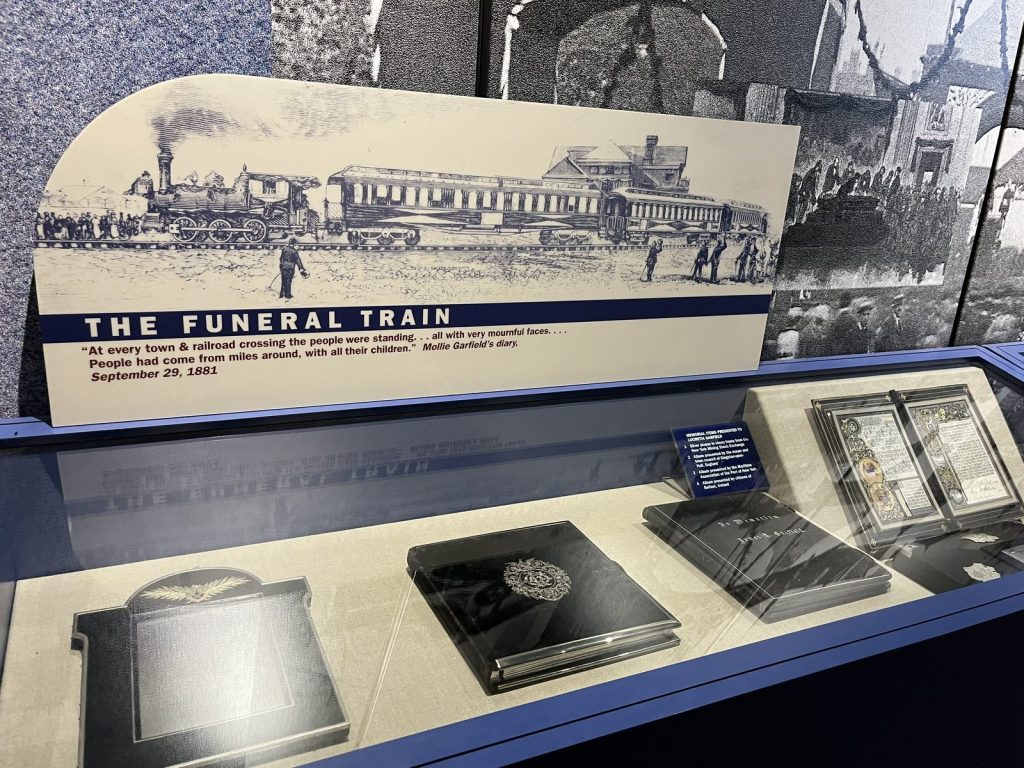
He died on September 19, 1881. He was 49 years old. Guiteau was executed the following year.
The Sign
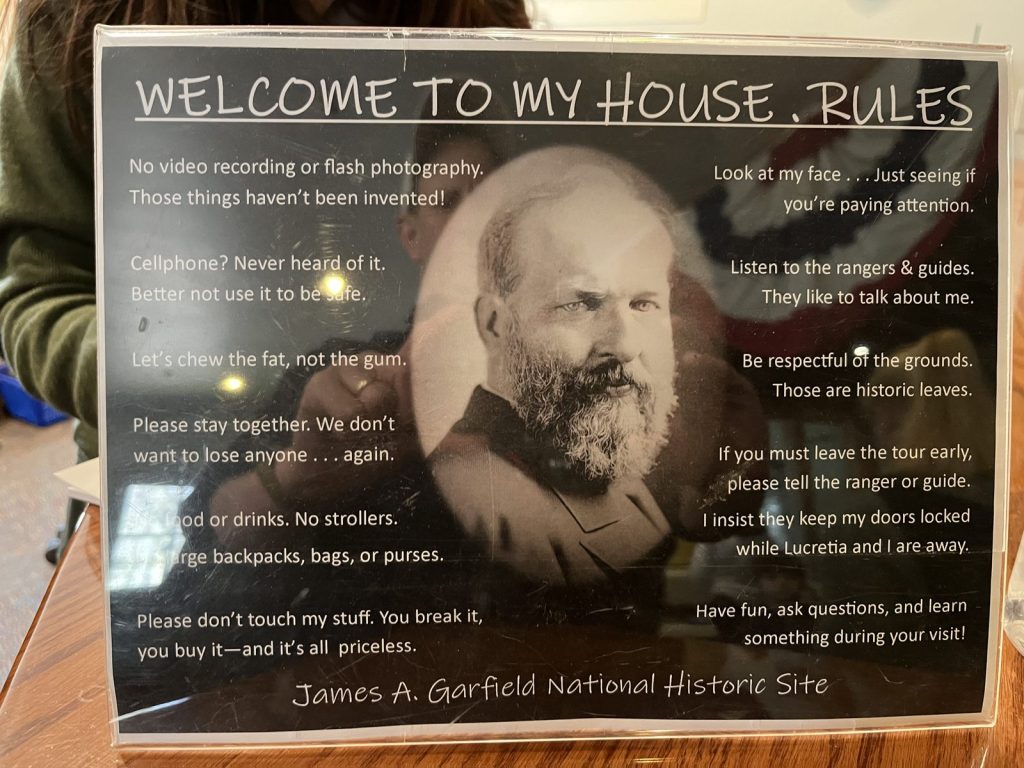
Before the house tour starts, there’s a sign at the Visitor written as a cheeky set of house rules for visitors. Someone on the ranger staff must have had fun making it.
Getting Your Passport Stamps at Garfield NHS
NPS Passport stamps (two) are available at the main desk in the center of the visitor center. The standard James A. Garfield NHS cancellation stamp is there, and — lesser known — is the Underground Railroad Freedom Network cancellation stamp. Both were available at the same desk.
For the full guide to the passport stamp program, head to my National Park Passport Stamps: The Ultimate Guide.
Planning Your Visit — Quick Facts
- Address: 8095 Mentor Ave, Mentor, OH 44060
- Visitor center hours: Opens at 10:00am — check NPS.gov for current seasonal hours
- Entrance fee: Free
- Parking: Free, flat lot adjacent to the visitor center
- Time needed: 1.5–2 hours — grounds + visitor center + house tour
- Accessibility: Flat site, easy walking — some Victorian staircases inside the house
- Tip: Arrive at 10:00am when the visitor center opens to secure a spot on the first tour.
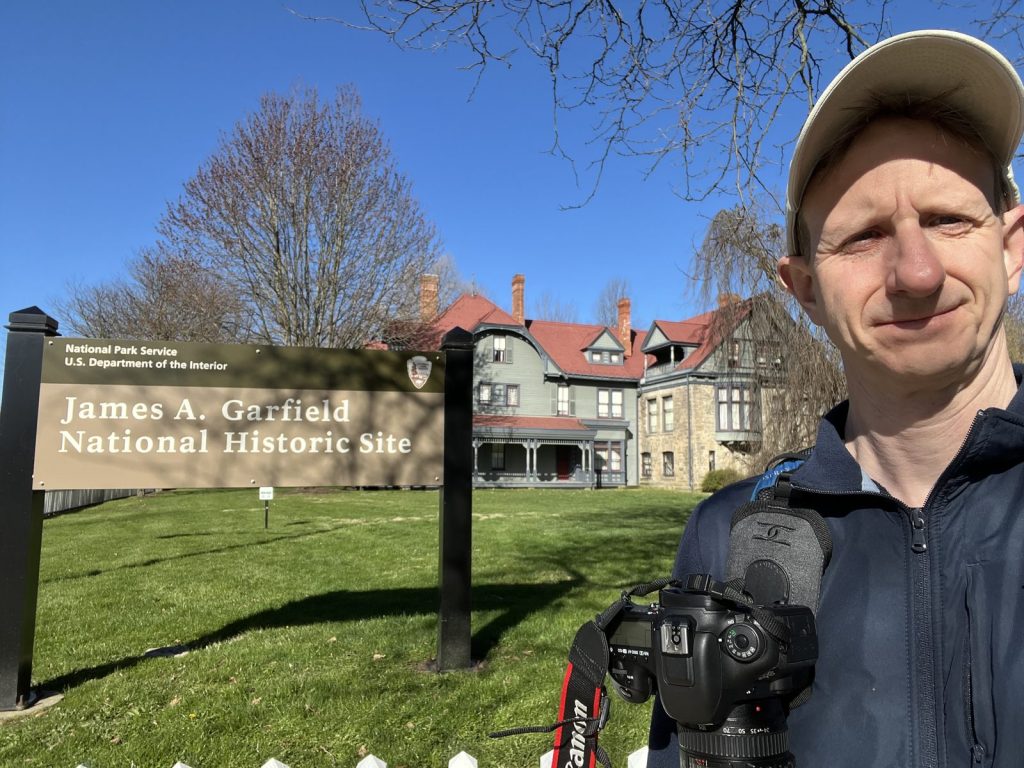
If you’re building an Ohio NPS itinerary, Garfield NHS sits close by to other sites in the state. For a full overview of what Ohio has to offer, my Ohio National Parks guide covers the complete picture. Fellow Ohio president William Howard Taft has his own NHS in Cincinnati — if you’re interested in presidential historic sites, Taft NHS is worth the stop. And if the Civil War and Buffalo Soldiers connection interests you, Charles Young Buffalo Soldiers National Monument in Wilberforce is another Ohio site with deep military history.
Is James A. Garfield NHS Worth the Stop?
Of course! It has a Bell, a Windmill, a long porch, cool house and a load of interesting history.
Garfield normally just gets a footnote in American history — the president who got shot. This site frame his contributions and live really well. A self-made farmer’s son who taught himself Greek and Latin, commanded troops in the Civil War, served nine terms in Congress, accepted a presidential nomination he didn’t seek, won, and was unfortunately killed less than a year later. The library alone is worth the visit.
Make sure to sign up for the tour. Spend some time in that library. And if you’re standing there wishing more of our current leaders read as much as this man did, you’re not alone.
Frequently Asked Questions
Where is James A. Garfield National Historic Site?
James A. Garfield National Historic Site is located at 8095 Mentor Ave in Mentor, Ohio — about 25 miles northeast of Cleveland. It preserves Lawnfield, the Garfield family home, along with the carriage house museum, outbuildings, and farm grounds. And is an overall pleasant place to visit.
Is James A. Garfield NHS free?
Yes, admission is completely free. No entrance fee, no parking fee.
Do you need a reservation for the house tour at Garfield NHS?
No reservation needed — tours are first come, first served. Arrive when the visitor center opens at 10:00am to sign up.
How many passport stamps can you get at James A. Garfield NHS?
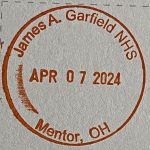
Two: the James A. Garfield NHS cancellation stamp and an Underground Railroad Freedom Network stamp. Both at the visitor center front desk.
How long does a visit to James A. Garfield NHS take?
Plan for 1.5 to 2 hours — grounds time, the carriage house museum, and the guided house tour.
Is the house tour at Garfield NHS guided or self-guided?
Guided. A ranger leads the tour and provides the full historical context for each room and about the man. Significantly better than self-guided tour that is around the property.
What is Lawnfield?
Lawnfield is the Garfield family estate in Mentor, Ohio — the farm Garfield purchased in 1876 and where he conducted his famous 1880 Front Porch Campaign. After his assassination, Lucretia Garfield lived there for 36 more years and built the memorial library wing to preserve his papers and books. One might call it the first presidential library.
Why do you think of a cartoon cat before a President when someone mentions Garfield?

Garfield served only 200 days as president before dying from complications following an assassination attempt in 1881. His brief presidency left a smaller historical footprint than a full term. Garfield the cat was the most widely syndicated comic strip, with 2 theatrical films, 13 TV specials, 2 animate shows with over 200 episodes and over 5,000 products licensed in 111 countries. So there is that.
