
Gulf Islands National Seashore Visitor Center: Davis Bayou Guide

The Gulf Islands National Seashore visitor center wasn’t what I expected when I pulled in on a gray December morning. I snuck away during a family trip for this morning excursion to check the place out quickly and pick up some passport stamps — but I didn’t that I would spend a solid chunk of time talking to a ranger about the fascinating history of the park and walk around the lovely visitor center.
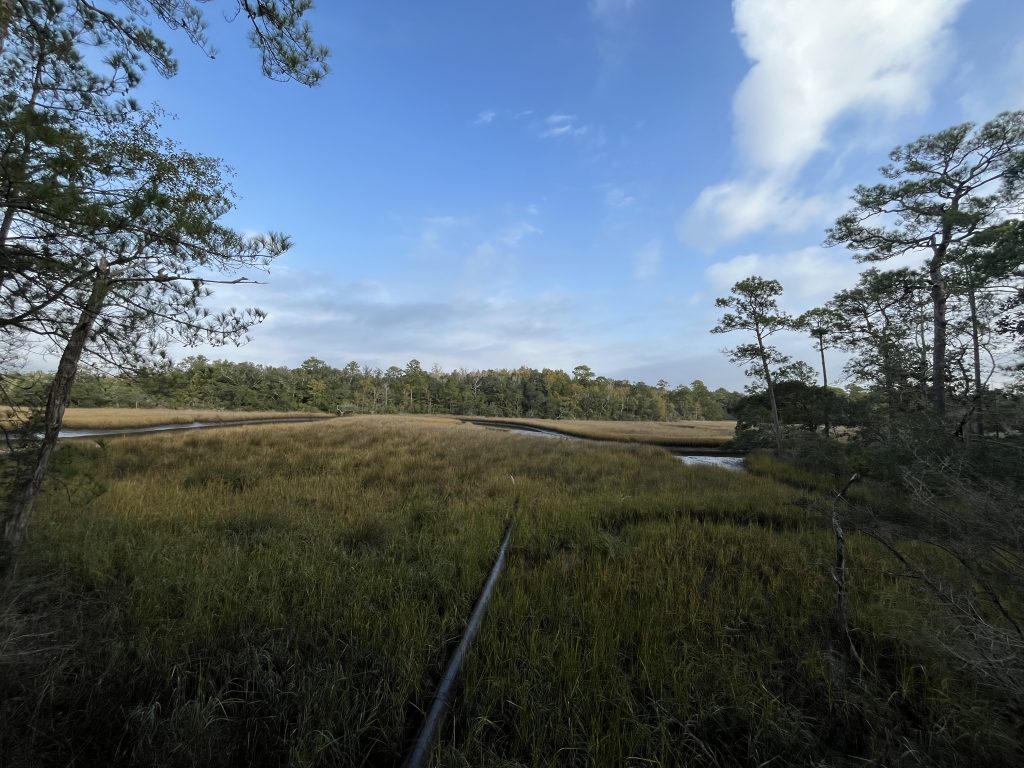
Gulf Islands National Seashore is not dramatic in the way of Yellowstone or the Grand Canyon. But there’s a quiet beauty to the bayou, a richness to the history, and they have stamps! If you’re planning a visit, here’s what you need to know.
Where Exactly Is the Davis Bayou Area?
Gulf Islands National Seashore is a two-state park — Florida and Mississippi — protecting a stretch of barrier islands, Gulf beaches, historic forts, and coastal ecosystems along the northern Gulf of Mexico.
Mississippi Areas
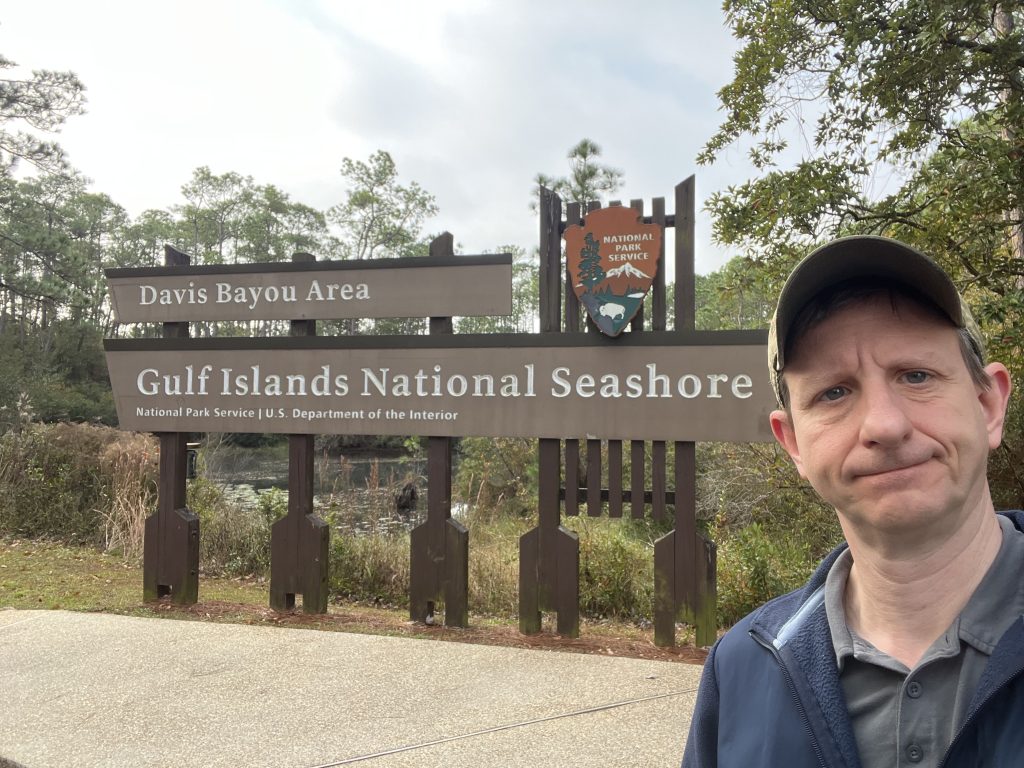
The Davis Bayou Area sits on the Mississippi side, right in Ocean Springs, just east of Biloxi. The address is 3500 Park Rd, Ocean Springs, MS 39564 — easy to find with GPS.
This is where you’ll find the William M. Colmer Visitor Center, the main Mississippi hub for the park. It’s also the area with the campground, fishing pier, boat launch, and several miles of trails and boardwalks. If you’re planning to explore the Mississippi district, this is your starting point.
This post focuses on the Mississippi side at Davis Bayou, which is the more accessible entry point for most visitors.
Florida Areas
The Florida district of the park — centered around the Pensacola area — has its own set of locations, including Fort Pickens on Santa Rosa Island and several Gulf beach areas.
There’s also Fort Barrancas, a well-preserved 19th-century masonry fort with its own visitor center and passport stamp. The catch: Fort Barrancas sits on the grounds of Naval Air Station Pensacola, an active military installation. Access requires a 100% ID check at the base gate, and the visitor center and fort are only open on select Fridays and Saturdays throughout the year — so if want to go, check the NPS site for current dates before making the trip.
The William Colmer Visitor Center
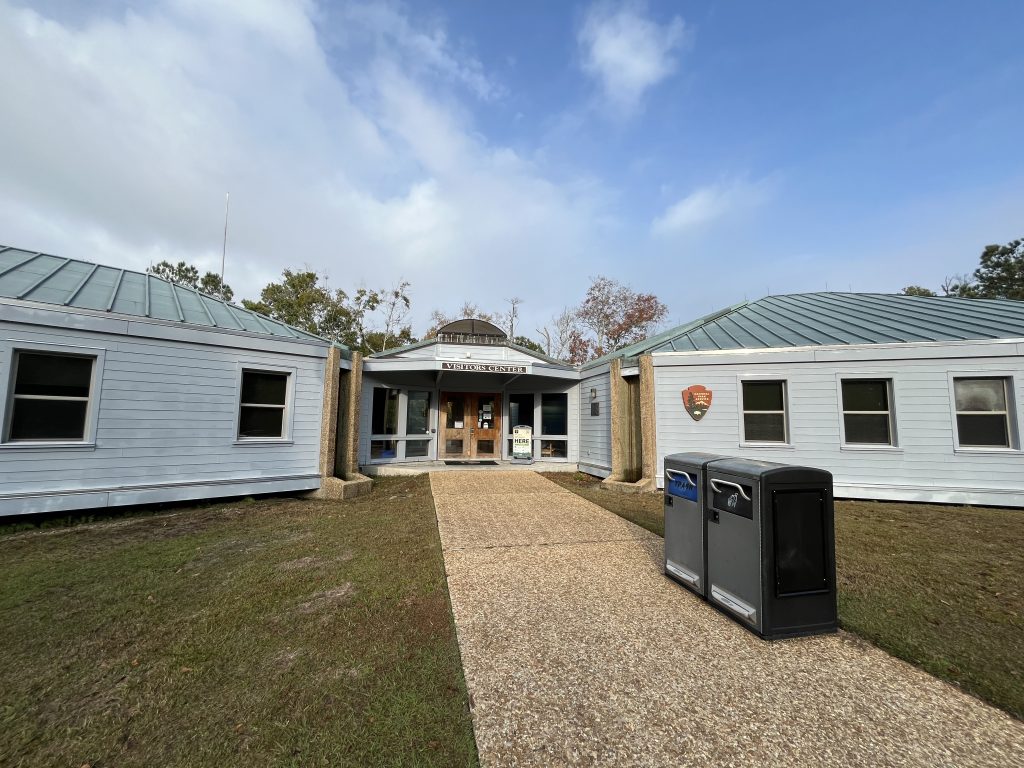
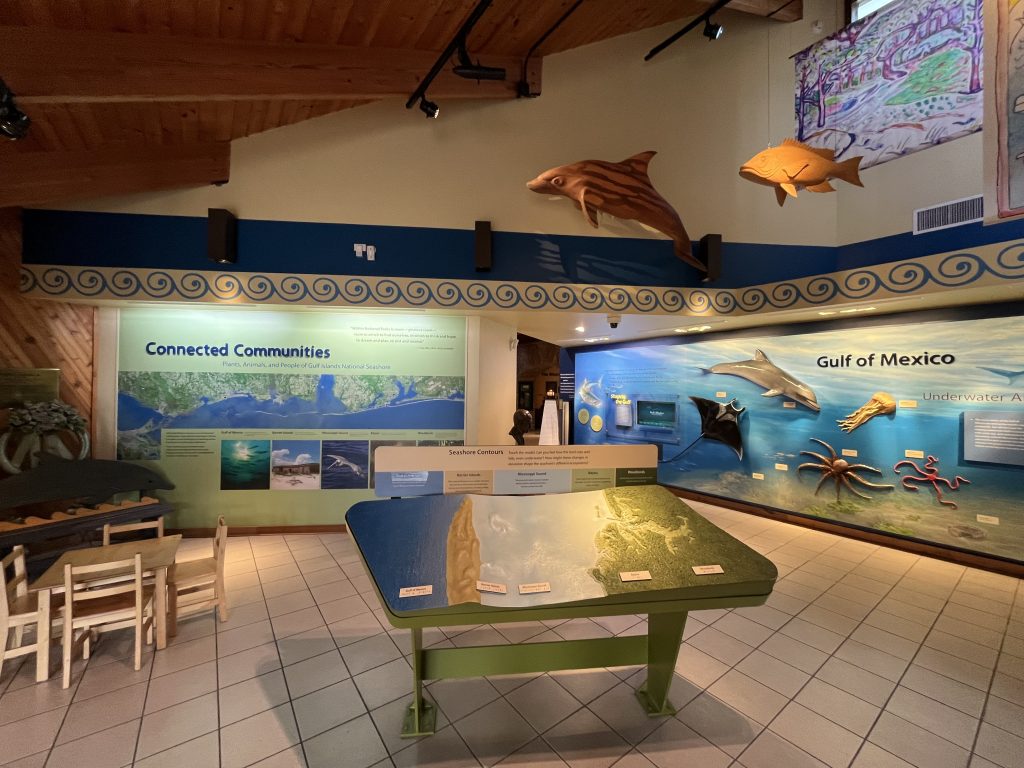
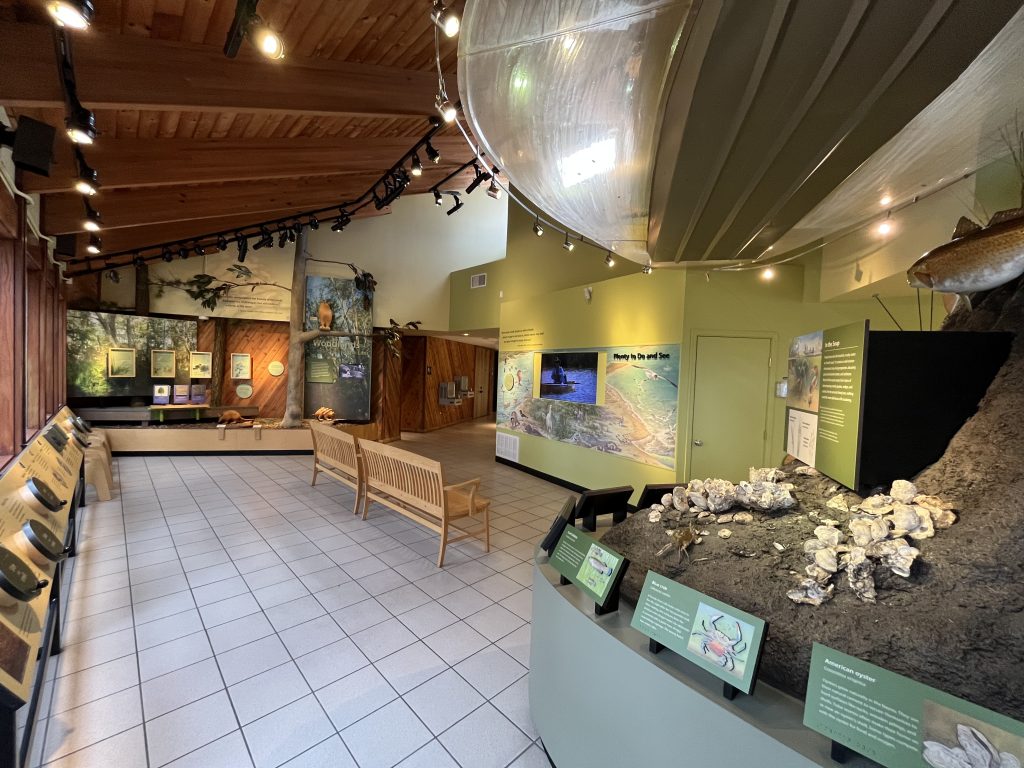
From the parking lot, the William M. Colmer Visitor Center looks modest — a low, light-blue building with a metal roof and the NPS arrowhead on the wall. Don’t let that fool you. Step inside and the space opens up into a genuinely impressive set of exhibits that cover just about every dimension of what makes this park special.
The centerpiece is hard to miss: a large Gulf of Mexico underwater display with sculpted sea life — sharks, rays, sea turtles — mounted in a dramatic diorama that stretches across one entire wall. Above it, hanging from the ceiling, are colorful banners and wooden fish!
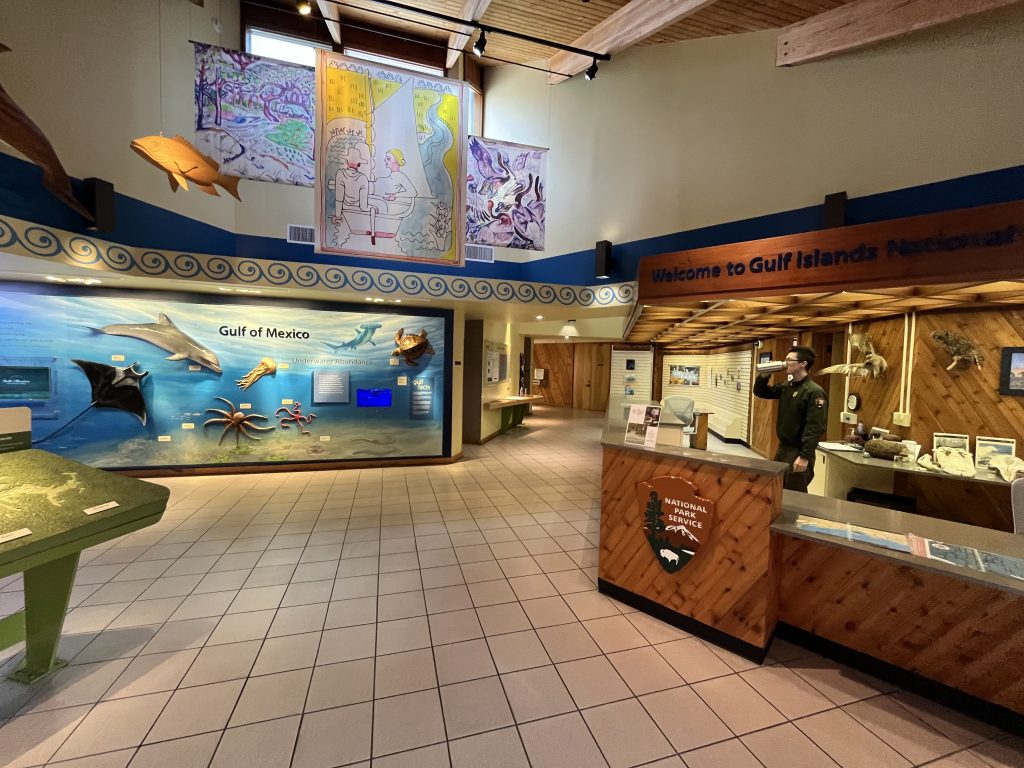
The exhibits branch out into different areas:
- Barrier Islands: Shape Shifters — a deep dive into how these constantly moving barrier islands form, shift, and protect the mainland.
- The Bayou: Fresh and Salt Water Mix — the ecology of the bayou system, with an interactive display on fishing and the people who depend on these waters.
- Why Tides? — a large rotating model explaining tidal forces. Simple, but effective.
- Fort Massachusetts — the history of the Civil War-era fort on Ship Island, including its role as a Union stronghold and prisoner-of-war facility.
- War Dog Reception and Training Center — this one stopped me in my tracks. During World War II, Cat Island (one of the barrier islands) was used to train war dogs. There’s a whole section on the program and the “Dogs of Cat Island” — an unexpected piece of history I hadn’t encountered before.
- Lens on Lighthouses — the lighthouse history of the Gulf Coast, including actual lighthouse lens artifacts.
A Bifurcated Park
One of the things I love most about visiting national parks is talking to the rangers. They know things and they’re almost always happy to talk.
I got into a great conversation about how Gulf Islands National Seashore came to be — and specifically, about the gap in the middle. If you look at a map of the park, you’ll notice something odd: it stretches 160 miles from Cat island in Mississippi to Santa Rosa Island in Florida, but Alabama — which sits right between them — is absent from the park. Why?
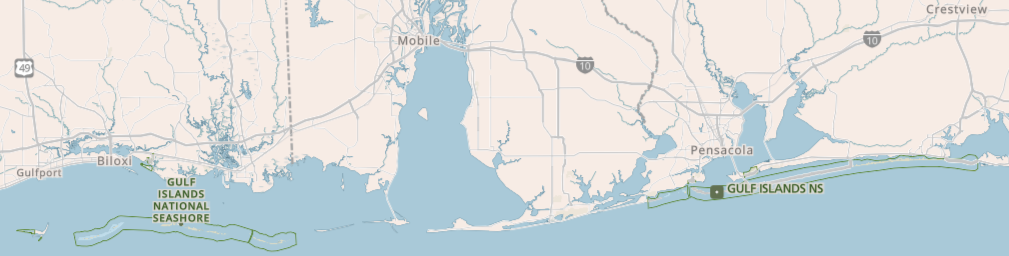
The short answer is complicated, but development played a role. When the effort to establish the national seashore was moving forward in the late 1960s and early 1970s, Alabama’s coastline wasn’t included. The ranger I spoke with pointed to real estate and development interests as a major factor — and the broader context supports that.
Post-war population growth and urbanization along the entire Gulf Coast were rapidly converting undeveloped barrier islands into resorts and infrastructure, and that pressure was especially strong in Alabama. Whatever combination of political dynamics, land ownership questions, and development opposition kept Alabama out, the result is what you see today: a park with a conspicuous gap running right through the middle of it.
Interestingly, the National Park Service itself still describes the seashore as stretching along the coasts of Mississippi, Alabama, and Florida — acknowledging the geography even though no Alabama land made it into the park. The contrast is still visible from the water or from the air: the undeveloped barrier island landscapes of the national seashore on either side, and the developed Alabama shoreline in between.
The Trails and Boardwalks
Before going into the visitor center, I walked around the patio and boardwalk around the visitor center that looked out over Davis Bayou — and also walked out to the pier and around the picnic area, and there was quiet beauty to the whole scene.
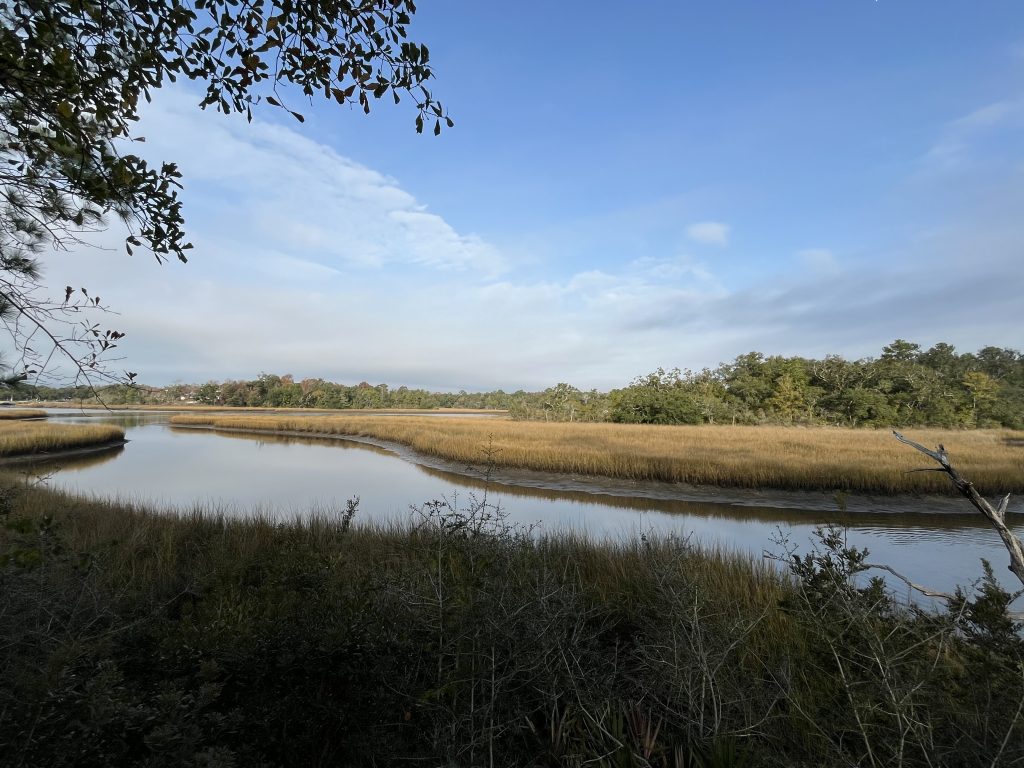
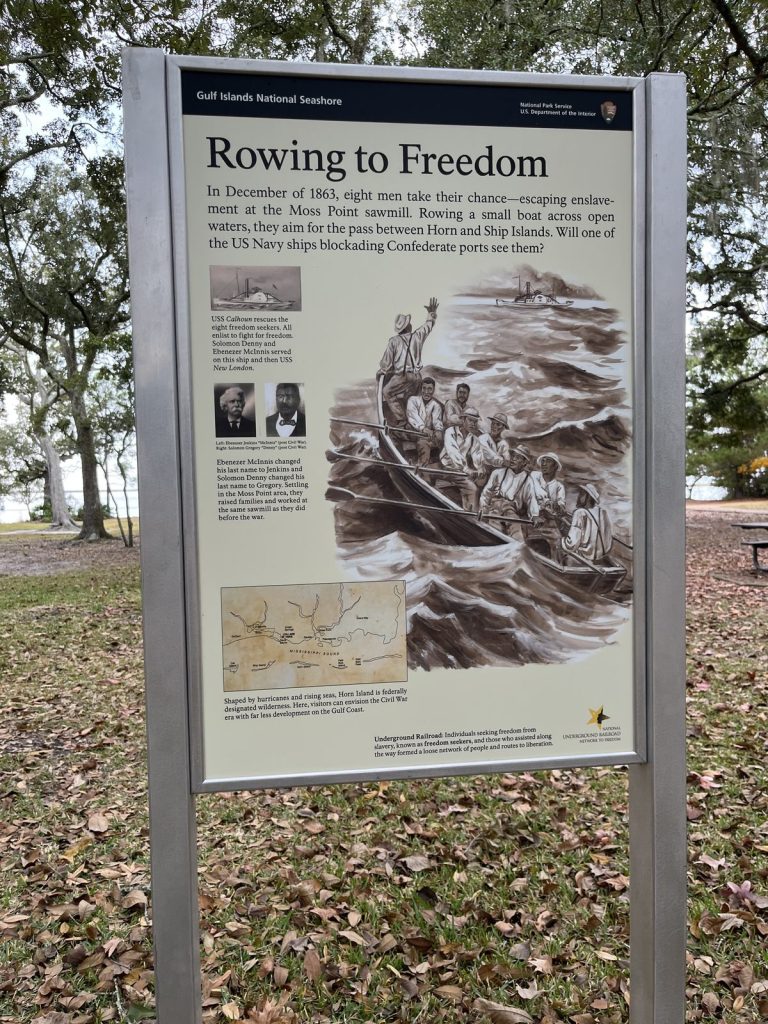
The trail system isn’t long, but it’s scenic and peaceful. There are interpretive signs along the way covering the ecology of the area — the salt marsh, the pine flatwoods, the species that depend on these habitats. One of the signs near the picnic area I came across was a “Rowing to Freedom” marker, connected to the Network to Freedom program and the history of enslaved people who sought freedom through these waterways.
What About the Ferry to the Barrier Islands?
This is one of the most common questions about Gulf Islands National Seashore, and it’s worth addressing directly: the ferry to the barrier islands does not depart from the visitor center.
I visited in December, which is off-season, so the ferry wasn’t running regardless. But even if it had been, this isn’t the departure point. The ferry that takes visitors out to Ship Island (where Fort Massachusetts is located) departs from a separate location — Gulfport, Mississippi.
If you’re specifically planning to visit the outer islands, you’ll need to check the NPS website or contact the park for current ferry schedules (usually running from Mid-March to October) and departure logistics, as seasonal availability applies.
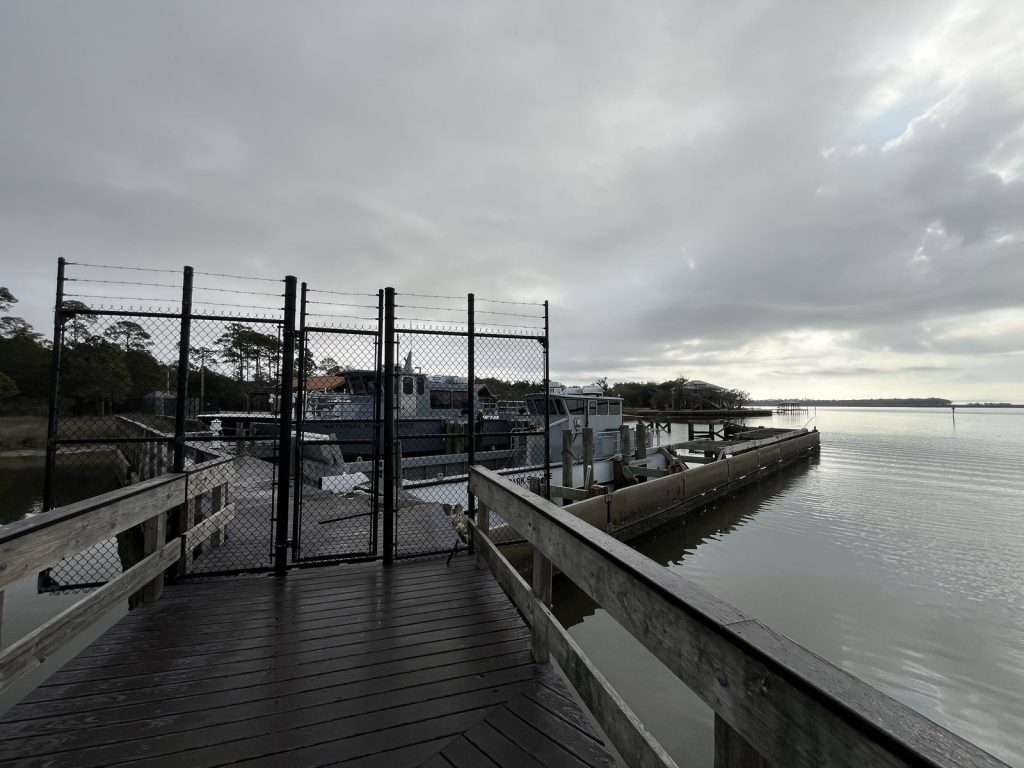
While note as exciting as a beach day in summer, visiting here on the off-season was still nice. Low crowds, and pleasant views.
A Note on a Nearby Stop That Didn’t Work Out
On my way in or out of the area, I also swung by the Gulf Coast Research Laboratory (GCRL) Marine Education Center, part of the University of Southern Mississippi. This facility focuses on marine science education and public outreach, and it has a bonus passport stamp. Unfortunately, the campus was closed when I arrived. Oh well.
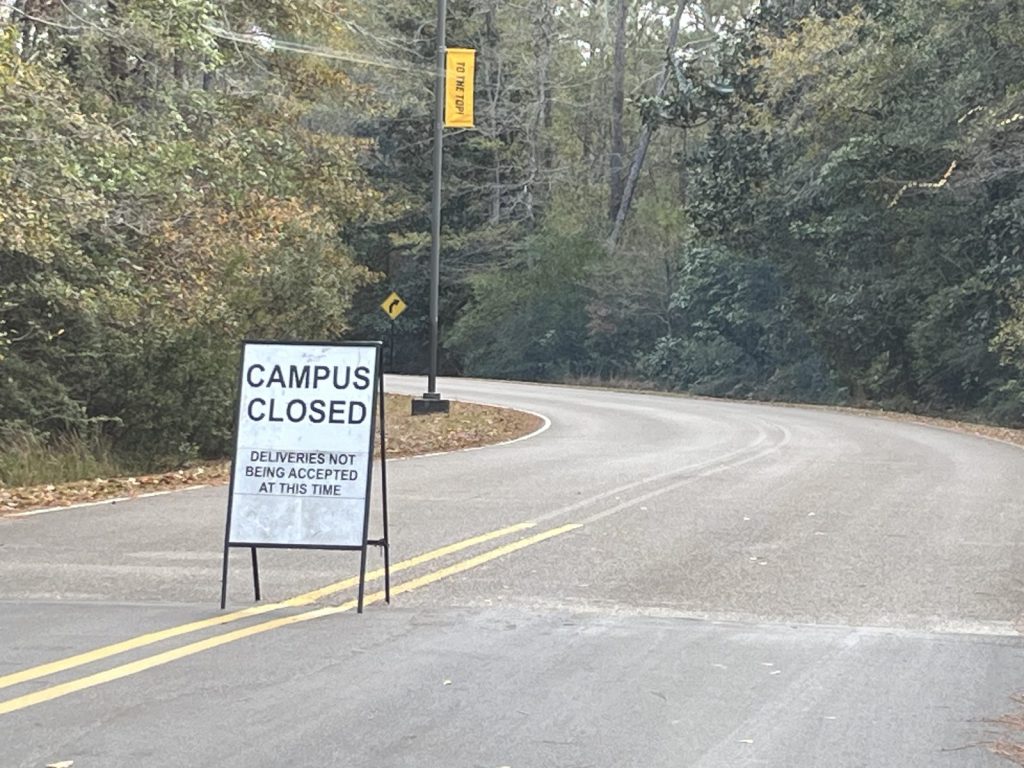
Roaming Monk Tip: if you’re in the area and trying to collect that bonus stamp, check ahead before making a special trip. It’s a different type of facility than an NPS visitor center, and its accessibility depends on the academic calendar and operational schedule.
Six Passport Stamps at One Stop
Yes, there are passport stamps here including a bonus stamps that passport stamp collectors should enjoy. The William M. Colmer Visitor Center has six stamps out during my visit:
- Gulf Islands National Seashore — FL-MS (main park stamp)
- Mississippi Gulf Coast National Heritage Area
- Gulf Islands National Seashore — Fort Massachusetts
- Ship and Horn Island — Network to Freedom
- US Colored Troops Historic Trail — Gulf Islands NS, FL & MS
- Wilderness 60 (bonus stamp)
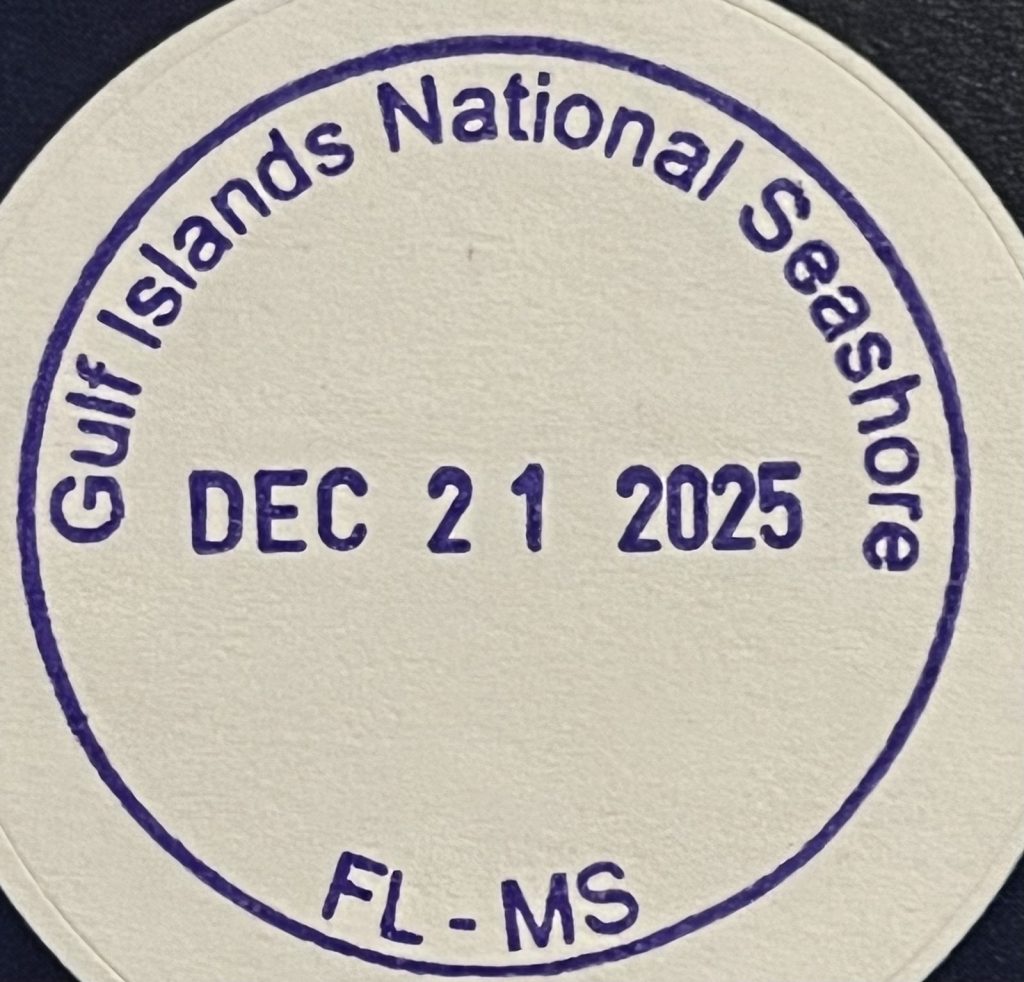
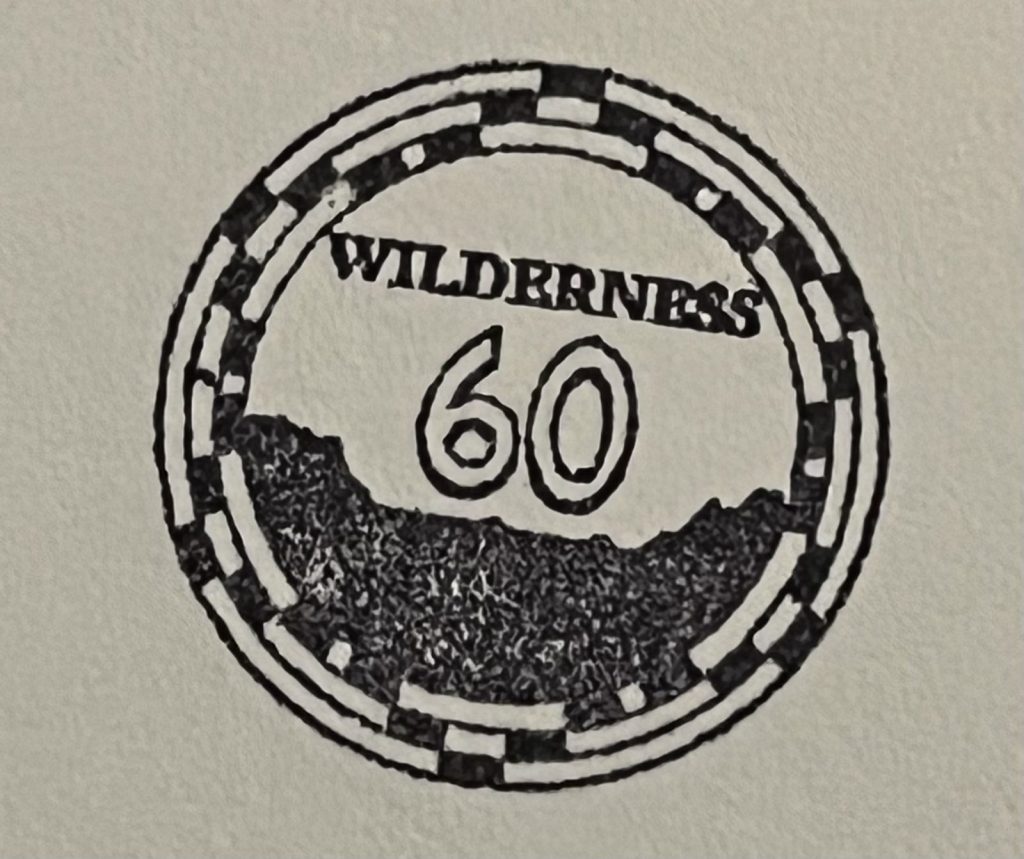
Six stamps at one visitor center is awesome. If you’re working through your bonus stamp collection, this stop alone justifies the detour.
Passport Stamp Tip: All six stamps are available at the William M. Colmer Visitor Center. Walk in through the main doors, turn right, and head to the main desk — the stamps are on the far left side of the desk. Ask the ranger and they’ll set you up with everything at once. The visitor center is open Wednesday through Sunday, 9 a.m. to 4 p.m.
Planning Your Visit: What You Need to Know
| Detail | Info |
|---|---|
| Visitor Center | William M. Colmer Visitor Center, Davis Bayou Area |
| Address | 3500 Park Rd, Ocean Springs, MS 39564 |
| Visitor Center Hours | Wednesday–Sunday, 9 a.m. to 4 p.m. |
| Area Gate Hours | 8 a.m. to sunset, year-round |
| Passport Stamps | 6 stamps available at front desk |
| Ferry to Barrier Islands | Does NOT depart from Davis Bayou (departs from Gulfport) |
| Swimming | Not permitted in Davis Bayou |
| Fishing | Designated pier only; valid license required |
| Campground | Available; campground office open Tue–Sat, 8 a.m.–4 p.m. |
| Entrance Fee | Yes; America the Beautiful pass accepted |
| Phone | 228-230-4100 |
If you have an America the Beautiful annual pass or senior pass, it covers entry here — always worth having if you’re visiting multiple national parks. If you don’t have one yet, check out how to get a free National Park pass — there are more options than most people realize.
Gulf Islands National Seashore is part of the broader Southeast national parks landscape, and if you’re road-tripping through the Gulf Coast region, it pairs well with Florida-side parks. The Florida national parks that sit in the same region make for an excellent multi-day loop.
[Video] Take a Walk Through the Visitor Center
Hey I made a video! Take a walk with me around and through the visitor center. It is a quick high-speed walkthrough video and gives you a good sense of the layout and the exhibits.
Final Thoughts
Gulf Islands National Seashore isn’t a park you’d typically put at the top of a “must-see” list — but that is what makes it great. It’s accessible, genuinely interesting, loaded with stamps, and the Davis Bayou Area has a quiet, peaceful local character that’s hard to find in busier parks. Coming in December meant I had the trails essentially to myself, and that conversation with the ranger about Alabama’s missing coastline is the kind of thing I’ll remember long after the visit fades.
If you’re passing through the Gulf Coast — or just looking for a coastal national park experience that isn’t wall-to-wall tourists — put Davis Bayou on your list. The stamps alone are worth it. The story of how the park came to be is a bonus.
Frequently Asked Questions About Gulf Islands National Seashore
Where is the Gulf Islands National Seashore visitor center?
The main Mississippi visitor center is the William M. Colmer Visitor Center at the Davis Bayou Area, 3500 Park Rd, Ocean Springs, MS 39564.
Can you visit Fort Barrancas at Gulf Islands National Seashore?
Yes, but access is limited. Fort Barrancas is located on the grounds of Naval Air Station Pensacola, an active military base, and requires a 100% ID check at the base gate. The visitor center and fort are only open on select Fridays and Saturdays throughout the year. Check the NPS website for current open dates before visiting.
What is there to do at the Davis Bayou Area?
The William M. Colmer Visitor Center here offers nature trails, boardwalks over the salt marsh, a fishing pier, boat launch, campground with extensive exhibits. No swimming is permitted in the bayou.
What are the hours for the Gulf Islands National Seashore visitor center?
The William M. Colmer Visitor Center is open Wednesday through Sunday, 9 a.m. to 4 p.m. The area gate is open 8 a.m. to sunset year-round.
Is Gulf Islands National Seashore worth visiting in winter?
Absolutely! The visitor center, trails, and boardwalks are open year-round. Winter means smaller crowds and peaceful conditions. Some seasonal activities like ferry service to the barrier islands may not be running, so check ahead if the outer islands are your goal. Worst case, you ride your bike around the road, or take in a short hike.
What exhibits are inside the Gulf Islands visitor center?
The William M. Colmer Visitor Center features exhibits on Gulf of Mexico marine life, barrier island ecology, Fort Massachusetts history, the WWII War Dog Training program on Cat Island, Mississippi Sound, lighthouse history, and the role of the islands in the Underground Railroad.
How many passport stamps can you get at Gulf Islands National Seashore?
At the Davis Bayou visitor center you can collect up to six stamps: the main Gulf Islands NS FL-MS stamp, the Mississippi Gulf Coast National Heritage Area stamp, the Fort Massachusetts stamp, the Ship and Horn Island Network to Freedom stamp, the US Colored Troops Historic Trail stamp, and a Wilderness 60 bonus stamp.
Can you take a ferry to the barrier islands from Davis Bayou?
No. Ferry service to the barrier islands does not depart from Davis Bayou. The ferry departure point is in Gulfport, Mississippi. Check the NPS website for current ferry schedules.
Why does Gulf Islands National Seashore skip Alabama?
When the national seashore was established, Alabama did not join the effort. Local real estate and development interests in Alabama resisted the conservation push, so the park was created spanning Florida and Mississippi — with the Alabama coastline between them remaining developed and outside park boundaries.
Is there an entrance fee for Gulf Islands National Seashore?
Yes, Gulf Islands National Seashore charges an entrance fee to visit many of the islands, forts and beaches. An America the Beautiful pass covers entry. You do NOT need to pay for an entrance fee to visit the William M. Colmer Visitor Center however.
Have you visited Gulf Islands National Seashore? Drop a comment below — I’d love to hear about your experience, especially if you made it out to Ship Island or the Florida district.

Thanks so much for your thoughtful, detailed posts about all things NPS! My husband and I really appreciate all of the great info and photos as we plan our own trips.