
Grand Canyon Mule Ride Review: Is It Worth It?

A Grand Canyon mule ride is the kind of experience that sounds a little suspect but it is actually a neat activity. It is actually better than you imagined. Our family was in Grand Canyon in the Spring and we saddled up on the South Rim for a two-hour ride along the Shoshone Trail. It was actually one of the coolest things you can do at Grand Canyon National Park.
My daughter and I always seem to gravitate to the horse rides on vacation, so we had to try this. We’re not professional riders, but this was not new for us. And while we’re a family who loves National Parks, collects passport stamps, and occasionally does things that make the kids a little nervous, this was actually in our wheel house a little. The mule ride exceeded our expectations, and was a great experience. Here’s what you need to know.
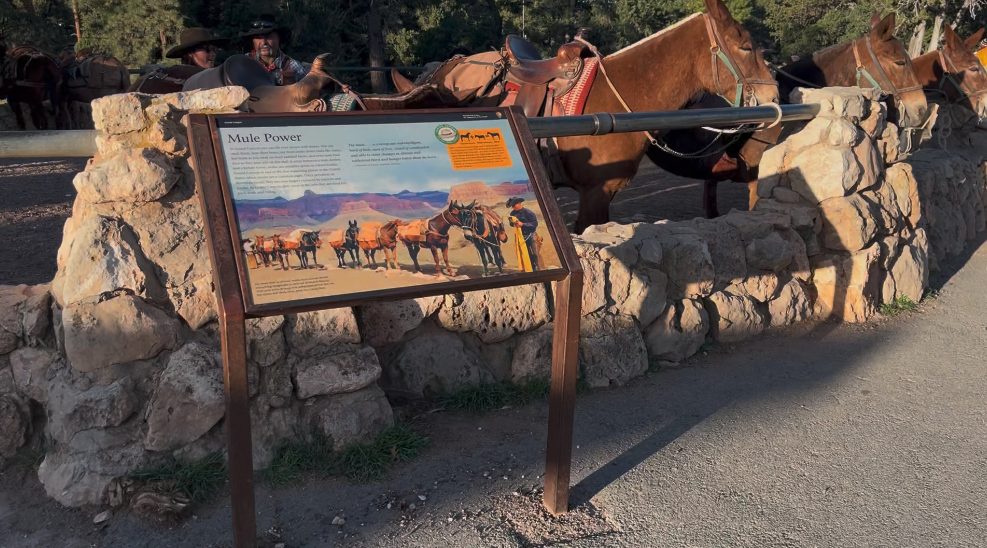
A Century of Mule Rides at the Grand Canyon
Mule rides have been part of the Grand Canyon since the late 1800s. When early tourists began arriving at the South Rim, mules were already there — hauling supplies, supporting mining operations, and carrying adventurers through the canyon’s rugged interior. It didn’t take long to figure out that tourists would pay to do exactly the same thing. By the early 1900s, mule trips were a cornerstone of South Rim tourism, and Grand Canyon National Park has offered them ever since.
President Teddy Roosevelt even took a mule ride into the canyon. More than a century later, people are still getting on these mules.
What Is the Grand Canyon Mule Ride?
The current operator — Grand Canyon Lodges (a Delaware North company) — runs two types of rides from the South Rim: a two-hour rim ride along the Shoshone Trail near Yaki Point, and a canyon ride that descends into the canyon itself. We did the rim ride, which follows the trail with six stops offering canyon views that will genuinely stop your breath.
The mules are seasoned veterans. These animals walk this trail constantly and they know every switchback, every edge, every footfall. While you need to actually ride your mule, and know what to do to take control, for the most part your job is to sit back, trust your mule, and take in the scenery. The mules go through a multi-year training process to ensure they can be trusted with riders.
A quick note on current availability (as of April 2026): Our wrangler mentioned that the overnight Phantom Ranch rides are temporarily suspended due to a rockslide in the canyon. Day rides into the canyon to Havasupai Gardens are still running. Overnight rides are expected to resume around July 2026. The good news: mule rides at the Grand Canyon run year-round, so there’s no bad season to book.
Check-In: Bright Angel Lodge the Day Before
Make sure you check in the day before your ride, it makes things so much easier. We arrived at Bright Angel Lodge the afternoon before and handled all the paperwork at the activity desk near the front entrance. This pushed our required morning arrival from 6:30 AM to 7:30 AM.
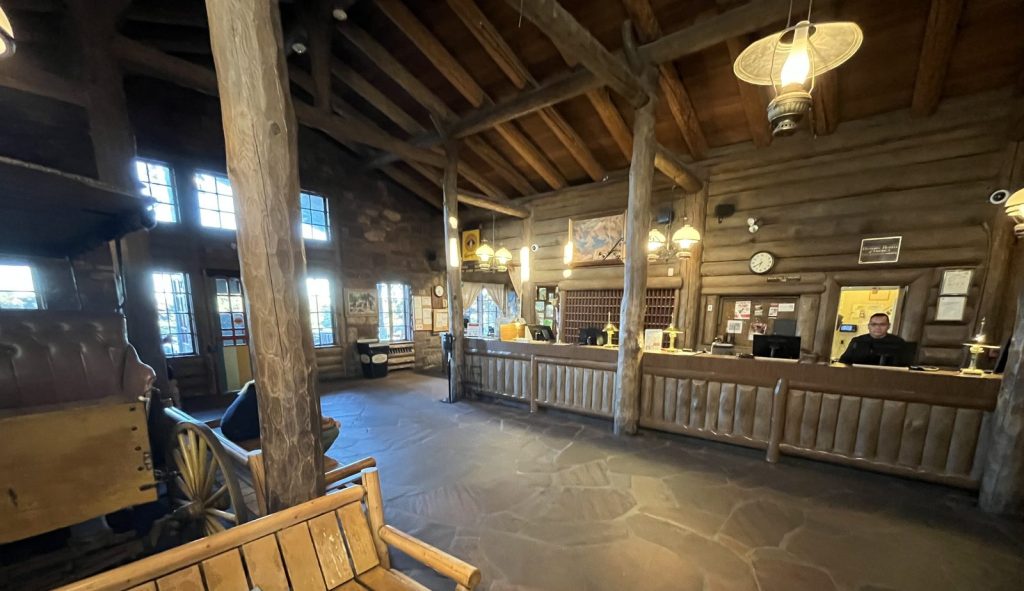
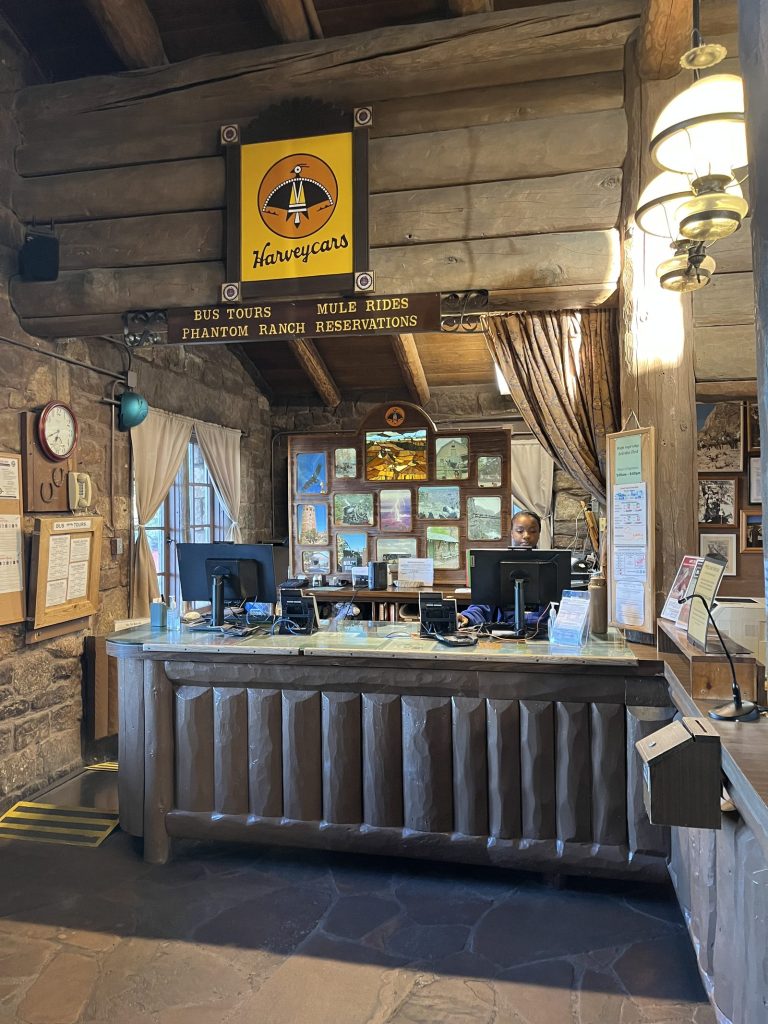
Day-before check-in is where you sign waivers and get your orientation rundown. The staff goes through the rules clearly. Big emphasis on not dropping anything on the trail — phones, sunglasses, and cameras all need a lanyard or strap. They’ll make one for you on the spot with string if you don’t have one. No backpacks or fanny packs. Long sleeves and pants are recommended. Kids under 18 must wear a helmet; adults have the option.
They weigh every rider — but they handle it with total discretion. Only the staff sees the number. There are weight limits in place (check current guidelines when booking), and my daughter said the staff member who handled check-in made the whole thing easy and low-key.
On the morning of the ride, we returned to Bright Angel Lodge and were transported by bus out to Yaki Barn, near Yaki Point, where we met our mules and set off on the Shoshone Trail. The rim ride for the two-hour experience departs from here. (The canyon rides use a separate corral near the Bright Angel Trailhead — a completely different setup for those heading down into the canyon.)
Meeting Your Mule
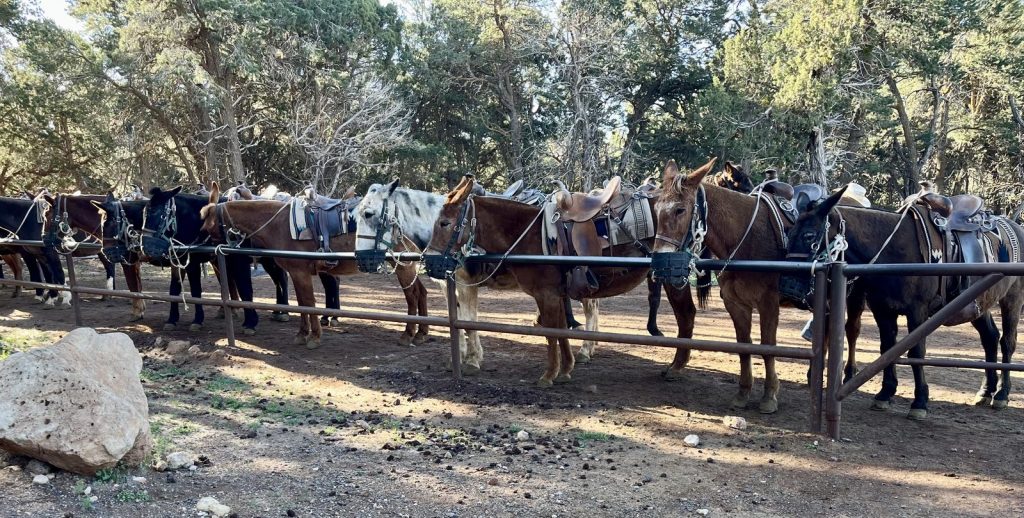
At the barn, the wranglers match riders to mules based on their own read of the group. Each mule has its own personality, and they take that into consideration with the rider’s experience. I was paired with Delilah. My daughter Sylvia got Sheldon. Delilah and Sheldon were apparently a pair, which explained why Sheldon spent a good chunk of the ride trying to inch his nose onto my boot.
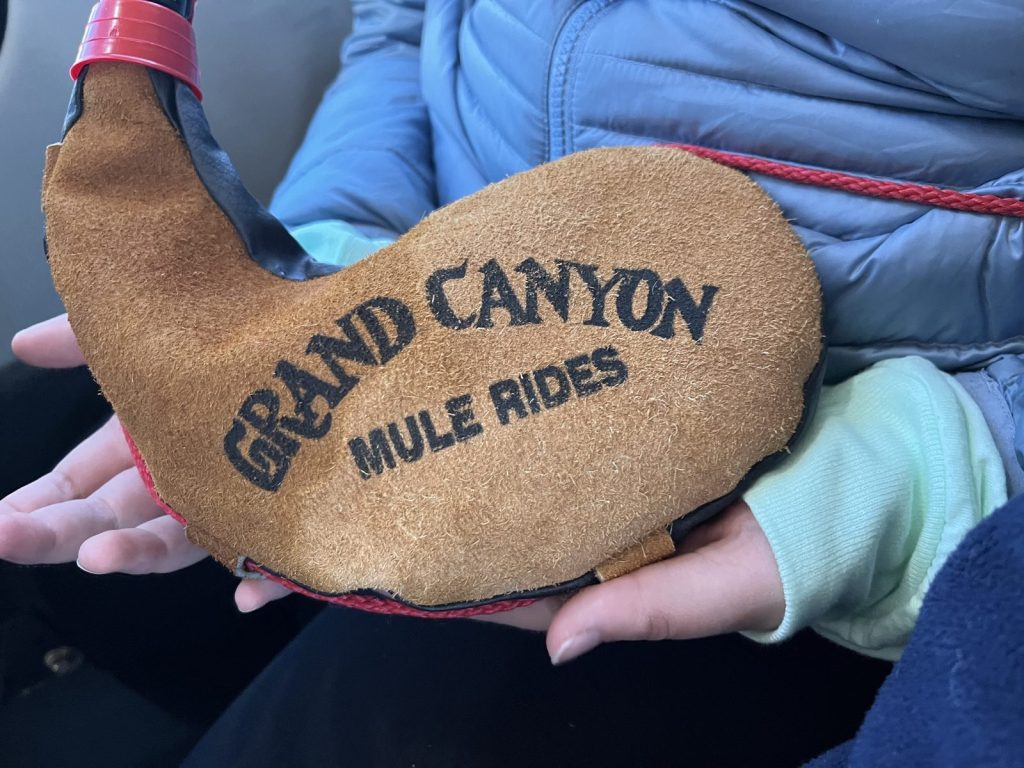
Every rider is given a canteen branded with Grand Canyon Mule Rides in classic western lettering at check-in — and this one pulls double duty. It’s your ticket. The staff uses it as a visual identifier for the group, and before you mount up at Yaki Barn, the wranglers strap it to your mule for the ride. The kids thought it was pretty cool.
You also get two lemon packets they give you into the canteen the night before, fill it with water, let it sit overnight, then dump and refill. Removes the plastic taste from the new canteen — and the canteen itself is a unique little souvenir.
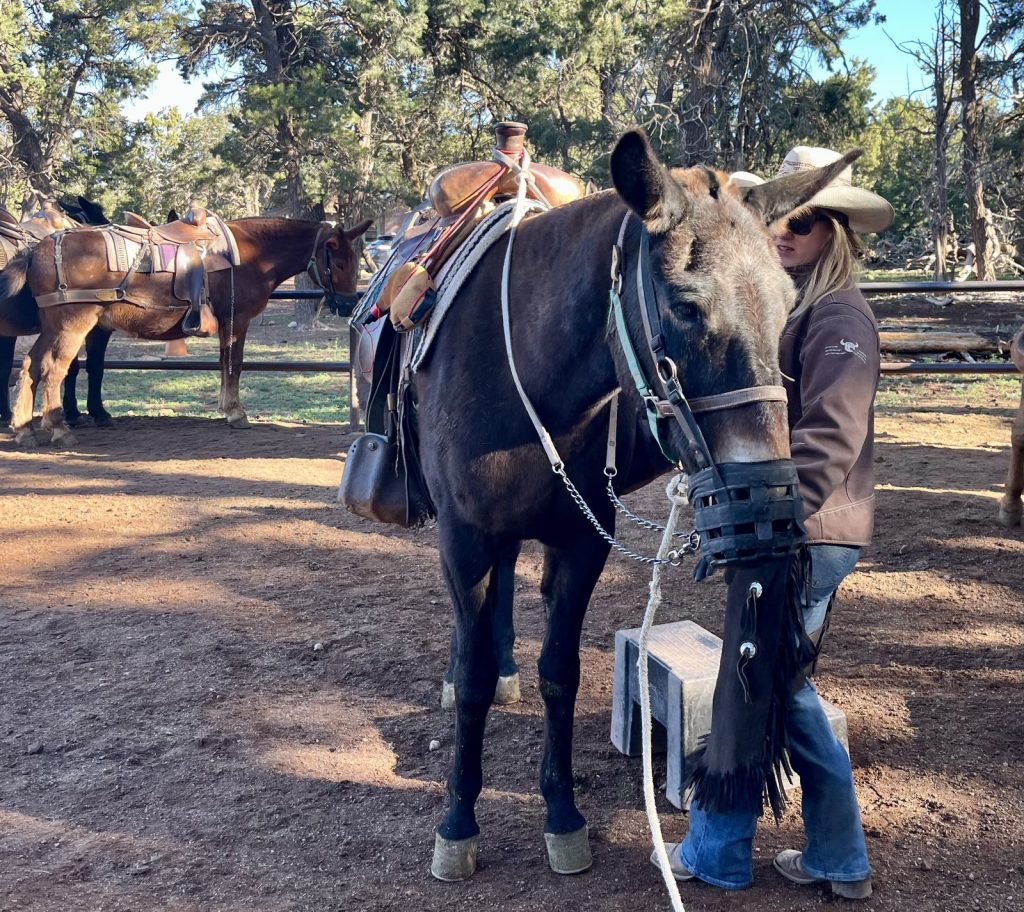
One thing our wrangler mentioned was that the mules rotate between the two-hour rim rides and the canyon rides. A mule does two rides along the rim in a day, then rest, then go down into the canyon. They’re managed carefully. These aren’t animals being pushed and seemed to be taken care of well.
The Ride Itself
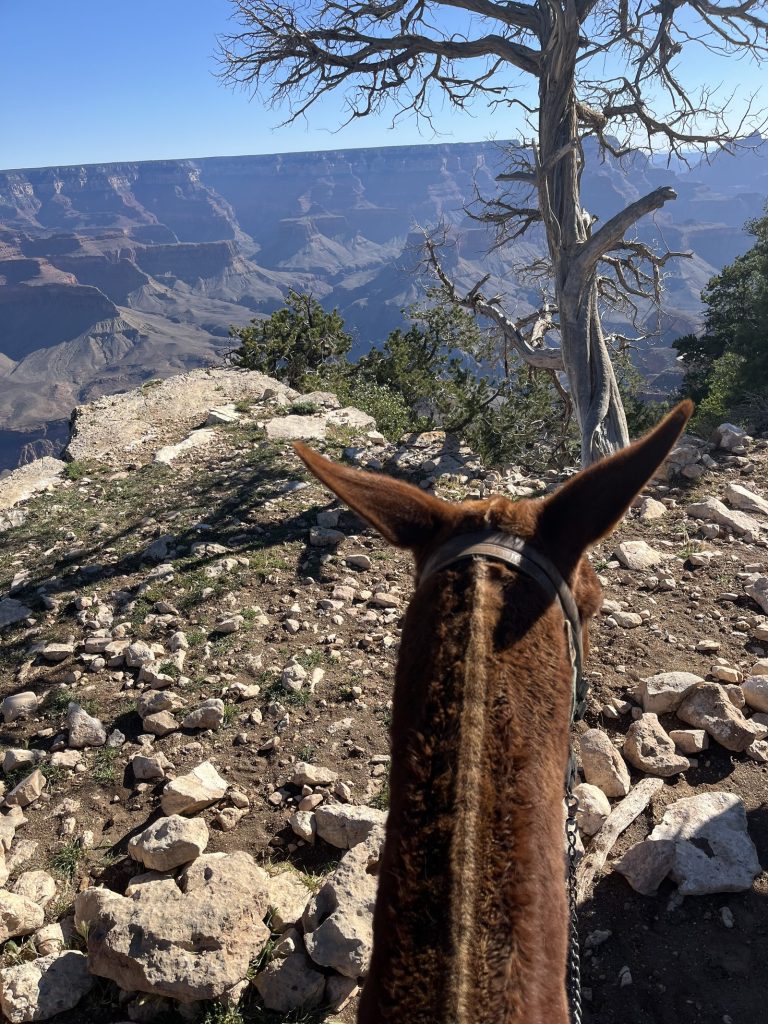
The Shoshone Trail rim ride is about two hours in the saddle with six stops at viewpoints along the way. Each stop gives you time to take photos, get a drink from your canteen, and genuinely absorb where you are. Our wrangler was fantastic — knowledgeable, friendly, and clearly loved what she did. At one of the stops, she grabbed our cameras and got proper photos of us with the canyon sprawling behind us. That photo alone is worth more than the ticket price.
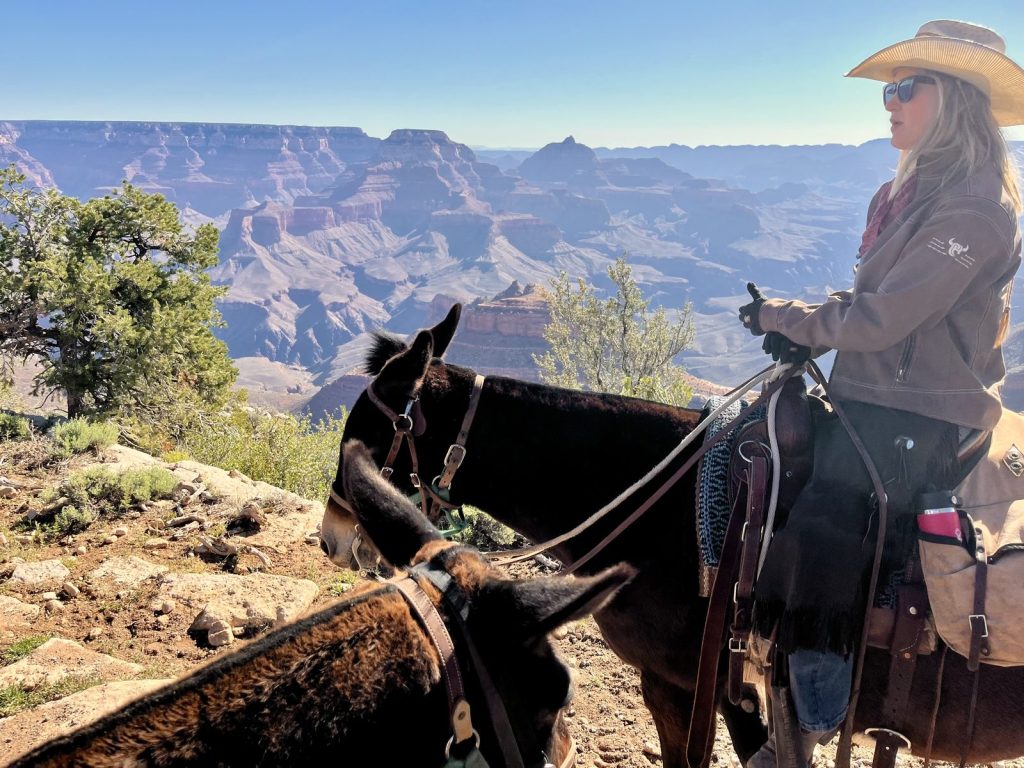
The perspective from muleback is genuinely different from standing at the rim. You’re moving. The canyon looks completely different when you’re not standing still at the edge. You see angles and depths that you simply don’t get on two feet.
Was it scary? Not for us. The mules stayed calm, the trail is well-maintained, and the wranglers keep everything moving smoothly. The only moment of drama? Delilah let out a magnificently timed gas cloud just as one of my kids was directly behind me. She was not pleased, but Sheldon did not seem to mind.
The Views Are the Point
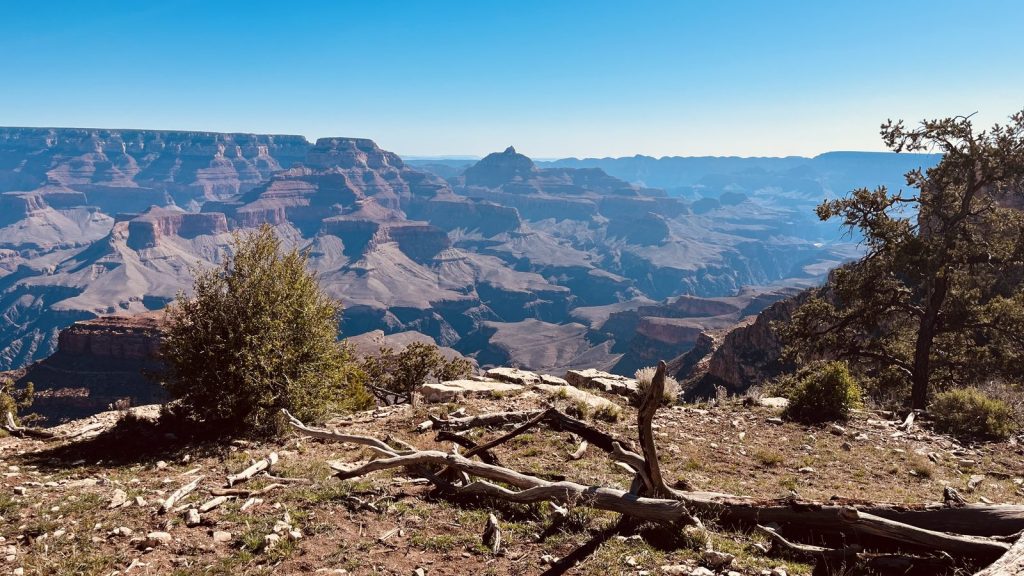
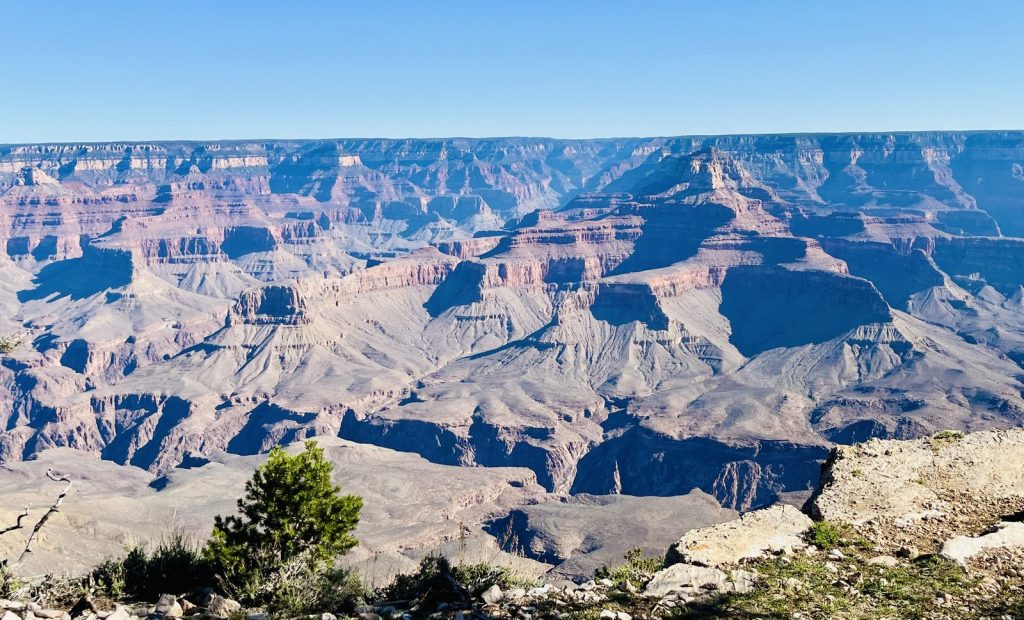
I’ve stood at the rim of the Grand Canyon many times during the trip to take in the views, but there is something about seeing it on a mule. This was a little different feeling. Each stop was something unique and we also got to ride through some ponderosa pine and juniper trees as well.

It is hard to capture the canyon well given its scale. So taking in the view from a little higher vantage point was different. A great experience overall. And hey, having a picture of me on the back of a mule named Delilah with the full canyon view in the background is kinda cool.
How the Kids Did
The kids handled it fine and it was a short enough ride that they we did not have any issues — mostly. my daughter near the end of the ride needed a bathroom, but it was really a non issue as we were very close to the end of the ride. The mules, the views, the canteen, the whole experience was great.
If you’re planning a family trip to Grand Canyon, this is the experience I’d put in the “do not skip” category. It’s not cheap, but is worth it.
What to Know Before You Book
- Book early. Grand Canyon mule rides sell out well in advance, especially during spring break and summer. Don’t wait until you’re planning the rest of the trip — book this first, then build around it.
- Check in the day before if you can. It saves you an hour of sleep on the morning of the ride and makes the day-of experience much smoother. Check-in is at the activity desk in Bright Angel Lodge.
- You’ll be bused to the barn. The rim ride departs from Yaki Barn near Yaki Point — not from the lodge itself. You’re picked up at Bright Angel Lodge on the morning of the ride and transported out. No need to figure out parking or logistics on your own.
- Dress in layers — this one matters. We rode in April and it was in the 50s at the start of the ride, warming into the 70s by mid-morning. I wore a t-shirt, a long-sleeve SPF button-down (required anyway), and a jacket on top. If you get warm on the trail, the wranglers will secure your jacket to your mule for you — no issues, no drama. Don’t make the mistake of thinking “it’s the desert, I won’t need a jacket.” The South Rim morning will humble you.
- The canteen is your ticket. When you check in at Bright Angel Lodge, you’re given a Grand Canyon mule ride canteen. This canteen is your proof of reservation — the staff uses it as a visual identifier for the group. Keep it with you. Before you get on your mule at Yaki Barn, the wranglers wrap the canteen to your mule for the ride. They provide two lemon packets (same size as a fast food ketchup packet) and suggest you put into the canteen, fill it with water, mix it up, and let it sit overnight. Dump it out and refill before the ride. It removes the plastic taste from the new canteen. it worked!
- Gear gets a lanyard or it stays behind. Phones, sunglasses, cameras — all need a strap or lanyard. The staff will help you make one on the spot if needed, but it’s easier to come prepared.
- Expect a pricing range around $150–$200 per person for the rim ride — check the current booking page for exact rates, as pricing can vary by season.
- Tip your wrangler. Bring cash. Remy made our ride — knowledgeable, warm, and took our photos at every stop. The wranglers do work hard and if you had a good experience feel free to show it with a tip.
- The rim ride is approachable for most fitness levels. Two hours in the saddle is about the right length — enough to feel like a real adventure without being exhausting. One rider in our group was a little sore afterward; I felt fine. It varies.
- Rides run year-round. There’s no closed season for the mule rides, which makes this a viable addition to a winter or shoulder-season Grand Canyon trip.
- Canyon day rides and overnight rides are separate. If you want to ride down into the canyon (Phantom Ranch), that’s a different booking, a different corral near the Bright Angel Trailhead, and a much bigger commitment. The canyon mules use the Bright Angel Trail — the same trail hikers use. We actually hiked a portion of Bright Angel a few days after our rim ride and were passed by a canyon mule group coming down. Same outfit, same mules. It’s a striking thing to watch from the hiker’s perspective — and a good reminder to stay to the side of the trail when mules are approaching. Check current availability — overnight rides were temporarily suspended in early 2026 due to a rockslide, with resumption expected around July 2026.
Is the Grand Canyon Mule Ride Worth It?
Absolutely!
What makes this experience stand apart isn’t just the views, though those are extraordinary. It’s the combination of everything working together: the wranglers, the mules, and the trail.
Standing at the rim is one thing. Riding along it, slowly, while it shifts in front of you — is a bit of a different feel. Visitors have been doing exactly this for well over a century, and is a good experience over all.
Book it early, tip your wrangler, bring a lanyard for your phone, and go. You’ll talk about Delilah for years.
And if you’re building out your National Park passport stamp collection while you’re there, don’t skip the visitor center — Grand Canyon has excellent stamp locations worth hunting down. Check the America the Beautiful Pass before you go too — it covers the entrance fee and pays for itself fast if Grand Canyon is part of a longer Southwest trip.
Frequently Asked Questions About the Grand Canyon Mule Ride
How do I book a Grand Canyon mule ride?
Mule rides at the Grand Canyon South Rim are operated by Grand Canyon Lodges (a Delaware North company). Book directly through their official website. These rides sell out well in advance, especially in peak season — book as early as possible.
How much does a Grand Canyon mule ride cost?
The two-hour South Rim rim ride runs approximately $150–$200 per person depending on the season. Canyon rides and overnight Phantom Ranch trips are priced higher. Check the current booking page for exact rates before reserving.
How long is the Grand Canyon mule ride?
The South Rim rim ride along the Shoshone Trail is approximately two hours in the saddle, with six viewpoint stops along the way. Total time from check-in at Bright Angel Lodge to returning from Yaki Barn runs closer to three hours.
Where does the Grand Canyon mule ride depart from?
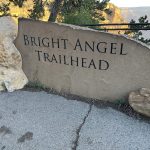
Check-in is at the activity desk inside Bright Angel Lodge. On the morning of your ride, you’re transported by bus to Yaki Barn near Yaki Point, where the rim ride begins on the Shoshone Trail. Canyon rides use a separate corral near the Bright Angel Trailhead.
Is the Grand Canyon mule ride scary?
Not as scary as you’d expect. The mules are experienced, the Shoshone Trail is well-maintained, and the wranglers keep everything moving safely. Most riders find it exhilarating rather than frightening.
What are the weight requirements for the Grand Canyon mule ride?
There are weight limits in place for rider safety. Check the current requirements on the booking page before you reserve. The weigh-in at check-in is handled discreetly; only staff see the number.
Do kids need to wear helmets on the Grand Canyon mule ride?
Yes — riders under 18 are required to wear helmets. Adults have the option. Helmets are provided.
What should I wear and bring on the Grand Canyon mule ride?
There are requirements, long sleeve shirt, long pants and closed toes shoes. Layers are key in spring and fall. The South Rim can be in the 50s at ride time and climb into the 70s by mid-morning — dress for both. A t-shirt under a long-sleeve SPF button-down with a jacket on top works well. If you get warm, the wranglers will secure your jacket to your mule. Keep gear minimal: no backpacks or fanny packs, and any phone, camera, or sunglasses must be on a lanyard. Bring cash to tip your wrangler.
Can you take photos on the Grand Canyon mule ride?
Yes — with a lanyard. Any device must be secured so it can’t be dropped. There are six stops where you can take photos, and the wranglers will photograph you with the canyon in the background using your own camera.
Are Grand Canyon mule rides available year-round?
Yes — mule rides at the South Rim operate year-round. There’s no closed season, which makes them a solid option for winter and shoulder-season visits. Departure times and pricing will change depending on the time of year.
What is the difference between the rim ride and the canyon ride?
The rim ride stays on the South Rim along the Shoshone Trail and takes approximately two hours. Canyon rides descend into the Grand Canyon and include day trips or overnight stays at Phantom Ranch. Note: as of April 2026, overnight rides are temporarily suspended due to a rockslide, with resumption expected around July 2026.
Is the Grand Canyon mule ride worth the money?
Absolutely. The wranglers work hard to make the experience easy, safe, and enjoyable — they grab your camera at every stop so you have photos from the ride. The Shoshone Trail gives you canyon perspectives most visitors never see. For the money, it was the best experience of our entire Grand Canyon trip.
