
Visiting Tuskegee Airmen National Historic Site in Alabama

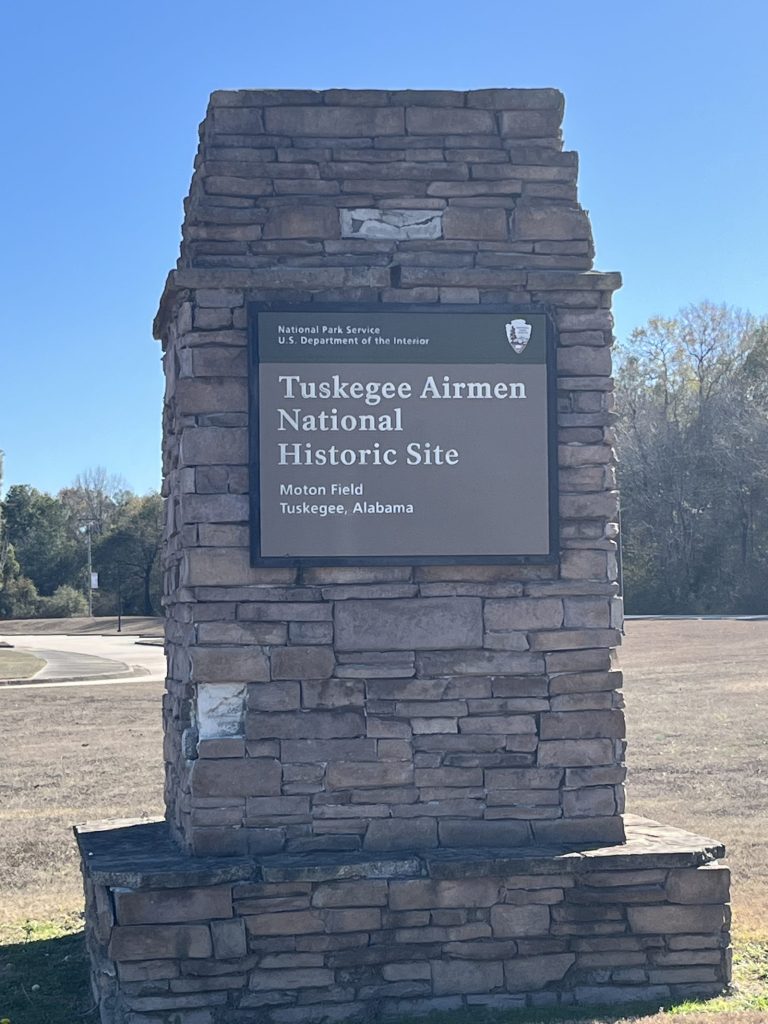
We were driving from Atlanta to Mobile and needed a good stop along the way. Visiting Tuskegee Airmen National Historic Site had been on my list, and the timing worked out — it was right off our route and we had some time to spare. What we found was a quiet, well-produced museum on an actual WWII airfield that told one of the most important stories in American military history.
It you remember there was a 2012 Hollywood movie called Red Tails, that told their story.

The Tuskegee Airmen NHS sits on Moton Field in Tuskegee, Alabama — the actual airfield where America’s first Black military pilots trained during World War II. These men proved, under segregation and doubt, that they could fly and fight as well as anyone. Their combat record speaks for itself: 1,578 missions, 112 enemy aircraft shot down, and a legacy that helped reshape the U.S. military and the civil rights movement that followed.
Finding Your Way In
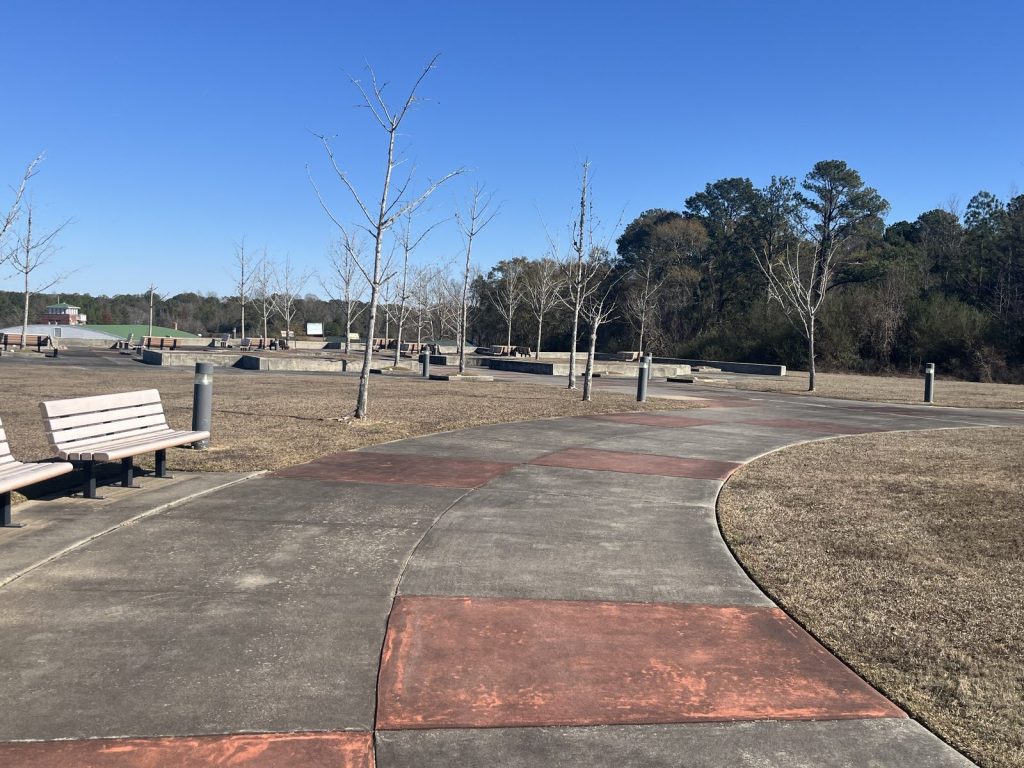
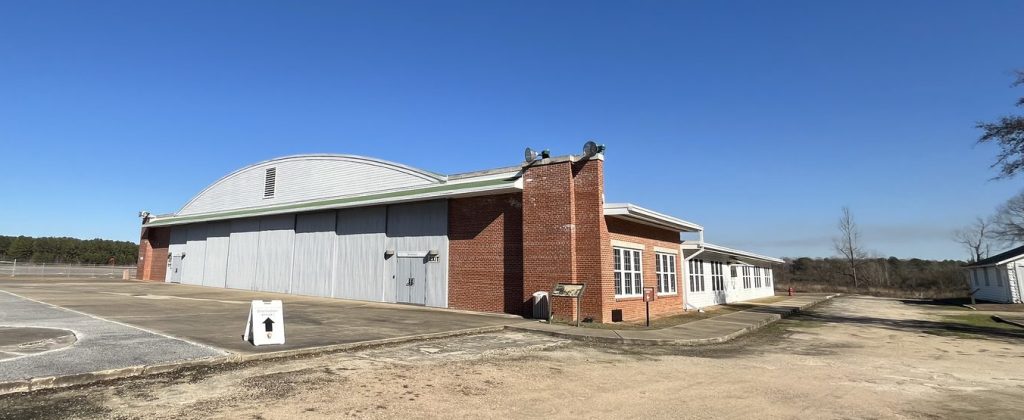
A heads up: when you pull into the parking lot at Moton Field, I was a little confused as to where to go. We were on a hill in an empty parking lot, and wasn’t really sure. It was around a December holiday so we were pretty much the only people at the site.You need to follow the sidewalk and you’ll see two large hangars sitting on the edge of the old airfield. The parking area is up on a slight hill above them. There is walkway down to the site, so from there it was which building do we go into.

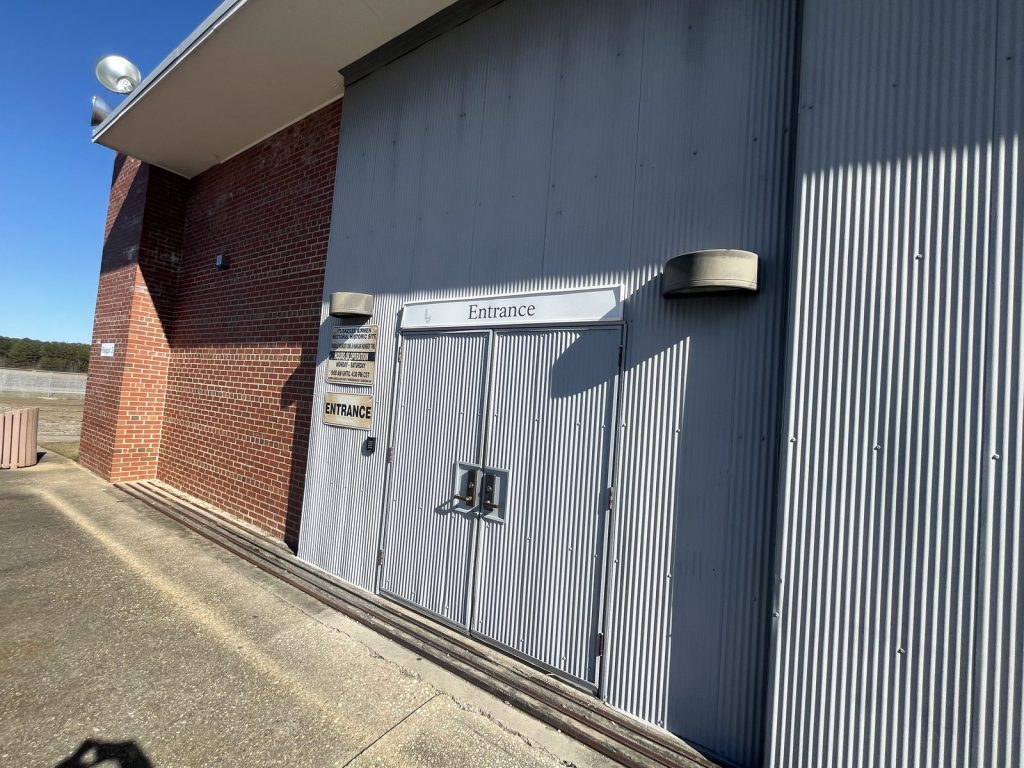
We saw a tent sign pointing to the main hanger (the furthest one on the right) indicating it was the main entrance. That’s Hangar 1.
Note, there are some benches near the parking lot in case you want to take a rest. Actually, there are quite a few benches. Like a lot.
Hangar 1 — The Main Exhibits
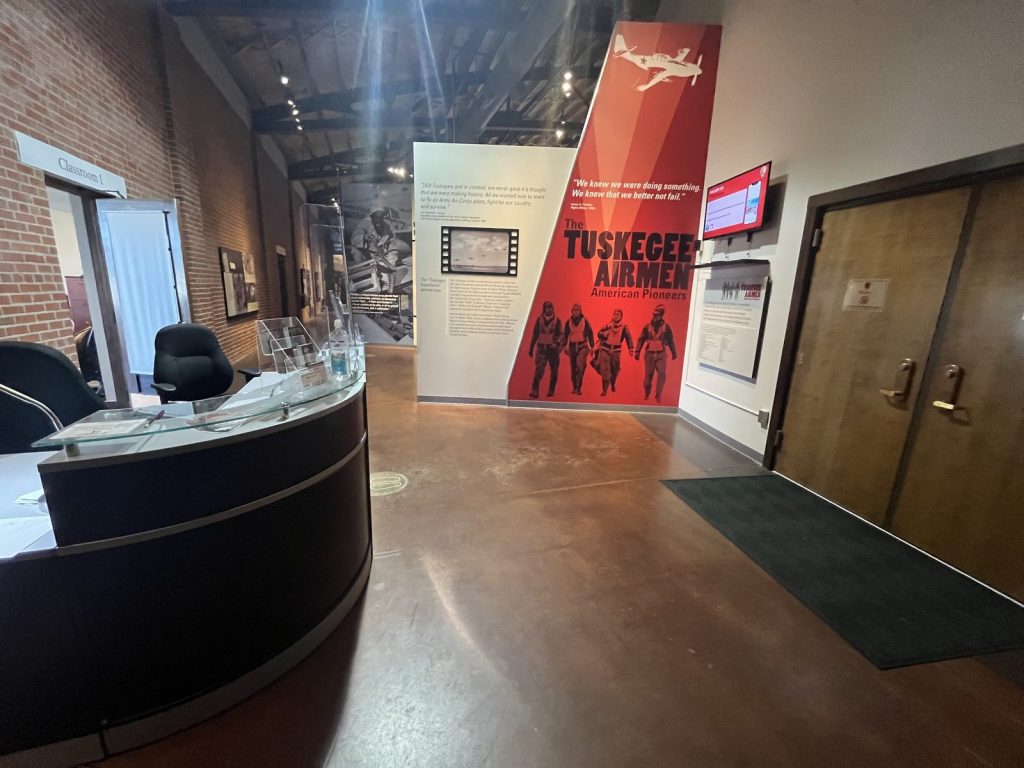
Hangar 1 is the main building and where you’ll spend most of your time. Right when you walk in, there’s a front desk where the staff will greet you — and where you get your passport stamp. The lobby has a big “Tuskegee Airmen: American Pioneers” banner and opens directly into the exhibit space.
The site walks you through the full story — from the fight to establish a Black pilot training program, through the training itself at Moton Field, to the combat record of the 332nd Fighter Group in Europe. Large photo murals, interpretive panels, and artifacts carry it all the way through.
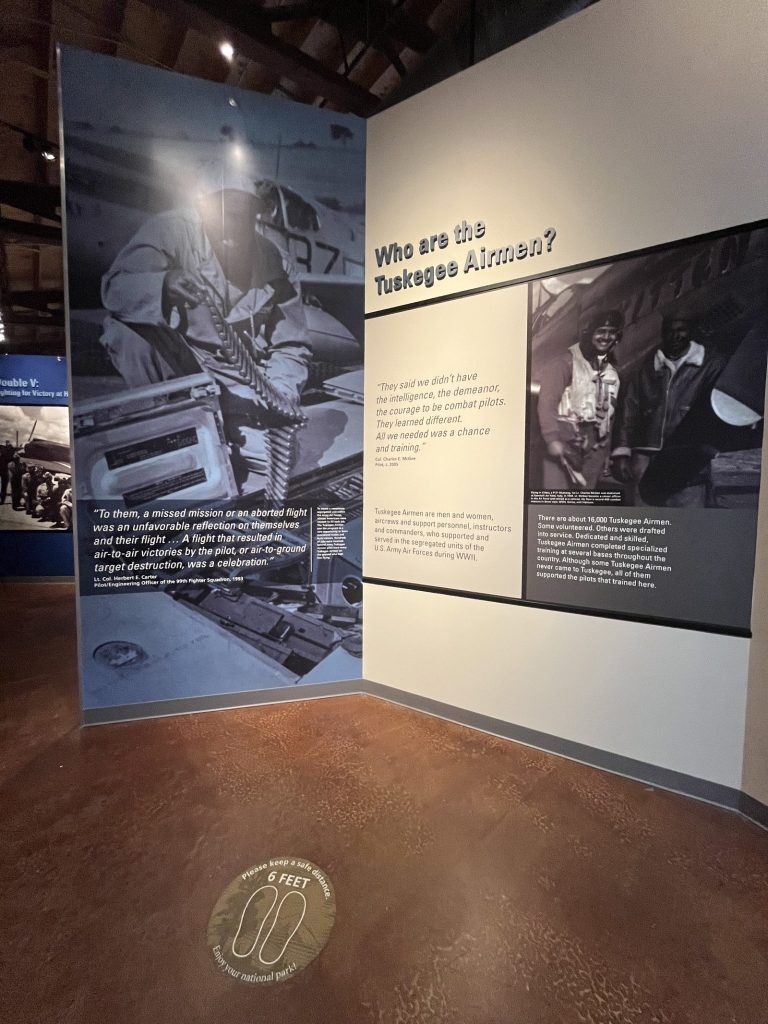
The centerpiece of Hangar 1 is a full-size P-51 Mustang hanging from the ceiling — complete with the famous red tail markings. It was really cool. The 332nd Fighter Group flew these in the European theater, and seeing one suspended above you in the actual hangar where these pilots started was pretty neat. The exhibit around the plane covers the combat missions, the movement maps across North Africa and Italy, and the unit’s record in detail.

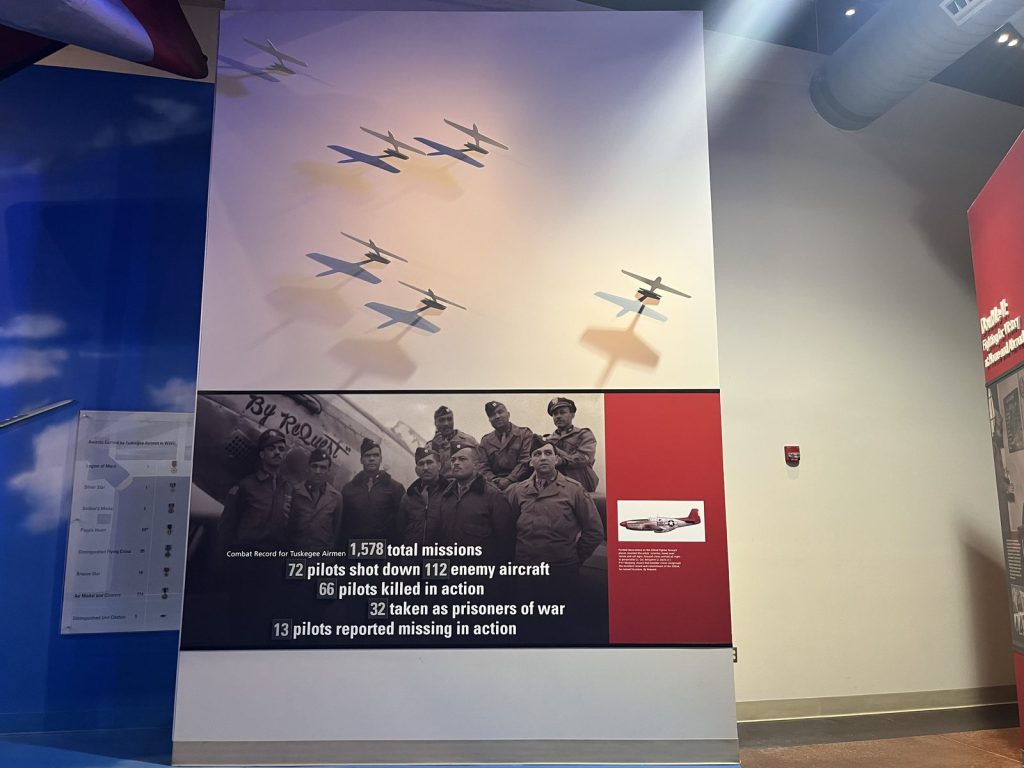
One wall that caught my attention had the Tuskegee Airmen’s combat record laid out in plain numbers: 1,578 total missions, 72 pilots shot down 112 enemy aircraft, 66 pilots killed in action, 32 taken as prisoners of war, and 13 reported missing in action. Those numbers hit hard when you’re standing in the building where it all started.
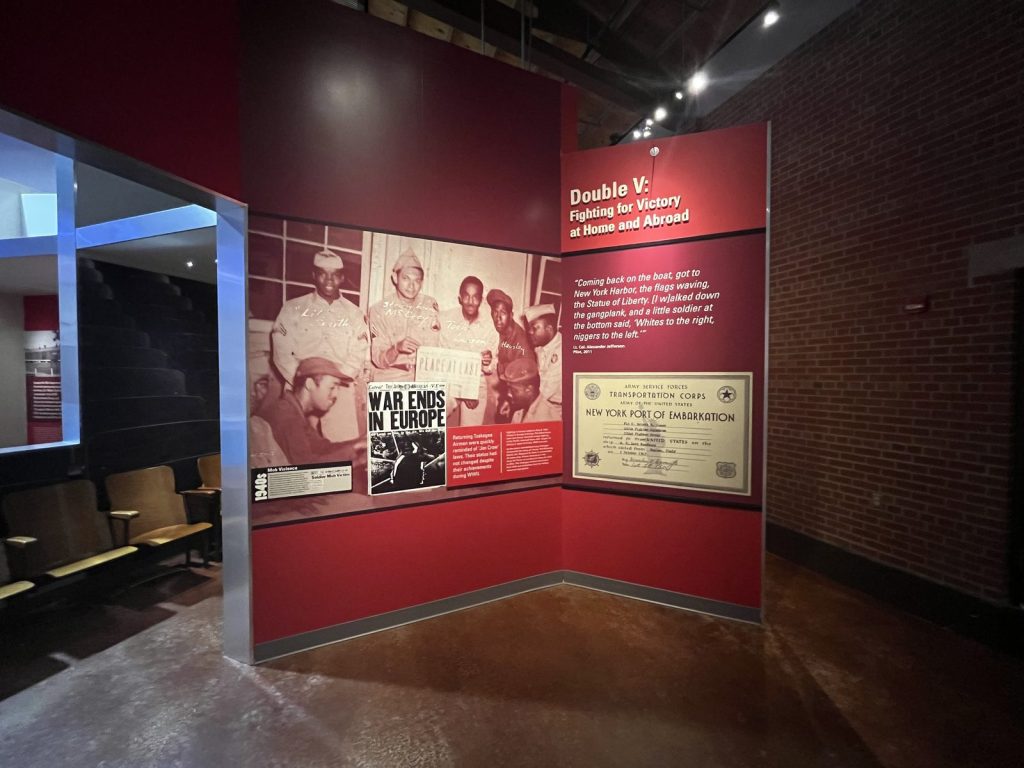
The exhibit continues through the “Double V” campaign — Victory abroad against fascism, Victory at home against racial discrimination — and into the postwar fight for civil rights and military desegregation. The connection between WWII service and the civil rights movement is clear.
America has incredible stories of bravery and sacrifice, but we also need to understand where we fell short, hear these uncomfortable stories, and celebrate those who were brave enough to fight against it.
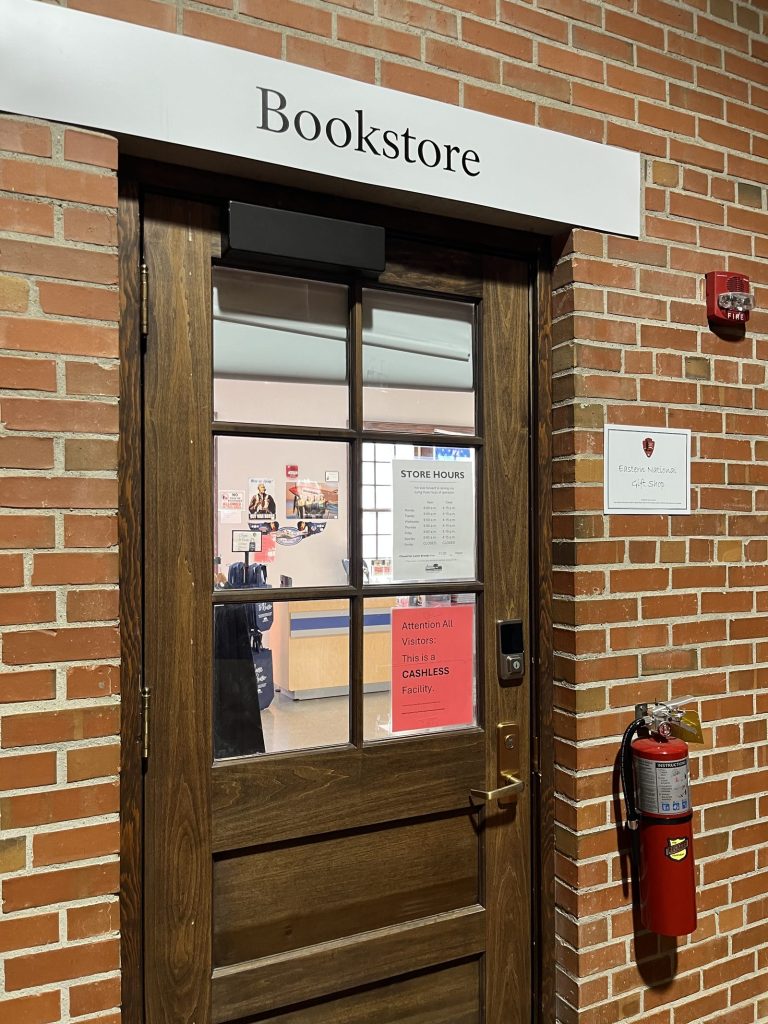
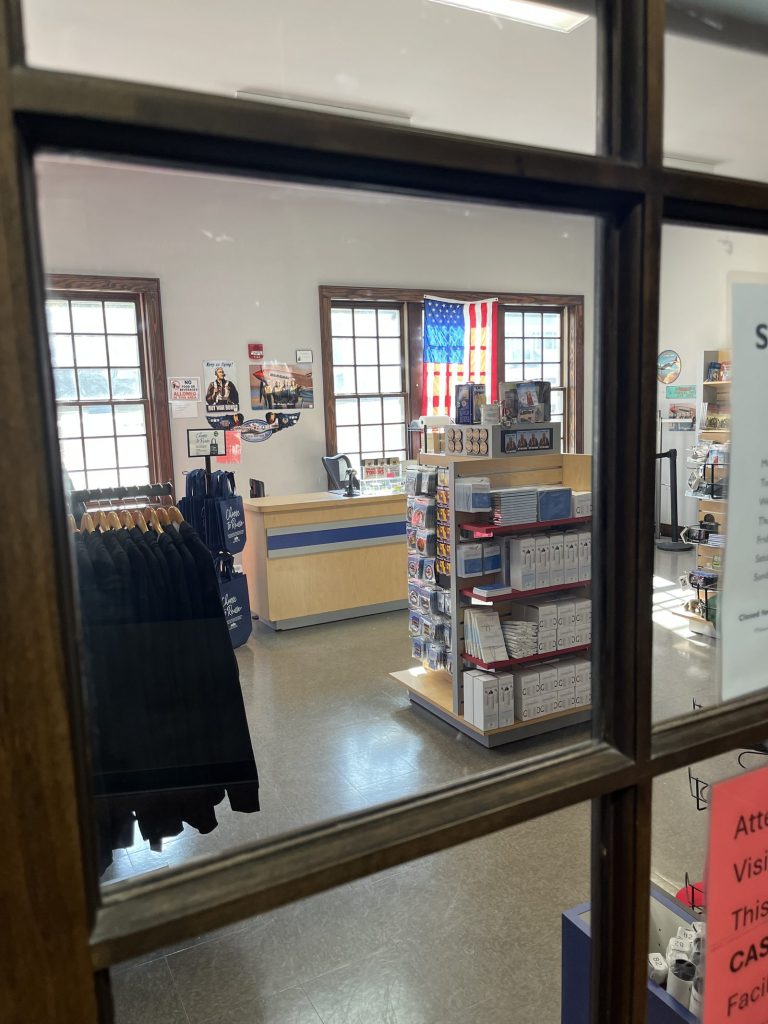
The walkthrough ends at a bookstore in the back of the building. It was closed when we first arrived — the staff member was on a break — but she opened it up as we were finishing. Small shop, standard NPS books and merchandise. No additional stamps or bonus stamps available at the bookstore.
Hangar 2 — The Training Aircraft
The second hangar is to the left as you walk down from the parking lot. And while the first hanger had some signs, this one had nothing. I was a little hesitant at first, and some of my family would problem have just skipped it, but I was curious. I noticed the gap in the door and was glad I did!
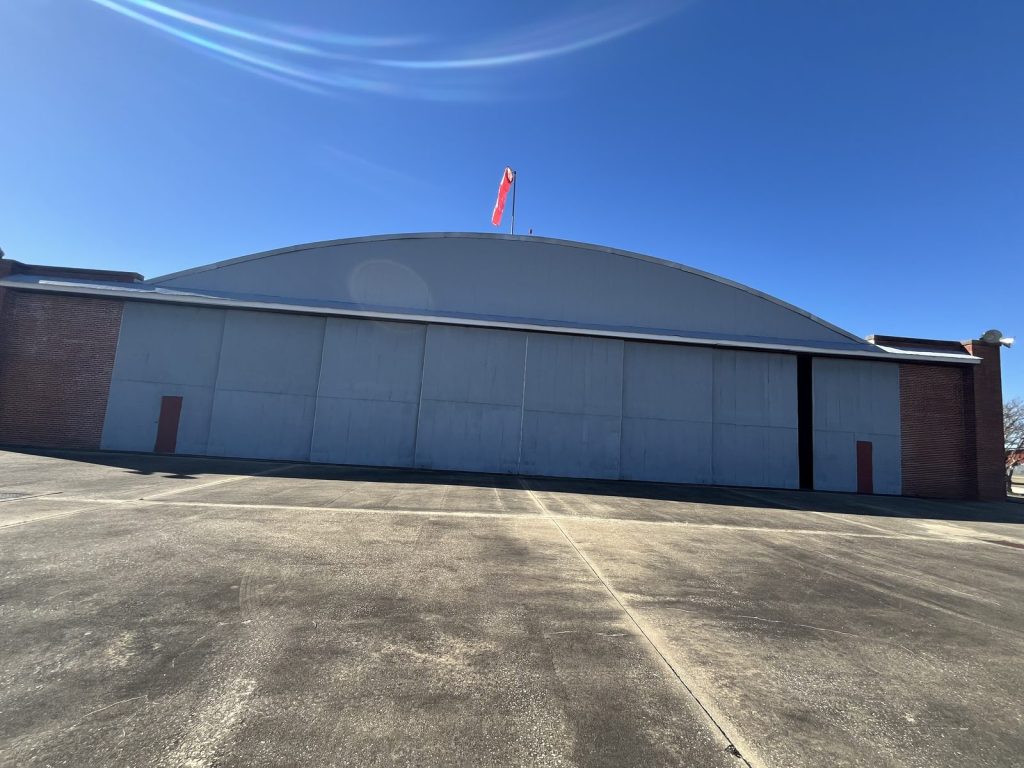
The exhibits here focus on the training side of the Tuskegee story — how these men actually learned how to fly.
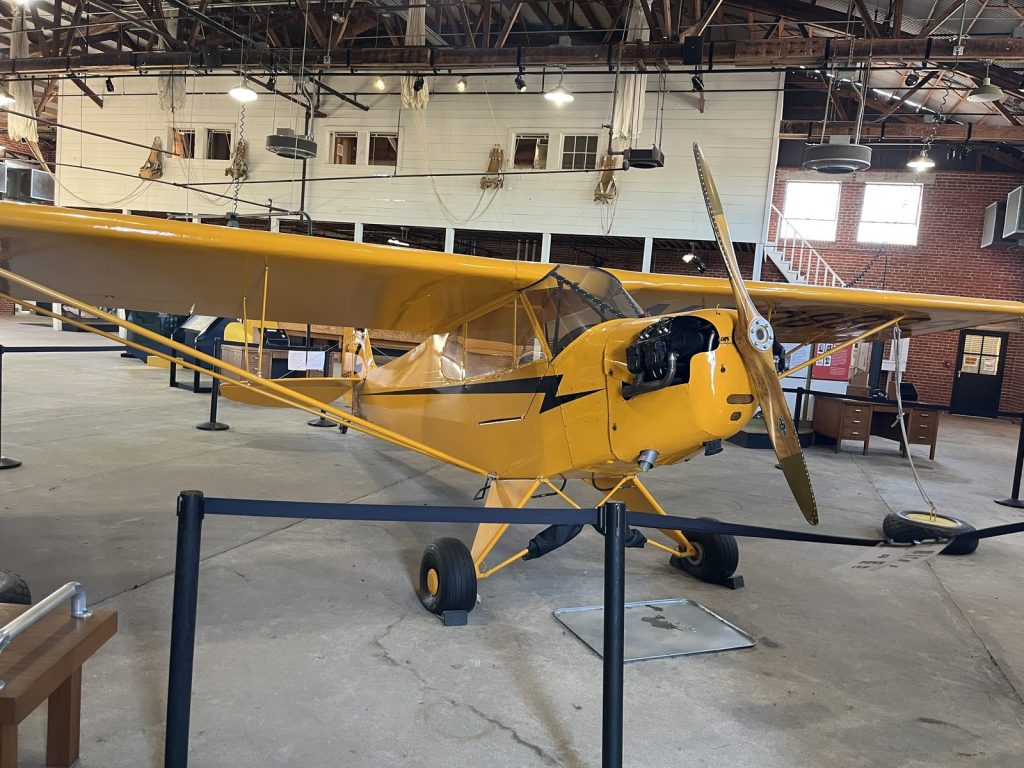
The star of this hangar is a bright yellow Piper J-3 Cub — the primary trainer that cadets flew first. Next to it is a Stearman PT-17 biplane, which was the next step up in the training program. It was amazing to see these sitting in the hangar to take in all the details.
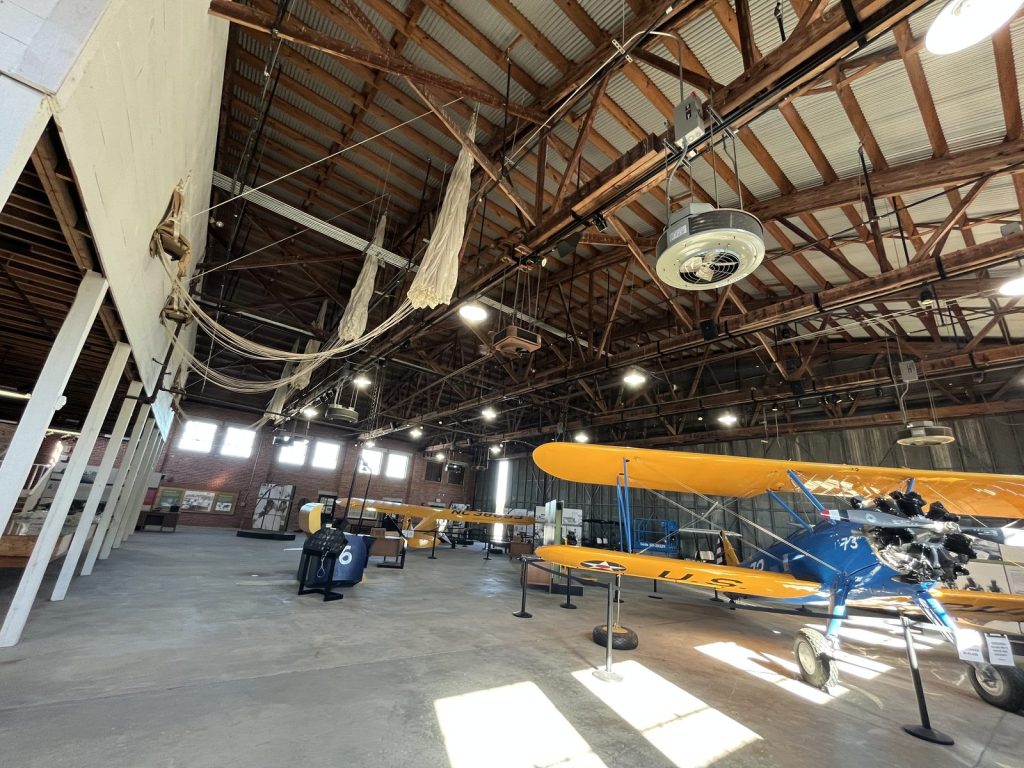
There’s also a Link Trainer on display — an early flight simulator that looks like a chunky blue and yellow cockpit box. It looks like a cardboard box car I built for my kids. Incredible that this was used for flight training. The cadets used these to practice instrument flying before getting into real aircraft.
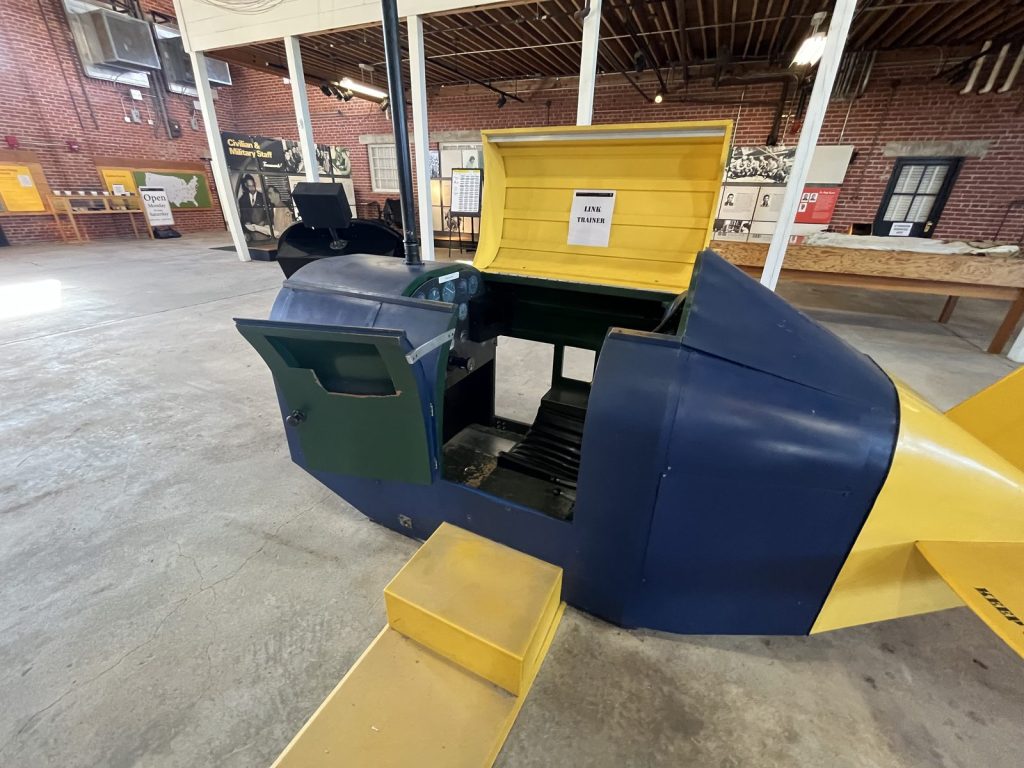
Hangar 2 is more open and less exhibit-heavy than Hangar 1. Between the two hangars, plan for about an hour total, maybe a little more if you read every panel carefully.
The Airfield Itself
One thing I appreciated about this site is that it’s on the actual Moton Field airstrip. You can see the old runway and surrounding buildings from the overlook near the parking lot. The interpretive panels outside the hangars add context — explaining where the cadets lived, trained, and waited for the bus that would take them to their next assignment.
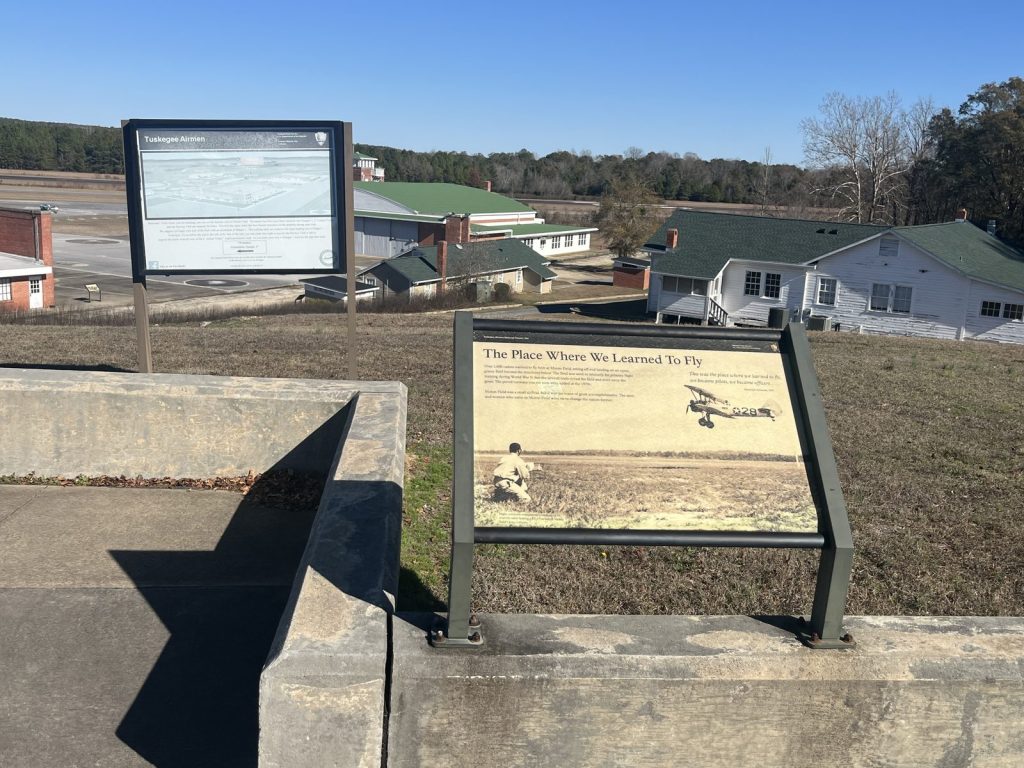
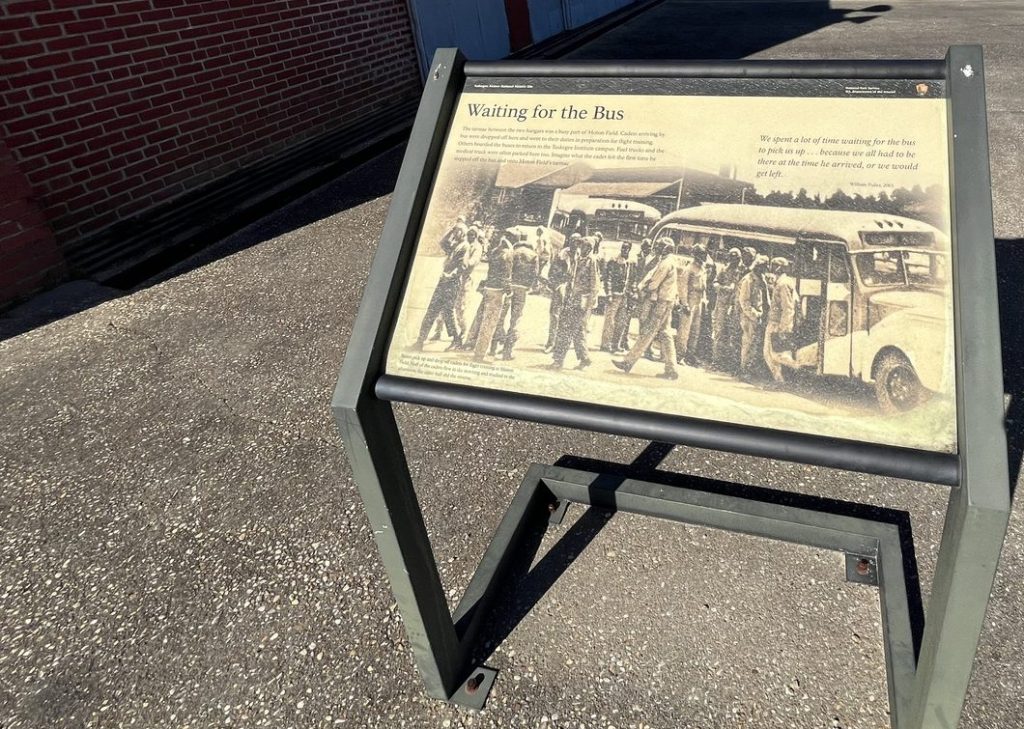
Getting Your Passport Stamp at Tuskegee Airmen NHS
Stamps are available right at the front desk when you walk into Hangar 1. The staff had the stamp ready and it was a quick, easy process. I got the standard Tuskegee Airmen NHS cancellation stamp — no bonus stamps or additional stamps were available that I could find.
The bookstore in the back of Hangar 1 does carry stamp supplies but no additional stamps. Some sites spread their stamps at different locations, but not here.
Passport Stamp Tip: The site is open Monday through Saturday. If you’re planning a road trip stop, just make sure you’re not passing through on a Sunday. For the full guide to the passport stamp program, check out my National Park Passport Stamps: The Ultimate Guide.
Nearby: Tuskegee Institute National Historic Site
Just a few miles from Moton Field is another NPS unit — Tuskegee Institute National Historic Site, which preserves the campus and legacy of Booker T. Washington’s Tuskegee University. We actually tried to visit it on the same stop, but since it was December and the university was on winter break, we couldn’t access the campus to see the historic buildings.
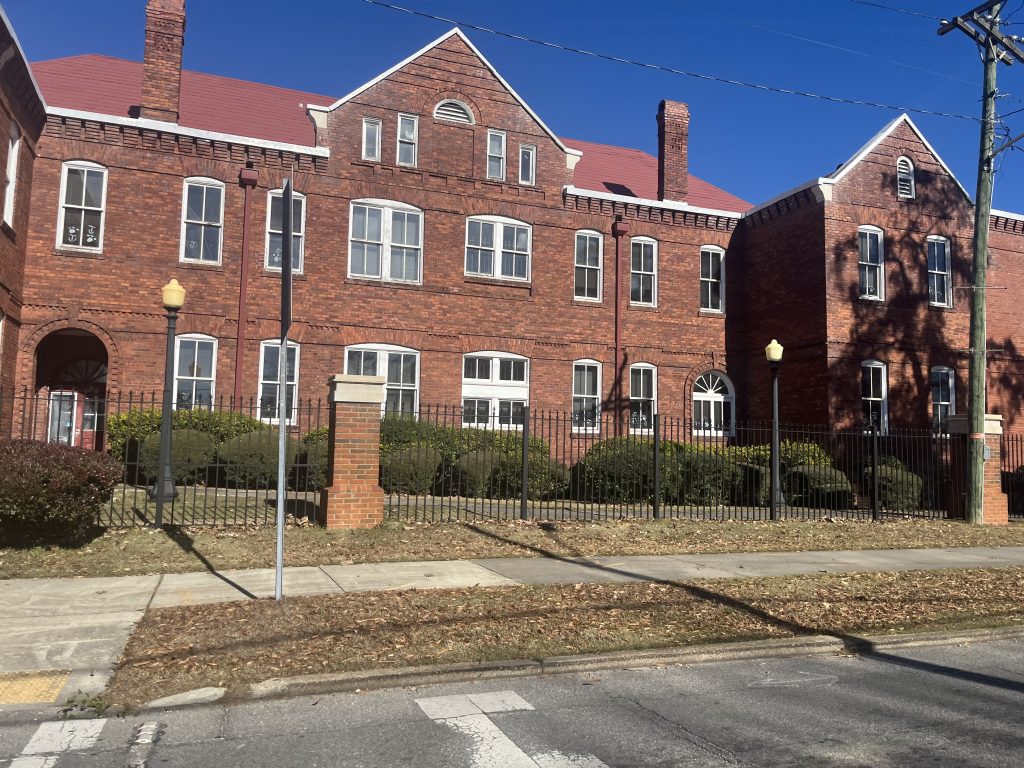
If you’re planning to do both sites in one trip, time it when the university is in session and you could gain access to the campus. That’s a detail I wish I’d known going in. The two sites together would make for a solid half-day in Tuskegee.
Planning Your Visit — Quick Facts
- Address: 1616 Chappie James Ave, Tuskegee, AL 36083 (Moton Field)
- Hours: Monday–Saturday, 9am–4:30pm; closed Sundays and federal holidays
- Parking: Free lot at the top of the hill overlooking the hangars
- Time needed: 1–1.5 hours for both hangars and outdoor panels
- Entrance fee: Free
- Terrain: Paved, mostly flat with a slight hill from parking to hangars — fully accessible
- Staffing note: Limited staff during my visit (December). Bookstore hours may vary — it was closed initially but opened before we left

If you’re building a Southeast NPS itinerary, Tuskegee Airmen NHS sits well on a route between Atlanta and the Gulf Coast. You and visit Martin Luther King Jr. National Historical Park in Atlanta and the Gulf Islands further south near Mobile. For more Southeast trip planning ideas, my Southeast National Parks guide covers the full region.
Is Tuskegee Airmen NHS Worth the Stop?
Absolutely! Even as a quick road trip stop, the exhibits are well-produced and the story hits hard. The P-51 Mustang hanging in Hangar 1 alone is worth walking in for — and the combat record wall will stop you cold.
It was quiet when we visited — nearly empty parking lot, just us and a couple of staff — but that’s not a knock. If anything, having the space to yourself makes the experience more personal. If you’re passing through central Alabama, make the stop. An hour on Moton Field is worth it.
Frequently Asked Questions
Where is Tuskegee Airmen National Historic Site?
Tuskegee Airmen NHS is located at Moton Field in Tuskegee, Alabama, at 1616 Chappie James Ave. It’s about 40 miles east of Montgomery and roughly 2.5 hours southeast of Atlanta — a natural stop on a drive between Atlanta and the Gulf Coast.
Is Tuskegee Airmen National Historic Site free?
es, admission is completely free. There’s no entrance fee, no parking fee, and no charge for any of the exhibits in either hangar.
Where do you get the passport stamp at Tuskegee Airmen NHS?
The passport stamp is available at the front desk inside Hangar 1, the main exhibit building. It’s the first thing you’ll encounter when you walk in — easy and quick.
How many passport stamps can you get at Tuskegee Airmen NHS?
I received the standard Tuskegee Airmen NHS cancellation stamp. No bonus stamps or additional stamps were available during my visit. The bookstore does carry stamp supplies but does not have any extra stamps.
What are the hours at Tuskegee Airmen NHS?
The site is open Monday through Saturday, 9am to 4:30pm. It is closed on Sundays and federal holidays.
How long does a visit to Tuskegee Airmen NHS take?
Plan for 1 to 1.5 hours to see both hangars and the outdoor interpretive panels. It’s a compact site and works well as a road trip stop without needing a full day.
What is Moton Field?
Moton Field is the airfield in Tuskegee, Alabama where the Tuskegee Airmen trained during World War II. It was the primary training site for America’s first Black military pilots. The NPS-preserved hangars and airstrip are the core of Tuskegee Airmen National Historic Site — you’re walking the same ground the cadets walked.
What is the difference between Tuskegee Airmen NHS and Tuskegee Institute NHS?
They’re two separate NPS units a few miles apart. Tuskegee Airmen NHS (Moton Field) covers the WWII pilot training program. Tuskegee Institute NHS covers the Tuskegee University campus and the legacy of Booker T. Washington. If you’re visiting both, note that the Institute site is on the university campus — access may be limited.
Can you visit Tuskegee Airmen NHS and Tuskegee Institute NHS on the same trip?
Yes, they’re only a few miles apart. Together they’d make a solid half-day in Tuskegee. Just be aware that campus access can be restricted during winter and summer breaks — I tried to visit in December and couldn’t get on campus. Plan your timing accordingly.
What is the combat record of the Tuskegee Airmen?
The Tuskegee Airmen flew 1,578 combat missions in the European and North African theaters during WWII. 72 pilots shot down 112 enemy aircraft. 66 pilots were killed in action, 32 were taken as prisoners of war, and 13 were reported missing in action. The combat record wall is inside Hangar 1.
Have you visited Tuskegee Airmen National Historic Site? Did you make it to the Institute site too? Drop a comment below — I’d love to hear how your visit went, especially if you managed to do both in one trip.
