
Ohio National Parks: Your Complete Visitor Guide (2026)

Ohio National Parks don’t always come up in conversations — but it probably should. The state holds 8 NPS-administered sites, and the range is genuinely surprising: ancient earthworks that predate written history, the birthplace of aviation, four presidential homes, a sweeping river valley national park, and a War of 1812 memorial sitting on an island in Lake Erie. Ohio also holds a remarkable distinction — it’s produced more U.S. presidents than any state except Virginia, and the NPS has preserved several of their homes here.
Whether you’re planning a targeted Ohio road trip or working through your passport stamp collection state by state, Ohio rewards the effort.
In This Guide
- Cuyahoga Valley National Park
- Hopewell Culture National Historical Park
- Dayton Aviation Heritage National Historical Park
- Charles Young Buffalo Soldiers National Monument
- William Howard Taft National Historic Site
- James A. Garfield National Historic Site
- First Ladies National Historic Site
- Perry’s Victory & International Peace Memorial
- Ohio NPS Sites — Quick Reference Table
- Planning an Ohio NPS Road Trip
- FAQ
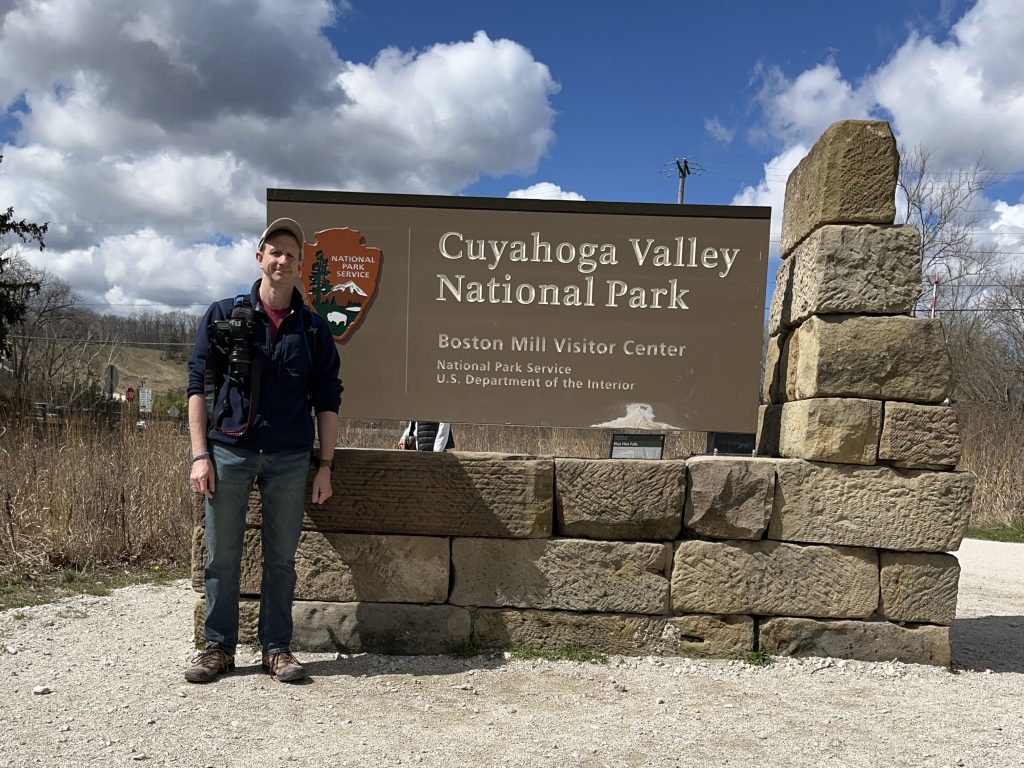
Cuyahoga Valley National Park
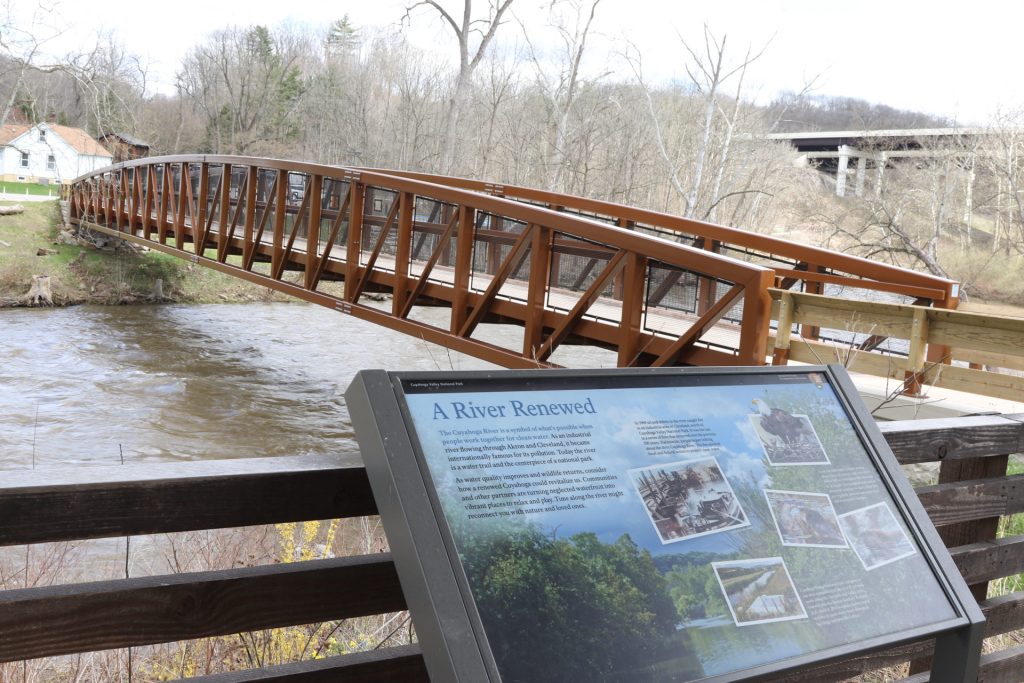
Ohio’s only designated National Park sits in the narrow valley carved by the Cuyahoga River between Cleveland and Akron, and it punches well above its weight. Over 33,000 acres of forest, farmland, and wetlands have been protected here — a remarkable reversal for a river that famously caught fire multiple times in the 20th century due to industrial pollution. The recovery of this valley is, in its own way, one of the more meaningful conservation stories in the national park system.
Brandywine Falls is the signature stop — a 65-foot cascade with a well-maintained boardwalk — but the park has a lot more to offer than one waterfall. The 20-mile Ohio & Erie Canal Towpath Trail runs through the heart of the park and can be hiked or biked in sections. The Ledges Trail through the Sharon Conglomerate rock formations is one of the better hikes in the Midwest. And the Cuyahoga Valley Scenic Railroad offers a train ride through the valley that families with younger kids particularly enjoy. This park draws over 2.6 million visitors a year.
Park Details
- Address: Boston Mill Visitor Center, 6947 Riverview Rd, Peninsula, OH 44264
- Hours: Visitor centers open daily; park open year-round, dawn to dusk
- Entrance Fee: Free
- Activities: Hiking, cycling, Towpath Trail, scenic train ride, Brandywine Falls, Ledges Trail, fishing, bird watching, ranger programs
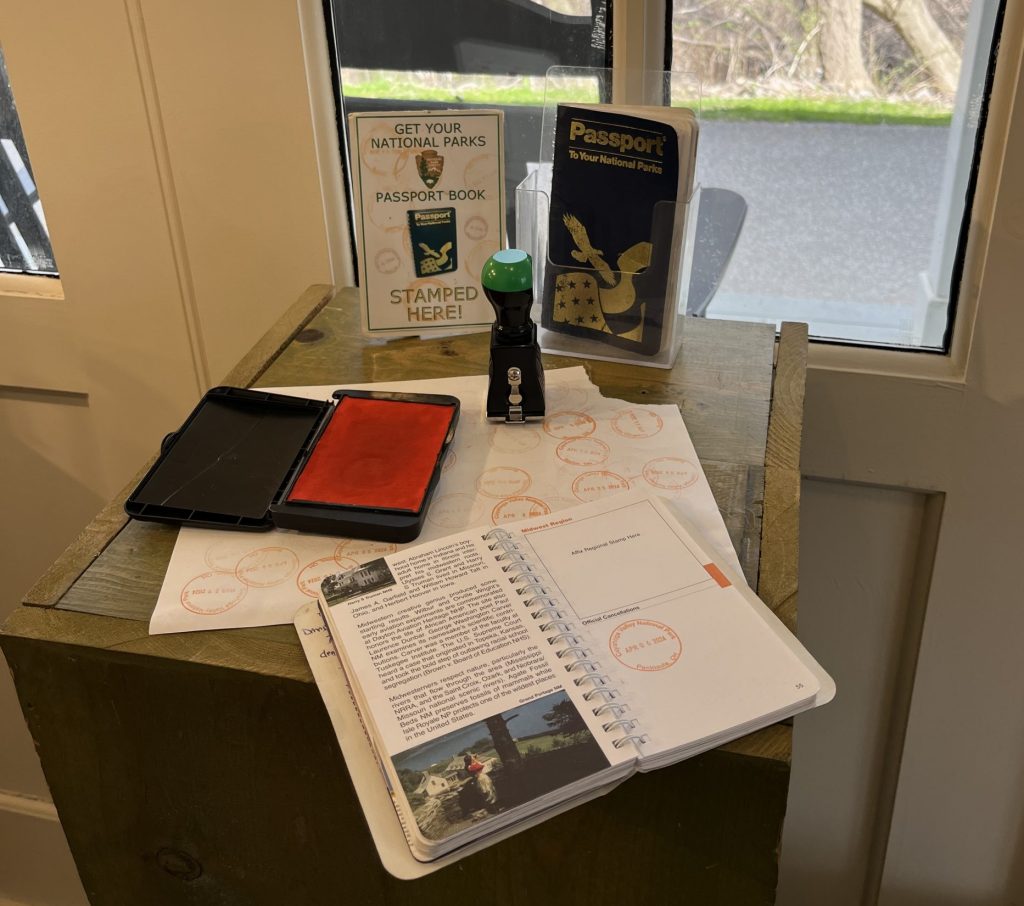
Passport Stamp Tip: The Boston Mill Visitor Center is your primary stamp stop. The Canal Exploration Center in Valley View is another option but note opening times vary by season.
Hopewell Culture National Historical Park
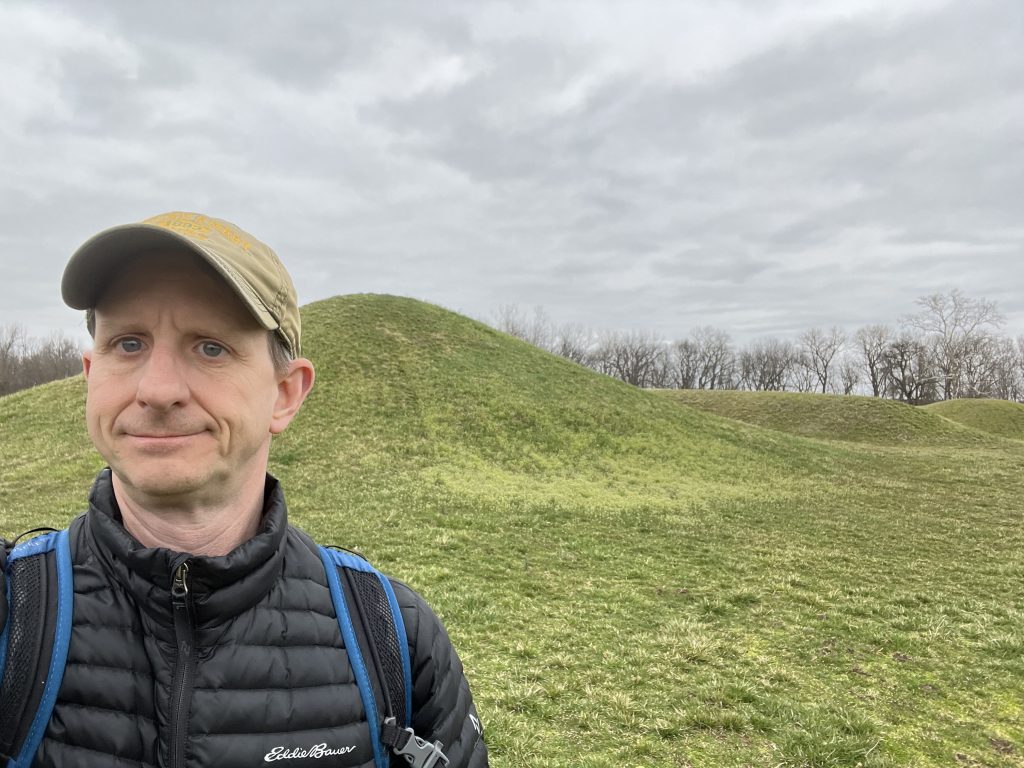
This is one of those sites that genuinely makes you think about your understanding of early North American history. The Hopewell people weren’t just one tribe but a massive culture — a civilization that built incredible geometric earthworks, linked elaborate trade networks across the entire continent , and produced remarkable works of art, all between roughly 200 BC and 500 AD.
I visited in early March and came in underprepared — I had planned a couple of hours and quickly realized that Hopewell Culture NHP actually encompasses six separate earthwork sites across the region, not just the main Mound City Group at the visitor center. The scale of what the Hopewell people built here is staggering once you start to understand it, and the visitor center exhibits do a genuinely good job conveying both the archaeology and the human story. Check out my full visitor guide is worth reading before you go: Hopewell Culture National Historical Park visitor guide.
Park Details
- Address: 16062 State Route 104, Chillicothe, OH 45601
- Hours: Daily 8:30am–5pm; grounds open dawn to dusk year-round
- Entrance Fee: Free
- Activities: Earthwork trail walks, visitor center exhibits and film, ranger programs, six satellite units (plan extra time)
Roaming Monk Tip: Stamp available at the main visitor center in Chillicothe. Note that the park’s six units are spread across a wide area — if you want to visit the satellite earthworks at Seip, Hopewell Mound Group, or Newark, those require separate drives.
Dayton Aviation Heritage National Historical Park
Dayton Aviation Heritage NHP commemorates three figures: Wilbur Wright, Orville Wright, and poet Paul Laurence Dunbar, all of whom called Dayton home and each of whom changed their respective fields permanently.
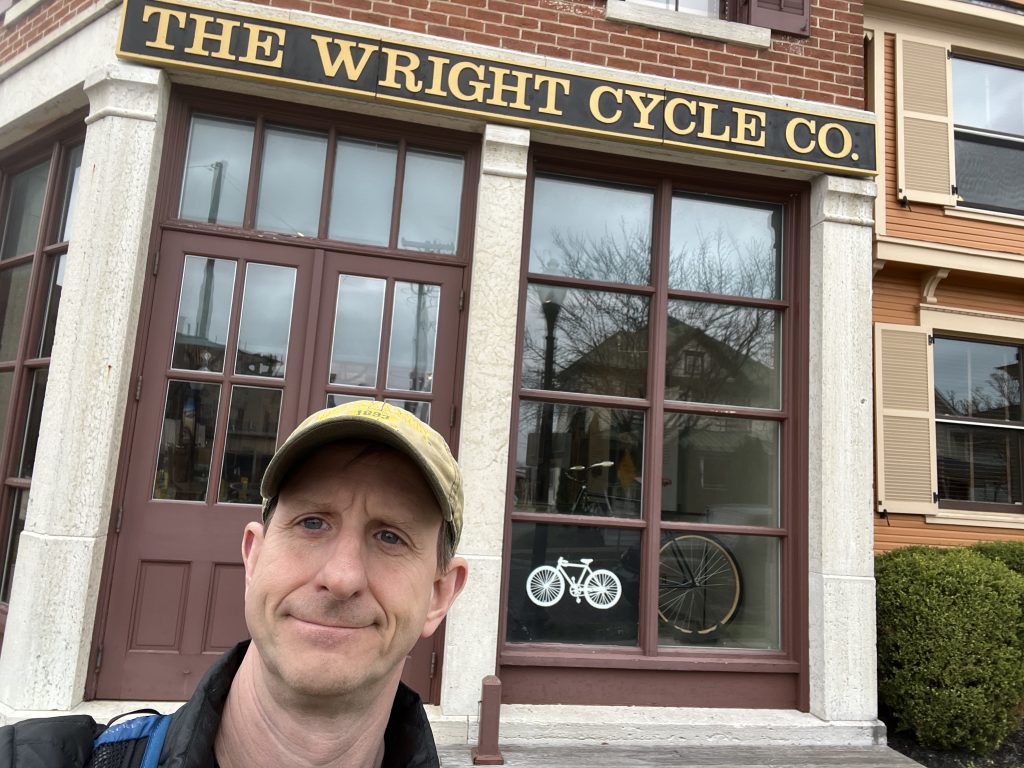
The park has multiple units spread across the city, anchored by the Wright-Dunbar Interpretive Center in the historic West Dayton neighborhood where both the Wright Brothers and Dunbar lived and worked. One of the Wright Brothers’ original bicycle shops is preserved here — the workspace where they developed the mechanical thinking that led to a flyable airplane. Huffman Prairie Flying Field, where the Wrights refined powered flight after Kitty Hawk, is on the grounds of Wright-Patterson Air Force Base and open to the public through the NPS. I had almost talked myself out of stopping here given time constraints — and I’m glad I didn’t. For the full story of what this park has to offer, check out my Dayton Aviation Heritage NHS visitor post.
Park Details
- Address: Wright-Dunbar Interpretive Center, 16 S Williams St, Dayton, OH 45402; Huffman Prairie Flying Field Interpretive Center, 2380 Memorial Rd, Wright-Patterson AFB, OH 45433
- Hours: Wright-Dunbar: daily 8:30am–5pm; Huffman Prairie: hours vary — check nps.gov/daav
- Entrance Fee: Free
- Activities: Wright Brothers bicycle shop, Dunbar home, Huffman Prairie Flying Field, interpretive exhibits, ranger programs
Roaming Monk Tip: Primary stamp is at the Wright-Dunbar Interpretive Center.
Charles Young Buffalo Soldiers National Monument
Colonel Charles Young’s story is a compelling story — and this site does it genuine justice. Young was born into slavery in 1864, became the third African American to graduate from West Point, rose to the rank of colonel (the first African American to do so), served as the first African American national park superintendent (at Sequoia), and when the Army forced him into medical retirement before World War I to keep him from commanding white officers, he proved his fitness by riding a horse 497 miles from Wilberforce, Ohio to Washington, D.C.
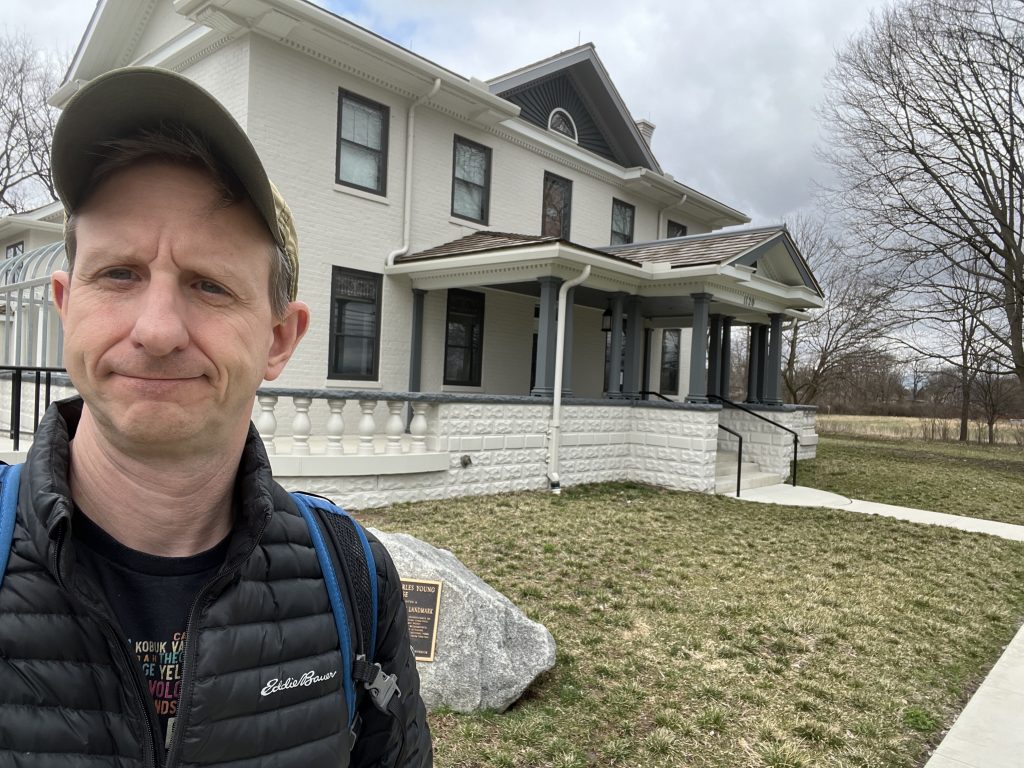
I stopped here as part of an Ohio road trip — planning a 30–45 minute visit and finding myself there considerably longer. The story is dense and layered, connecting Civil Rights, military history, and the origins of the National Park Service in ways you don’t expect. The restored Victorian home gives the exhibits a tangible setting. Read the full account in my dedicated post: Charles Young Buffalo Soldiers National Monument visitor guide.
Park Details
- Address: 1120 US Route 42 E, Wilberforce, OH 45384
- Hours: Wed–Sun 8:30am–4:30pm (confirm current hours — the visitor contact station has been at a temporary location during home restoration; check nps.gov/chyo for updates)
- Entrance Fee: Free
- Activities: Historic home tours, Buffalo Soldiers exhibits, ranger programs, Junior Ranger program
William Howard Taft National Historic Site
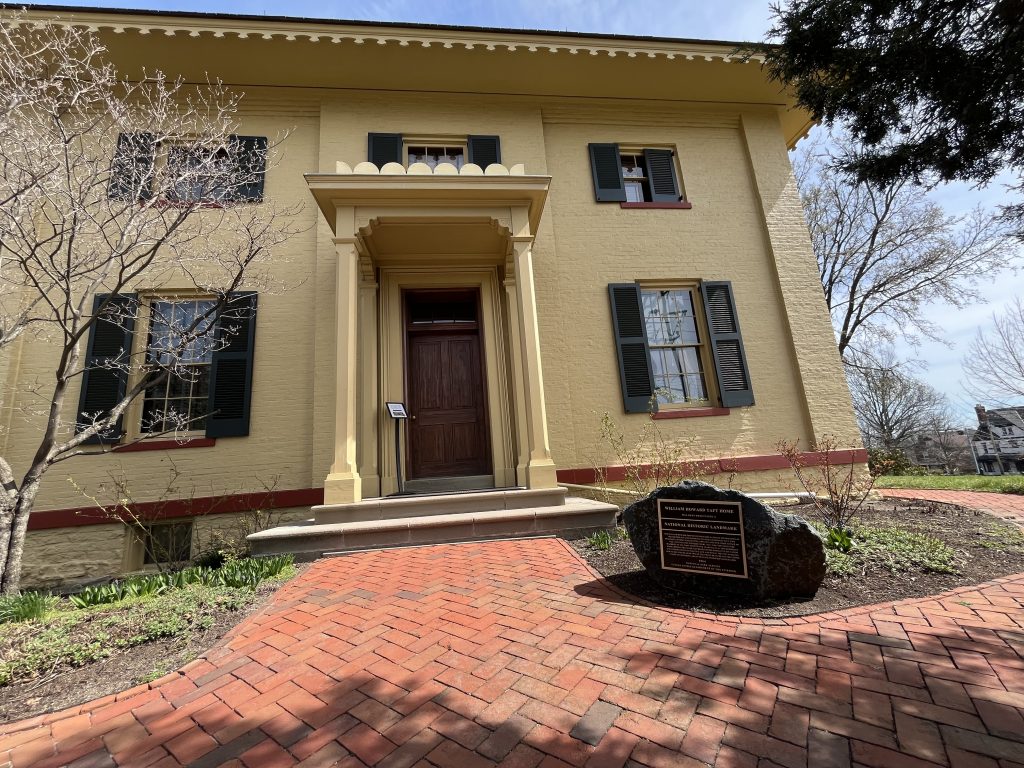
On one of Cincinnati’s prominent hilltops sits the two-story Greek Revival house where William Howard Taft was born and grew up. Taft is a genuinely interesting figure — the only person in American history to serve as both President and Chief Justice of the Supreme Court, and by most accounts far more comfortable in the judicial role than the executive one. And yet, there is the whole bathtub thing (just ask). The house has been restored to its mid-19th century appearance and the exhibits trace both his personal story and the broader Taft family legacy of public service in Cincinnati.
Start at the Taft Education Center before touring the house — the 15-minute film provides essential context, especially for the less-familiar chapters of Taft’s career (his time as Governor of the Philippines, his work as Roosevelt’s Secretary of War, and eventually his appointment as Chief Justice). Guided tours are led by rangers and run about 45 minutes. This pairs naturally with Hopewell Culture as part of a southern Ohio loop, as the Hopewell post notes. William Howard Taft National Historic Site visitor guide.
Park Details
- Address: 2038 Auburn Ave, Cincinnati, OH 45219
- Hours: Daily 8am–4pm; guided tours offered throughout the day
- Entrance Fee: Free
- Activities: Ranger-guided house tours, Taft Education Center exhibits and film, self-guided grounds
James A. Garfield National Historic Site
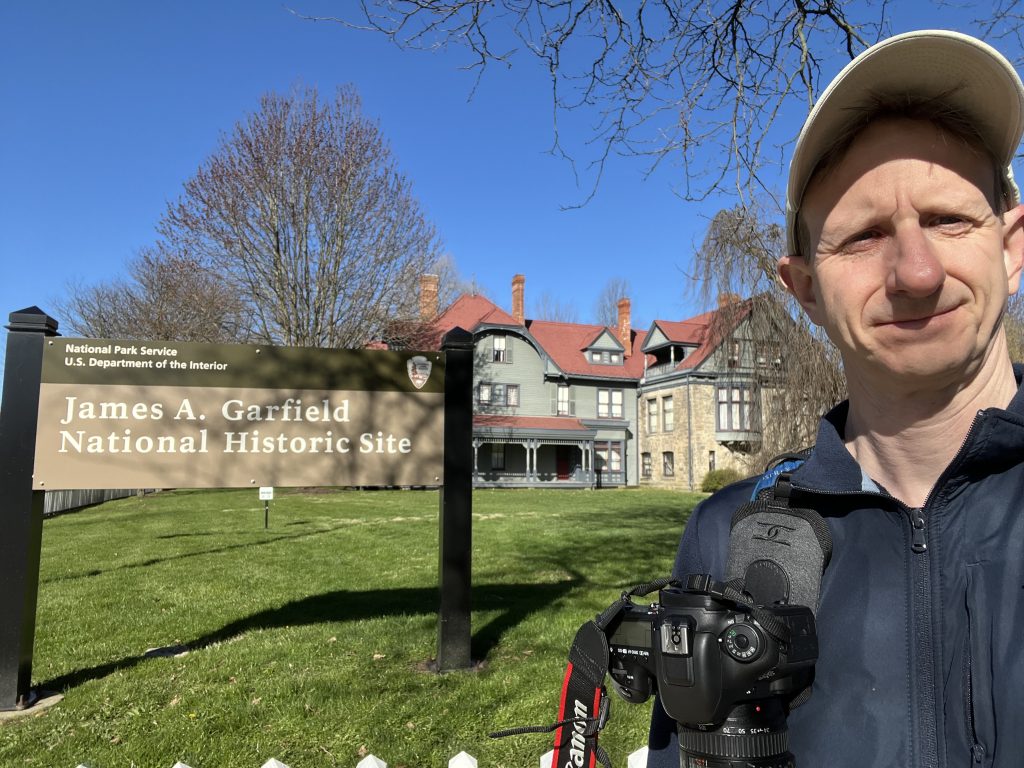
James Garfield’s estate in Mentor, Ohio — known as Lawnfield — is best known for the front porch from which he ran his entire 1880 presidential campaign, greeting thousands of supporters without ever leaving home. A little odd in today’s environment but hey, he won! The “front porch campaign” became a defining moment in American political strategy.
Garfield was the 20th President and the second to be assassinated — shot just four months into his term. His wife Lucretia, after his death, commissioned a memorial library wing added to the home, creating the first presidential library in U.S. history. This guy loved books. The house contains over 80% of the original Garfield family furniture, which gives it a tangible authenticity you don’t find at every presidential site. See my James A. Garfield post for more information.
Park Details
- Address: 8095 Mentor Ave, Mentor, OH 44060
- Hours: Daily (seasonal variations); check nps.gov/jaga for current hours
- Entrance Fee: Free
- Activities: Ranger-guided house tours, first presidential library, Garfield family exhibits, carriage house
Roaming MonkTip: Stamp at the visitor center. The guided house tour is worthwhile here — the combination of the original furniture and the memorial library story is worth it.
First Ladies National Historic Site
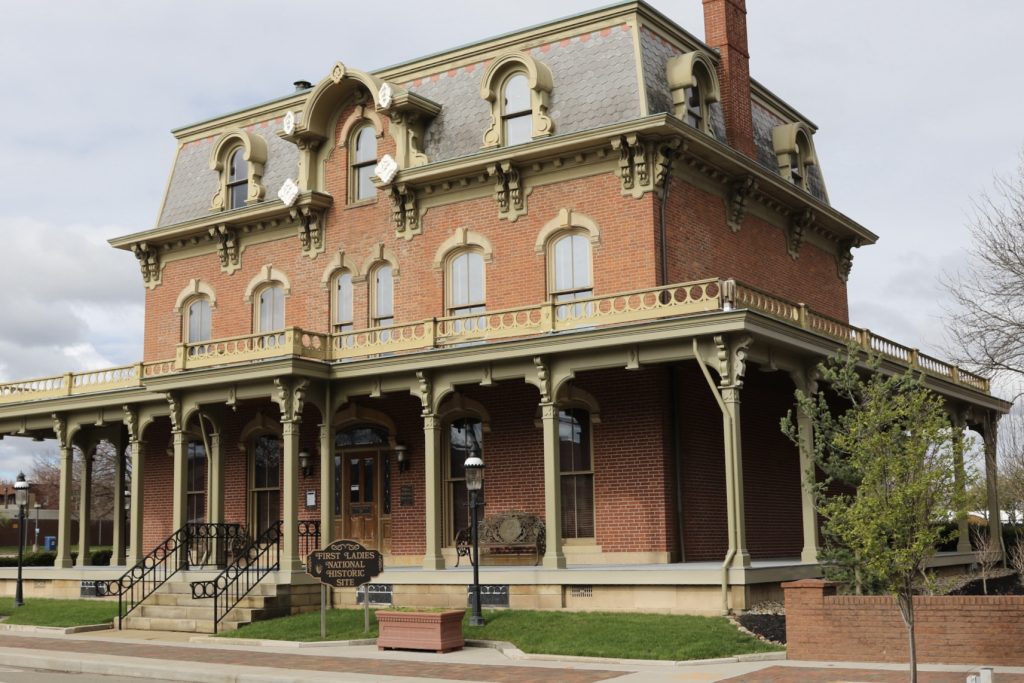
Canton, Ohio is home to a genuinely unique NPS unit — one that reframes the history of the White House by centering the women who shaped it. First Ladies National Historic Site preserves two downtown Canton properties: the City National Bank Building (a seven-story 1895 building that houses the education center and exhibits) and the home of First Lady Ida Saxton McKinley, wife of President William McKinley.
The exhibits cover all of America’s First Ladies through interactive displays, period clothing, and biographical material. For passport collectors, this is a compact and straightforward stop in downtown Canton. See the NPS First Ladies page for current hours and tour schedules.
Park Details
- Address: Education Center: 205 Market Ave S, Canton, OH 44702; Saxton McKinley House: 331 Market Ave S, Canton, OH 44702
- Hours: Wed–Sat 9am–5pm (tours of the McKinley home at scheduled times); check nps.gov/fila for current schedule
- Entrance Fee: Free
- Activities: First Ladies exhibits, guided McKinley home tours, education center film
Perry’s Victory & International Peace Memorial
This one requires a ferry ride — and that’s part of the appeal. Perry’s Victory & International Peace Memorial stands on South Bass Island in Lake Erie, marking the site of one of the most decisive naval battles of the War of 1812. On September 10, 1813, Commodore Oliver Hazard Perry led nine American vessels against six British ships and won decisively, sending the famous message: “We have met the enemy and they are ours.” The victory secured American control of Lake Erie and changed the course of the war.
The memorial itself is a 352-foot Doric column — one of the world’s tallest — and an observation deck at the top offers a sweeping view over the lake and the surrounding islands. The “International Peace” part of the name reflects what followed: Britain, Canada, and the United States have maintained an unbroken peace since the War of 1812, and the memorial honors that legacy as much as the battle itself. South Bass Island is also home to Put-in-Bay, a lively resort town — visiting in the shoulder season (May or September/October) gives you a much quieter experience than peak summer weekends. See the NPS Perry’s Victory page for current ferry schedules and visitor information.
Park Details
- Address: 93 Delaware Ave, Put-in-Bay, OH 43456 (South Bass Island — ferry required from Port Clinton or Catawba Island)
- Hours: Memorial open seasonally (late April through mid-October); closed in winter
- Entrance Fee: Yes — small fee per person for the observation deck (the grounds are free); ferry costs are separate
- Activities: 352-foot observation tower with Lake Erie views, historical exhibits, ranger programs, island exploration
Ohio NPS Sites — Quick Reference
| Site | Type | Location | Fee | Stamp Location |
|---|---|---|---|---|
| Cuyahoga Valley NP | National Park | Peninsula, OH | Free | Boston Mill VC |
| Hopewell Culture NHP | National Historical Park | Chillicothe, OH | Free | Main Visitor Center |
| Dayton Aviation Heritage NHP | National Historical Park | Dayton, OH | Free | Wright-Dunbar Interpretive Center |
| Charles Young Buffalo Soldiers NM | National Monument | Wilberforce, OH | Free | Visitor Contact Station |
| William Howard Taft NHS | National Historic Site | Cincinnati, OH | Free | Taft Education Center |
| James A. Garfield NHS | National Historic Site | Mentor, OH | Free | Visitor Center |
| First Ladies NHS | National Historic Site | Canton, OH | Free | Education Center |
| Perry’s Victory & Int’l Peace Memorial | National Memorial | South Bass Island, OH | $ (obs. deck) | Memorial visitor center |
For everything you need to know about collecting passport stamps, my National Park Passport Stamps: The Ultimate Guide covers the program from start to finish. And if you’re looking for a free America the Beautiful pass for parks that do charge, here’s how to get one.
Planning an Ohio NPS Road Trip
Ohio’s NPS sites divide naturally into three geographic clusters that work well as multi-day road trip legs.
Southwest Ohio is the most productive single-day cluster: Charles Young (Wilberforce/Dayton area), Dayton Aviation Heritage (Dayton), and William Howard Taft NHS (Cincinnati) can all be done in one long day traveling southwest. I covered Charles Young and Dayton Aviation on the same swing through the Dayton area — they’re about 20 minutes apart — before continuing toward Cincinnati for Taft. Add Hopewell Culture (Chillicothe, about an hour east of Cincinnati) for a second day and you’ve collected five stamps across two days of driving.
Northeast Ohio covers the Lake Erie corridor: James A. Garfield NHS in Mentor (east of Cleveland) and Cuyahoga Valley National Park (between Cleveland and Akron) anchor this cluster. If you’re doing a dedicated northeast swing, these two make for a natural two-day trip — Garfield for a morning, Cuyahoga for the afternoon and next day if you want to hike properly.
Canton stands a bit on its own — First Ladies NHS is a compact stop in downtown Canton that fits naturally between a Cleveland-area visit and a southern Ohio leg. It’s close enough to Cuyahoga Valley to combine in a day.
Perry’s Victory requires dedicated planning as a ferry trip out to South Bass Island. May or September shoulder season visits are worth the extra planning — you avoid the summer resort crowds while the memorial is still fully staffed and open.
Ohio is also worth noting as the “Mother of Presidents” state — Garfield, Taft, McKinley (via First Ladies), and by extension several other president connections give the Ohio NPS cluster an unusual coherence as a presidential history road trip. If you’re curious about how NPS site types work — why some are National Parks, others National Monuments, National Memorials, or Historic Sites — my post on types of national parks breaks down the designation system clearly.
Frequently Asked Questions
How many National Park sites are in Ohio?
Ohio has 8 NPS-administered units: Cuyahoga Valley National Park, Hopewell Culture NHP, Dayton Aviation Heritage NHP, Charles Young Buffalo Soldiers National Monument, William Howard Taft NHS, James A. Garfield NHS, First Ladies NHS, and Perry’s Victory & International Peace Memorial. Ohio’s only designated “National Park” is Cuyahoga Valley.
What is the most visited National Park in Ohio?
Cuyahoga Valley National Park draws roughly 2.6 million visitors annually — far more than any other Ohio NPS site. It’s Ohio’s only designated National Park and sits conveniently between Cleveland and Akron.
Are Ohio National Parks free?
Seven of the eight are completely free. Perry’s Victory & International Peace Memorial charges a small fee per person for the observation deck (the grounds are free), and you’ll need to factor in the ferry cost to reach the island. All others — including Cuyahoga Valley National Park — have no entrance fee.
Can you get a National Park passport stamp in Ohio?
Yes — all 8 Ohio NPS sites offer passport cancellation stamps at their visitor centers or contact stations. For the complete guide to the passport program, see National Park Passport Stamps: The Ultimate Guide.
Why is Ohio called the “Mother of Presidents”?
Ohio has produced seven U.S. presidents — Ulysses S. Grant, Rutherford B. Hayes, James A. Garfield, Benjamin Harrison, William McKinley, William Howard Taft, and Warren G. Harding — more than any state except Virginia. The NPS preserves the homes of Garfield and Taft in Ohio, along with the First Ladies site honoring Ida McKinley.
What is the Hopewell Culture National Historical Park?
Hopewell Culture NHP preserves ancient earthworks built by the Hopewell people — a sophisticated pre-Columbian civilization that flourished in Ohio from roughly 200 BC to 500 AD. The park encompasses six separate earthwork sites across the Chillicothe region. The Mound City Group at the main visitor center is the primary starting point, but the park is significantly larger than most visitors realize going in. See my Hopewell Culture visitor guide for full planning details.
How do you get to Perry’s Victory & International Peace Memorial?
Perry’s Victory is on South Bass Island in Lake Erie, accessible only by ferry. Ferries run from Port Clinton and Catawba Island seasonally (roughly late April through mid-October). The island’s main town, Put-in-Bay, is a popular summer resort destination — visiting in May or September gives you a much quieter experience. Check the NPS Perry’s Victory page for current ferry schedules.
Do you need an America the Beautiful Pass for Ohio National Parks?
No — seven of the eight Ohio NPS sites are completely free, so an America the Beautiful Pass won’t save you anything at most Ohio stops. The only site with an entrance fee is Perry’s Victory & International Peace Memorial. The ferry to South Bass Island is a separate cost not covered by any NPS pass. That said, if you’re combining an Ohio trip with visits to fee-charging parks elsewhere, the pass pays for itself quickly. Here’s how to get a free America the Beautiful Pass if you qualify.
What is the best time to visit Ohio national parks?
Late spring through early fall (May–October) covers most Ohio sites well. Cuyahoga Valley is excellent in October for fall foliage and is open year-round. Perry’s Victory is only accessible seasonally — the memorial typically opens late April and closes mid-October, so plan ferry logistics accordingly. The presidential sites and historical parks are generally open year-round with stable hours, though calling ahead is always worth it for smaller sites like Charles Young and First Ladies NHS.
Have you visited the Ohio national parks? Which ones are on your list? Drop a comment below — and if you’ve made the ferry trip out to Perry’s Victory, I’d love to hear about it.
